Quranic Answer
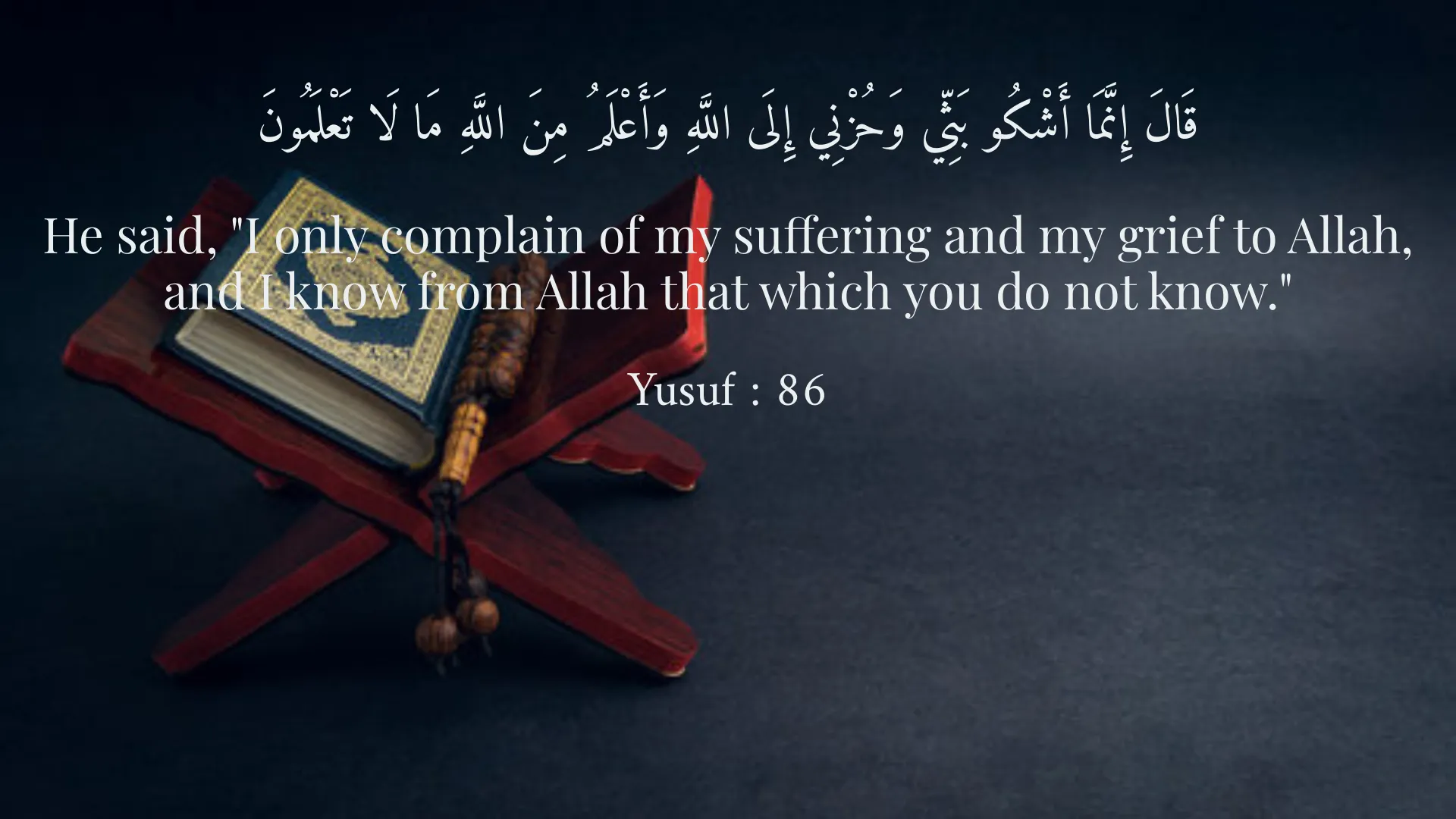
Sadness and sorrow are inherent and unavoidable aspects of the human experience. Every individual, regardless of their level of faith, encounters difficult moments throughout their life that can lead to feelings of grief, longing, or even profound sadness. The question that arises here is whether this natural emotion, sadness, is considered a sign of weak faith from the perspective of the Holy Quran. The answer to this question requires deep contemplation of divine verses and a correct understanding of the place of human emotions in Islamic teachings. The Holy Quran explicitly recognizes sadness as a natural human response to calamities and losses. This divine book even narrates stories of prophets and highly favored servants of God who experienced grief and sorrow. The most prominent example in this regard is the story of Prophet Ya’qub (Jacob) (peace be upon him) in Surah Yusuf. After the separation from his son, Yusuf (Joseph), and then Benjamin, he felt such profound sorrow that his eyes turned white from intense weeping and he lost his sight. Yet, even in the midst of this agonizing grief, Prophet Ya’qub (AS) never despaired of divine mercy. He consistently expressed his complaints and sorrow solely to God: “He said, 'I only complain of my suffering and my grief to Allah, and I know from Allah that which you do not know.'” (Yusuf, 86). This verse clearly indicates that sadness has a place even in the life of a divine prophet, but the fundamental difference lies in how one deals with it. Ya’qub directed his grief to the source of absolute power and infinite knowledge, Allah, and never succumbed to despair or hopelessness. This key point distinguishes between natural sadness and despair. Despair and hopelessness concerning Allah’s mercy, which are strongly condemned in the Holy Quran, are considered a sign of weak faith and even disbelief. In Surah Az-Zumar, verse 53, Allah Almighty addresses His servants, saying: “Say, 'O My servants who have transgressed against themselves [by sinning], do not despair from the mercy of Allah. Indeed, Allah forgives all sins. Indeed, it is He who is the Forgiving, the Merciful.'” This verse indicates that Qunut (absolute despair) is essentially a lack of trust in Allah’s boundless power, forgiveness, and mercy, which is incompatible with the spirit of true faith. Therefore, sadness in itself is not a sign of weakness, but drowning in it and reaching the stage of despair can be an indication of instability in the foundations of faith. The Holy Quran advises believers to show patience and steadfastness in the face of hardships and sorrows. In Surah Al-Imran, verse 139, after the Battle of Uhud, where Muslims suffered losses and difficulties, Allah addressed them, saying: “And do not weaken and do not grieve, and you will be superior if you are [true] believers.” This verse does not mean an absolute denial of the feeling of sadness, but rather means not to surrender to it and prevent its negative impact on the believer’s resolve and determination. Strong faith helps a person to stand firm in the face of sadness, rather than denying or suppressing it. This steadfastness in the face of sorrow and transforming it into an opportunity for reflection and greater reliance on God, is itself a sign of the perfection and strength of faith. The believer uses sadness for self-improvement and drawing closer to Allah, rather than making it an excuse to withdraw from spiritual and social life. Furthermore, in the narrative of the Prophet Muhammad’s (peace be upon him) migration with Abu Bakr to the cave of Thawr, when Abu Bakr became sad out of fear of being discovered and captured, the Prophet (PBUH) comforted him with soothing words: “When he said to his companion, 'Do not grieve; indeed Allah is with us.'” (Surah At-Tawbah, 40). This statement of the Prophet (PBUH) shows that sadness is a natural state, but reliance on the presence and help of Allah can transform it into peace and assurance. This inner tranquility, which the Quran calls “Sakina” and which descends upon the hearts of believers from Allah (e.g., in Surah Al-Fath, 4), is evidence of the strength of faith that helps a person in facing the most severe calamities. Verses that promise “no fear upon them, nor shall they grieve” (La Khawfun ‘alayhim wa la hum yahzanun) to believers and the righteous (e.g., Al-Baqarah: 277; Yunus: 62) primarily refer to the ultimate reward in the afterlife and the spiritual state of those who have reached a degree of knowledge and reliance such that they are free from anxiety and sorrow even in this world, or are able to manage them excellently. This promise expresses the ultimate goal of faith and the path of spiritual growth, rather than decreeing that a believer should never be sad under any circumstances. Instead, its meaning is that deep faith grants a person the ability to endure and manage sorrow and prevents it from leading them to destruction and despair. In conclusion, sadness in itself is not a sign of weak faith. Rather, how one deals with it is a test and an indicator for measuring the strength of faith. A believer who feels sad but overcomes this stage with beautiful patience, complete reliance on God, and seeking refuge in the Almighty, not only does not have weak faith, but emerges victorious from this divine trial and attains higher degrees of piety and closeness to Allah. Strong faith does not deny sadness but transforms it into a channel for a deeper connection with the Creator, enabling a person to anchor their hope and peace in Allah amidst the storms and hardships of life. Sadness can be a springboard for spiritual growth, provided it is viewed with a faithful perspective and reliance on divine power and wisdom. This outlook transforms sadness from a weakening factor into a catalyst for spiritual elevation and demonstrates the solidity of the foundation of faith.
Related Verses
قَالَ إِنَّمَا أَشْكُو بَثِّي وَحُزْنِي إِلَى اللَّهِ وَأَعْلَمُ مِنَ اللَّهِ مَا لَا تَعْلَمُونَ
He said, "I only complain of my suffering and my grief to Allah, and I know from Allah that which you do not know."
Yusuf : 86
وَلَا تَهِنُوا وَلَا تَحْزَنُوا وَأَنتُمُ الْأَعْلَوْنَ إِن كُنتُم مُّؤْمِنِينَ
And do not weaken and do not grieve, and you will be superior if you are [true] believers.
Al-Imran : 139
إِلَّا تَنصُرُوهُ فَقَدْ نَصَرَهُ اللَّهُ إِذْ أَخْرَجَهُ الَّذِينَ كَفَرُوا ثَانِيَ اثْنَيْنِ إِذْ هُمَا فِي الْغَارِ إِذْ يَقُولُ لِصَاحِبِهِ لَا تَحْزَنْ إِنَّ اللَّهَ مَعَنَا ۖ فَأَنزَلَ اللَّهُ سَكِينَتَهُ عَلَيْهِ وَأَيَّدَهُ بِجُنُودٍ لَّمْ تَرَوْهَا وَجَعَلَ كَلِمَةَ الَّذِينَ كَفَرُوا السُّفْلَىٰ ۗ وَكَلِمَةُ اللَّهِ هِيَ الْعُلْيَا ۗ وَاللَّهُ عَزِيزٌ حَكِيمٌ
If you do not aid him – Allah has already aided him when those who disbelieved expelled him, he being the second of two, when they were in the cave and he said to his companion, "Do not grieve; indeed Allah is with us." Then Allah sent down His tranquility upon him and supported him with soldiers [angels] you did not see and made the word of those who disbelieved the lowest, while the word of Allah – that is the highest. And Allah is Exalted in Might and Wise.
At-Tawbah : 40
Short Story
They say that in ancient times, there was a wealthy merchant who suddenly fell upon misfortune, and all his wealth and possessions vanished. He became so consumed by grief and sorrow that he stayed at home, gave up work, and wept over his fate every day. One day, a wise dervish passed by that street and saw the merchant's distressed state. He asked him, "O brother, what has befallen you that you are so sad and despondent?" The merchant recounted the story of his lost fortune. The dervish smiled kindly and said, "O dear one, the world is like a sea; sometimes waves rise, and sometimes it is calm. A ship that breaks must be repaired with patience and reliance on the Navigator. Is not a chest full of God's remembrance and a bright heart better than a vault full of treasures and a heart full of despair?" The merchant pondered these words and realized that the dervish spoke the truth. His sadness did not vanish instantly, but it transformed into a profound calm and a renewed determination. He understood that true capital lies in the heart, not in worldly possessions, and relying on his faith, he began to rebuild his life and found a hopeful spirit.