Quranic Answer
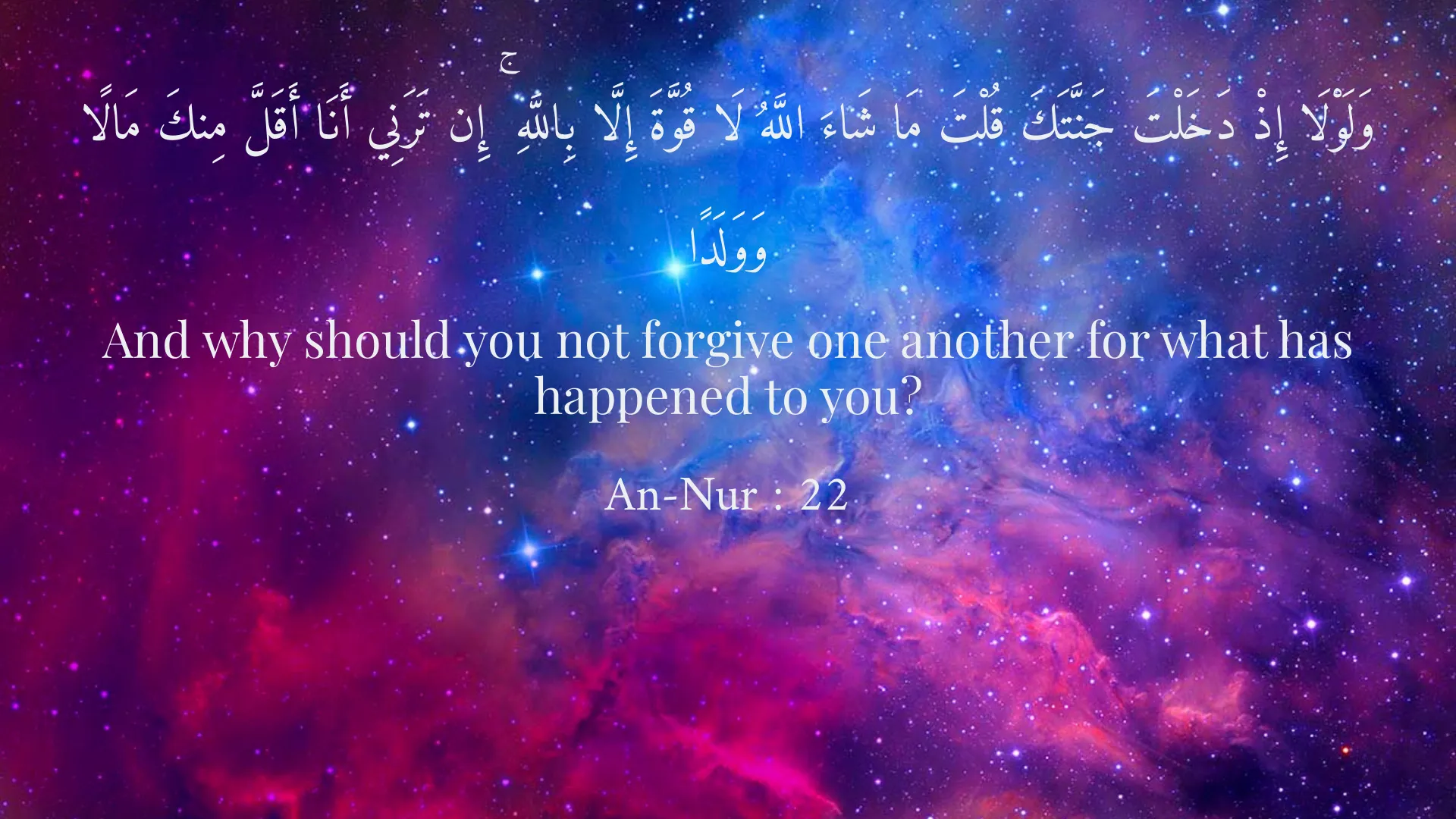
The concept of forgiveness is a profound and multifaceted topic that has been explored across various religious, philosophical, and psychological landscapes. In particular, the Holy Quran provides a rich tapestry of insight into the idea of forgiveness, underscoring its importance for spiritual and moral growth. Central to this notion is the idea of self-forgiveness, which serves not only as a means of personal healing but also as a crucial step towards a broader moral and spiritual development. In Surah An-Nur, verse 22, the Quran speaks explicitly about the nature of forgiveness: 'And why should you not forgive one another for what has happened to you?' This powerful exhortation encapsulates the essence of human imperfection and the need for compassion, both towards oneself and others. The verse implies a fundamental truth: everyone makes mistakes. Perfection is not a human trait; rather, it is through our imperfections that we learn, grow, and evolve into better individuals. The realization that no one is immune to error opens the door to compassion, allowing individuals to embrace forgiveness as a means of personal liberation. Self-forgiveness, in particular, emerges as a vital psychological process. In many cultures, guilt and shame are often pervasive feelings associated with wrongdoing. Carrying these burdens not only affects one’s mental health but also inhibits personal growth. Psychologically, understanding that making mistakes is a universal human experience can significantly enhance inner peace. By acknowledging our mistakes and forgiving ourselves, we release the heavy burden of guilt that clouds our minds. This act of self-kindness fosters a sense of satisfaction and self-acceptance as we come to terms with our imperfections. Moreover, the Quran's teachings emphasize the importance of relying on divine mercy. Surah Al-Mu'minun, verse 60 states: 'And those who hope for their Lord do not fear His punishment, and they rely on their Creator.' This verse serves as a reminder that, while we are responsible for our actions, we are also enveloped in the mercy of our Creator. Trusting in this mercy allows individuals to move past feelings of worthlessness and despair that often accompany mistakes. Instead of focusing on the fear of punishment, believers are encouraged to look towards forgiveness and mercy as a source of comfort and strength. The interplay between self-forgiveness and divine mercy is essential for spiritual growth. When individuals accept their own shortcomings and forgive themselves, they are not merely indulging in self-pity; rather, they are making a conscious decision to move forward. This forward momentum is crucial for ethical and spiritual development. By accepting our past actions, we enable ourselves to learn from them, develop empathy for others, and cultivate virtues such as patience and humility. Additionally, embracing forgiveness can have profound relational implications. When individuals forgive themselves, they are more inclined to extend that forgiveness to others. This creates an environment where compassion and understanding thrive, resulting in healthier relationships. Forgiving others often mirrors the ability to forgive oneself. Consequently, fostering a culture of forgiveness can lead to stronger and more resilient communities, as individuals learn to navigate the complexities of human interactions with grace and understanding. From a broader philosophical perspective, the act of forgiveness can be viewed as a rejection of the cycle of negativity and harm that often perpetuates in society. Holding onto grudges and seeking revenge can lead to a cycle of pain that affects countless individuals; however, forgiveness interrupts this cycle. It acts as a catalyst for healing, providing a pathway not just for personal growth but for societal change. When communities prioritize forgiveness—both self-forgiveness and forgiving others—they create an atmosphere conducive to reconciliation, understanding, and peace. The modern psychological approach to forgiveness aligns remarkably well with the Quranic understanding of this powerful process. Various studies have shown that forgiveness can improve mental health, reduce stress, and increase feelings of happiness and fulfillment. Therapeutic practices often incorporate the principles of self-forgiveness, encouraging individuals to confront their mistakes and engage in self-reflection. This modern understanding reinforces the timeless wisdom found in the Quran, illustrating that the spiritual and psychological dimensions of forgiveness are intertwined. In practical terms, fostering a practice of self-forgiveness may involve several steps. Firstly, it requires acknowledging one’s mistakes without deflecting responsibility. This self-awareness is essential for personal accountability. Next, individuals are encouraged to cultivate self-compassion, treating themselves with the same kindness they would offer a friend in a similar situation. This may involve positive affirmations, mindfulness practices, or engaging in activities that promote well-being and joy. Forgiveness is also a practice that can be reinforced within communities. Educational institutions, religious organizations, and social groups can play a significant role in promoting discussions around forgiveness. By creating safe spaces for individuals to share their experiences and learn from one another, communities can nurture a collective understanding of the importance of forgiveness. Workshops, seminars, and group discussions can all serve as platforms for promoting forgiveness and exploring its many dimensions. In conclusion, the concept of forgiveness, particularly self-forgiveness, is a profound and transformative principle emphasized in the Holy Quran. By recognizing our human imperfections and embracing the mercy offered by a higher power, we foster personal and spiritual growth. The teachings of the Quran on forgiveness resonate deeply with contemporary psychological approaches, highlighting the importance of self-acceptance and compassion in achieving inner peace and well-being. As we navigate the challenges of life, let us remember the power of forgiveness—not only as an act of grace towards ourselves and others but as a crucial step towards holistic growth and harmony in our lives.
Related Verses
وَلَوْلَا إِذْ دَخَلْتَ جَنَّتَكَ قُلْتَ مَا شَاءَ اللَّهُ لَا قُوَّةَ إِلَّا بِاللَّهِ ۚ إِن تَرَنِي أَنَا أَقَلَّ مِنكَ مَالًا وَوَلَدًا
And why should you not forgive one another for what has happened to you?
An-Nur : 22
وَالَّذِينَ هُمْ لِرَبِّهِمْ يَرْجُونَ
And those who hope for their Lord do not fear His punishment, and they rely on their Creator.
Al-Mu'minun : 60
Short Story
Once upon a time, there was a young man named Mahdi who was very upset about his past. He was always drowning in thoughts of the mistakes he had made and felt he could never escape them. But one day, a teacher told him, 'Mahdi, no one is flawless. You must forgive yourself and learn from the past to move forward.' This sentence had a profound impact on Mahdi, and he was able to find greater peace in his life through self-forgiveness.