Quranic Answer
In the elevated teachings of the Holy Quran, the concept of 'self-forgiveness,' as understood in modern psychology—that is, as a purely individual and self-sufficient act to liberate oneself from guilt—is not directly named or detailed. However, the Quran offers a comprehensive and unparalleled solution for achieving a state of inner peace, liberation from the heavy burden of sin, and progression in life with hope and self-acceptance. This can be understood as the Quranic path to what might be termed self-forgiveness. This solution is deeply rooted in humanity's relationship with the Creator, Allah Almighty, and is founded upon sincere repentance (Tawbah) and seeking His forgiveness. The Quran repeatedly emphasizes Allah's boundless mercy and His readiness to forgive those who turn back to Him. This emphasis is crucial because it directly addresses the human tendency towards despair or excessive self-condemnation after committing sins. Instead of advocating for an independent act of 'self-forgiveness' where the individual solely bears the burden, the Quran directs believers to the ultimate source of forgiveness: Allah. When a person turns to Allah with a repentant heart, acknowledges their wrongdoing, expresses remorse, and resolves not to repeat the sin (which are the conditions for sincere Tawbah), Allah promises to forgive. This act of repentance is not merely an external ritual; it is a profound internal process of introspection, humility, and realignment with divine will. Consider the illuminating verse in Surah Az-Zumar (39:53): "Say, 'O My servants who have transgressed against themselves [by sinning], do not despair of the mercy of Allah. Indeed, Allah forgives all sins. Indeed, it is He who is the Forgiving, the Merciful.'" This verse is a beacon of hope. It directly addresses those who have 'transgressed against themselves'—implying that sin harms not only God's commands but also one's own soul and well-being. The command "do not despair of the mercy of Allah" is a direct counter to crippling guilt, self-blame, and self-condemnation. It implicitly teaches that perpetual self-flagellation or refusal to acknowledge the possibility of forgiveness is contrary to the spirit of Islam. When God, the ultimate Judge, promises to forgive all sins for those who repent, it provides the ultimate validation and permission for an individual to release themselves from the shackles of their past mistakes. This divine assurance is the foundation upon which true internal peace and self-acceptance are built. Furthermore, Surah An-Nisa (4:110) states: "And whoever does evil or wrongs himself then seeks forgiveness of Allah will find Allah Forgiving and Merciful." This verse reiterates the direct path to healing: seeking Allah's forgiveness. The phrase "wrongs himself" again indicates the self-inflicted harm of sin. The promise that one will "find Allah Forgiving and Merciful" upon seeking His forgiveness is the key. Once Allah forgives, the believer is liberated from the spiritual burden of sin. This liberation is profoundly empowering and allows an individual to move past self-recrimination. The act of seeking forgiveness from God is, in essence, an act of accepting one's fallibility, taking responsibility, and then entrusting oneself to divine grace. This process is far more profound and effective than a purely self-generated act of 'self-forgiveness,' as it taps into an infinite source of mercy and cleansing. The concept of Tawbah (repentance) itself is a profound journey of self-transformation. It involves acknowledging one's mistakes, regretting them, resolving not to repeat them, and if applicable, making amends for wrongs done to others. When these conditions are met, and one sincerely turns to Allah, the Quran assures that God accepts the repentance. This acceptance is what truly purifies the soul and brings inner tranquility (Sakīnah). The absence of crippling guilt, the feeling of being cleansed, and the renewed sense of purpose and connection with God are the spiritual fruits of this process. These fruits are precisely what many seek through the concept of 'self-forgiveness' in secular contexts. Moreover, the Quran warns against despairing of Allah's mercy (Qunut), deeming it a grave sin. This prohibition implicitly prevents individuals from drowning in self-reproach and rejecting the chance for a fresh start. When a person understands that Allah forgives even major sins upon sincere repentance, there is no longer a reason to remain in endless self-torment and guilt. This hope in divine forgiveness allows one to accept the past, learn from it, and step towards the future with renewed vigor and determination. This approach not only alleviates psychological burdens but also enables the individual to focus on their primary purpose of creation: worshipping Allah and performing good deeds. Therefore, from the Quranic perspective, the value of 'self-forgiveness' is not found in humanity's limited capacity to pardon its own mistakes, but rather in Allah's infinite power to erase sins and bestow genuine peace and self-acceptance. This process is a spiritual and moral reconstruction where an individual achieves completeness and tranquility through their profound connection with their Creator.
Related Verses
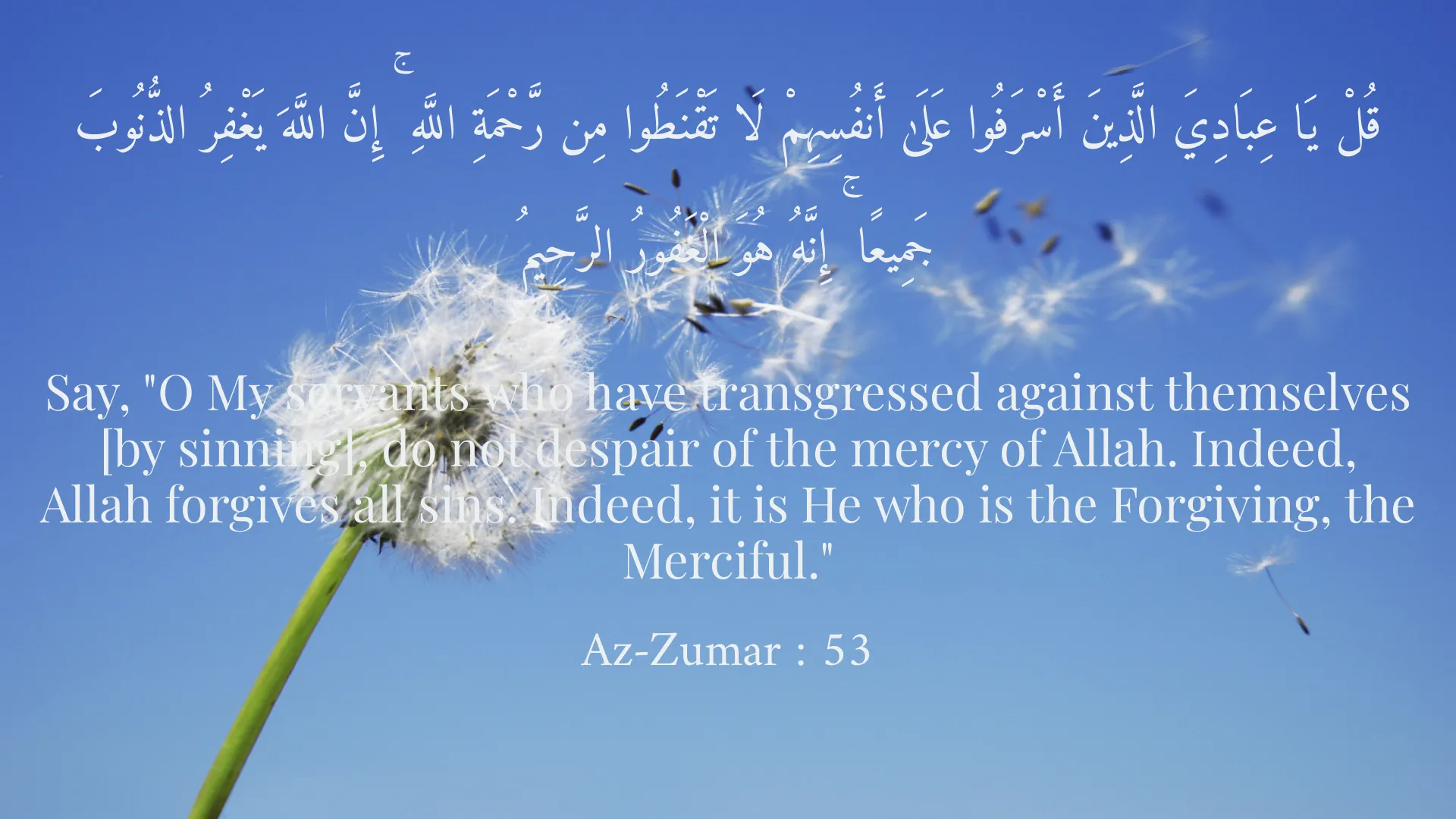
قُلْ يَا عِبَادِيَ الَّذِينَ أَسْرَفُوا عَلَىٰ أَنفُسِهِمْ لَا تَقْنَطُوا مِن رَّحْمَةِ اللَّهِ ۚ إِنَّ اللَّهَ يَغْفِرُ الذُّنُوبَ جَمِيعًا ۚ إِنَّهُ هُوَ الْغَفُورُ الرَّحِيمُ
Say, "O My servants who have transgressed against themselves [by sinning], do not despair of the mercy of Allah. Indeed, Allah forgives all sins. Indeed, it is He who is the Forgiving, the Merciful."
Az-Zumar : 53
وَمَن يَعْمَلْ سُوءًا أَوْ يَظْلِمْ نَفْسَهُ ثُمَّ يَسْتَغْفِرِ اللَّهَ يَجِدِ اللَّهَ غَفُورًا رَّحِيمًا
And whoever does evil or wrongs himself then seeks forgiveness of Allah will find Allah Forgiving and Merciful.
An-Nisa : 110
وَالَّذِينَ إِذَا فَعَلُوا فَاحِشَةً أَوْ ظَلَمُوا أَنفُسَهُمْ ذَكَرُوا اللَّهَ فَاسْتَغْفَرُوا لِذُنُوبِهِمْ وَمَن يَغْفِرُ الذُّنُوبَ إِلَّا اللَّهُ وَلَمْ يُصِرُّوا عَلَىٰ مَا فَعَلُوا وَهُمْ يَعْلَمُونَ
And those who, when they commit an immorality or wrong themselves, remember Allah and ask forgiveness for their sins — and who can forgive sins except Allah? — and do not persistently repeat what they have done while they know.
Al-Imran : 135
Short Story
One day, a man with a heavy heart and a troubled soul approached a wise Shaikh and asked, "O Shaikh, I have committed many sins, and the burden of these errors weighs heavily upon me. How can I forgive myself and find relief from this distress?" The Shaikh smiled and said, "My son, know that the spring of divine mercy never dries, and the door of repentance is always open. Just as a gardener revives a withered flower by watering it, so too does God cleanse your heart from the rust of sin with sincere repentance." The Shaikh continued, "There was once a king who had a loyal servant. One day, this servant made a grave mistake and became deeply regretful, blaming himself day and night for fear of punishment. When the king learned of his remorse, he summoned him and, with a kind gaze, said, 'O my servant, you erred against me and you blame yourself, but because of your sincere remorse and repentance, I have forgiven you. Now, rise and continue your work with loyalty and diligence.'" The Shaikh concluded, "O man, if you too seek forgiveness from your Creator and trust in His mercy, He will forgive you. And this divine forgiveness will pave the way for your release from self-reproach and the beginning of a new life. True peace lies not in your own internal power to forgive yourself, but in connecting with the boundless divine mercy." The man, upon hearing these words, returned home lighter than ever, his heart filled with hope and tranquility.