Quranic Answer
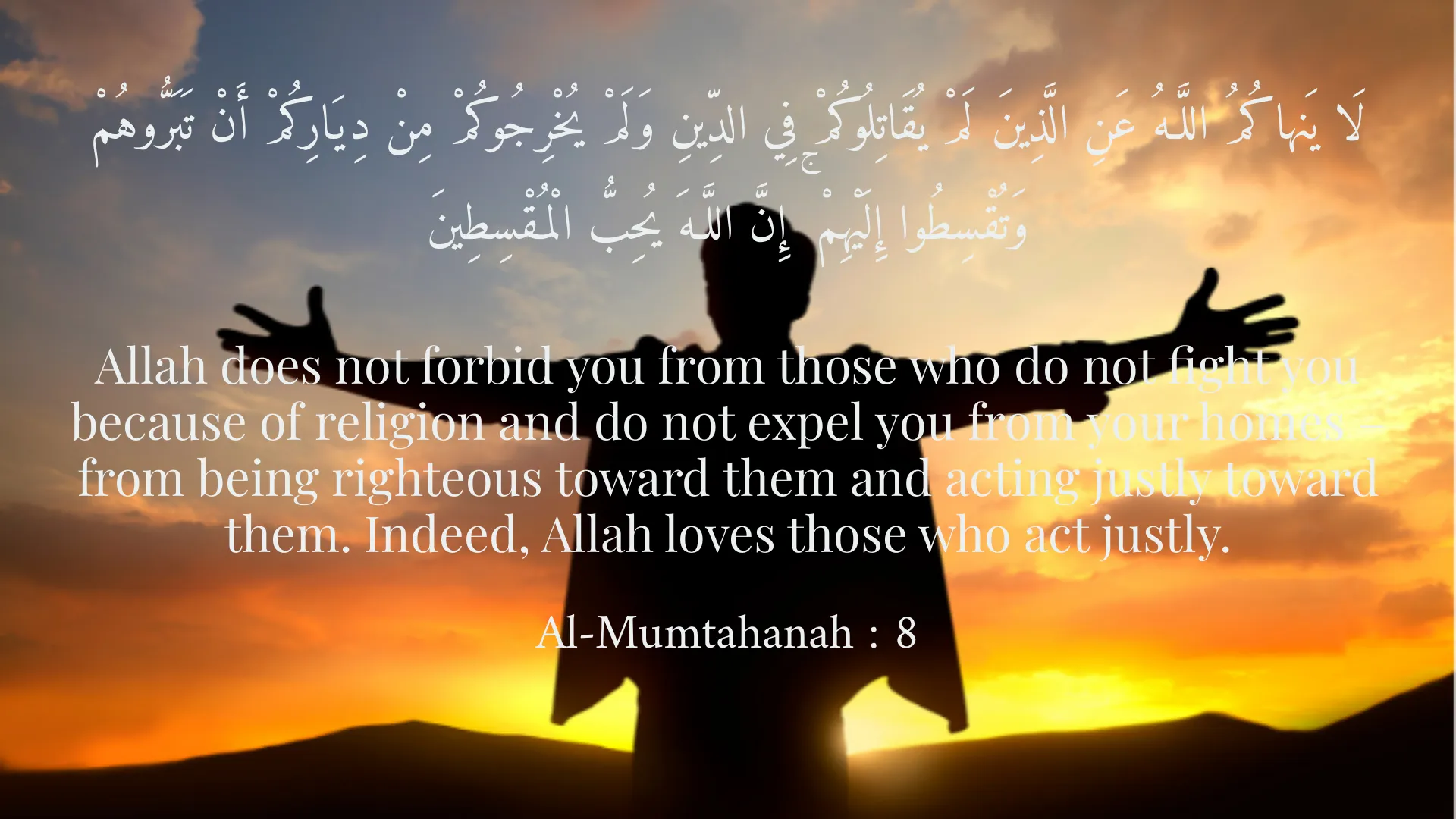
In the Holy Quran, serving creation is emphasized as a valuable form of worship, marking an essential aspect of the Islamic faith. This emphasis on service is rooted in numerous verses meant to guide the followers of Islam on how they should relate to one another and to the wider community. The Quran acts as a moral compendium, providing not only spiritual teachings but also practical guidance for everyday conduct, focusing extensively on the importance of kindness, compassion, and social responsibility. One of the most telling verses concerning this is found in Surah Al-Mumtahanah, verse 8, which states: "Allah does not forbid you from those who do not fight you because of religion and do not expel you from your homes – from being righteous toward them and acting justly toward them. Indeed, Allah loves those who act justly." This assertion highlights the ethical principles of kindness and fairness, extending beyond the Muslim community to all of creation. The verse affirms that righteousness is a necessary attribute, serving as a foundation for relations among individuals irrespective of their background. Such an approach to interpersonal interactions fosters an environment of respect and understanding, promoting peaceful coexistence. The concept of service also transcends mere ethical obligation; it intertwines with the very essence of worship in Islam. The Quran articulates that acts of kindness and service to others constitute a spiritual service to Allah Himself. By engaging in good deeds and acting justly, individuals enact their devotion not only through rituals but also through their everyday actions and interactions with others. In addition to this, Surah At-Tawbah, verse 60 provides specific guidance regarding Zakat, one of the Five Pillars of Islam, which emphasizes serving those in need. The verse states: "Zakat expenditures are only for the poor and for the needy and for those employed to collect [the funds] and for bringing hearts together and for freeing captives and for those in debt and for the cause of Allah and for the stranded traveler." This delineation underscores the importance of supporting the less fortunate and emphasizes that the act of giving Zakat is, above all, about serving the creation of Allah. This directive is a reminder that wealth has a communal aspect; it should be shared and utilized in ways that promote support and upliftment. Moreover, this verse also declares that support for the stranded traveler and those burdened by debt is paramount. It acknowledges the myriad of challenges individuals may face, urging followers to respond with compassion and assistance. Such frameworks provided by the Quran reinforce that serving others is not merely an act of charity but a profound form of worship that can usher in divine satisfaction and blessing. By establishing social support systems, such as giving Zakat, individuals not only fulfill an obligation but also contribute to a caring community. These teachings lead to the cultivation of empathy and compassion, reminding individuals that everyone has inherent value and needs which must be respected and addressed. Each act of kindness, therefore, should be performed with the understanding that it is a service to God, enhancing one's piety and placing one on a path of righteousness. The teachings of the Prophet Muhammad (peace be upon him) reinforce this ideology. His hadith states: "The best among people are those who are most beneficial to others." This profound statement encapsulates the very essence of Islam, indicating that genuine faith is reflected not in the quantity of prayers performed or rituals observed but in the quality of one's interactions and contributions to the well-being of others. By caring for those in need and attending to the essentials of humanity, individuals enhance their spiritual standing and fulfill the core tenets of Islam. Furthermore, the emphasis on service to others strengthens community bonds and fosters a sense of belonging and mutual support. Islam views the world as a single entity, where every person is interconnected through the shared experiences of life. Thus, serving others enhances social solidarity and nurtures relationships built on trust and mutual help. It creates a resilient social framework within Muslim communities and society at large. There is also an essential aspect of Taqwa (God-consciousness) linked with serving creation. Engaging in acts of kindness, charity, and compassion is a manifestation of one’s awareness of God and His commands. The more one acts in service to creation, the more they align themselves with the divine attributes of mercy and compassion that Allah exemplifies. This alignment is crucial in paving one's way toward divine closeness. In conclusion, the Quran and the teachings of the Prophet Muhammad (peace be upon him) collectively guide Muslims to understand that serving creation is a vital form of worship. It is a manifestation of one’s faith and a means to express gratitude towards Allah for the blessings one has received. Engaging in acts of goodness, charity, and justice is not an isolated duty, but a pathway toward a meaningful relationship with the Creator. For Muslims, recognizing the inherent dignity of all individuals and actively working to alleviate their distress fulfills a dual role of duty: serving fellow humans and serving God. Thus, the act of serving creation becomes a powerful form of worship that not only enjoins the believer to live a life of service but also places them on a path that leads closer to Allah's pleasure and mercy.
Related Verses
لَا يَنهاكُمُ اللَّـهُ عَنِ الَّذِينَ لَمْ يُقَاتِلُوكُمْ فِي الدِّينِ وَلَمْ يُخْرِجُوكُمْ مِنْ دِيَارِكُمْ أَنْ تَبَرُّوهُمْ وَتُقْسِطُوا إِلَيْهِمْ ۚ إِنَّ اللَّـهَ يُحِبُّ الْمُقْسِطِينَ
Allah does not forbid you from those who do not fight you because of religion and do not expel you from your homes – from being righteous toward them and acting justly toward them. Indeed, Allah loves those who act justly.
Al-Mumtahanah : 8
إِنَّمَا الصَّدَقاتُ لِلْفُقَرَاءِ وَالْمَسَاكِينِ وَالْعَامِلِينَ عَلَيْهَا وَالْمُؤَلَّفَةِ قُلُوبُهُمْ وَفِي الرِّقَابِ وَالْغَارِمِينَ وَفِي سَبِيلِ اللَّـهِ وَابْنِ السَّبِيلِ ۚ فَرِيضَةً مِّنَ اللَّـهِ ۗ وَاللَّـهُ عَلِيمٌ حَكِيمٌ
Zakat expenditures are only for the poor and for the needy and for those employed to collect [the funds] and for bringing hearts together and for freeing captives and for those in debt and for the cause of Allah and for the stranded traveler. It is a duty from Allah; and Allah is Knowing and Wise.
At-Tawbah : 60
Short Story
One day, a man was walking through the streets when he noticed a child desperately trying to find food by running to different families. The man immediately stopped and gave the child a bowl of food he had with him. Rather than focusing on his own needs, he thought of God's love. Days later, the man dreamt and saw that for this good deed, he was rewarded with a bountiful paradise filled with divine blessings and mercy. This story illustrates that serving creation can indeed count as an act of worship and draws one closer to Allah.