Quranic Answer
"Is silence always a sign of deep understanding?" is a question that delves into the complex dimensions of human comprehension and its various modes of expression. In the Holy Quran, there is no direct or definitive "yes" or "no" answer to whether silence "always" signifies deep understanding. However, by drawing upon Quranic teachings regarding the importance of contemplation, reflection, listening, speaking, and wisdom, one can arrive at a more comprehensive understanding of this matter and conclude that silence, by itself and in all circumstances, cannot be the sole criterion for measuring the depth of understanding. Rather, silence becomes valuable and indicative of depth when it is accompanied by contemplation, insight, and wisdom. The Quran emphasizes the profound importance of looking deeply into the divine signs (Ayat Allah), whether they are in the horizons (the universe) or within the souls (human beings), or in the words of revelation (the Holy Book). This contemplation and reflection, which often occur in a state of inner silence and deep thought, lead to deeper understandings. For instance, numerous verses in the Quran invite humans to ponder over creation. In Surah Al-Imran, verses 190-191, it states: "Indeed, in the creation of the heavens and the earth and the alternation of the night and the day are signs for those of understanding. Who remember Allah while standing or sitting or [lying] on their sides and reflect upon the creation of the heavens and the earth, [saying], 'Our Lord, You did not create this in vain; exalted are You [above such a thing]; then protect us from the punishment of the Fire.'" This "reflection" (tafakkur) on creation often takes place in an atmosphere of inner silence and profound concentration, leading to the discovery of truths and the comprehension of hidden meanings. This type of silence is the silence of contemplation, which opens a gateway to deeper understanding and insight. In this state, silence is not merely an absence of speech, but an active state of seeking knowledge and connecting with truth. Furthermore, the Quran emphasizes the importance of listening and paying close attention. In Surah Al-A'raf (verse 204), it states: "And when the Qur'an is recited, then listen to it and pay attention that you may receive mercy." The word "ansitū" (أَنصِتُوا) in this verse is highly significant. "Insat" (انصات) means silence accompanied by complete attention, active listening, and opening the heart to receive the message. This silence combined with listening is not just about refraining from speaking, but about having an open mind and heart to receive the deepest messages and be profoundly influenced by divine words, which in itself paves the way for deeper understanding, guidance, and attaining divine mercy. Here, silence is a prerequisite for profound comprehension and emotional impact; a silence born of respect, humility before the truth, and readiness to receive the light of guidance. Such silence allows a person to listen carefully to the words without prejudice and to grasp their deeper meanings. This type of silence can certainly be a sign of deep understanding or at least a facilitator of it. However, just as the Quran emphasizes contemplative silence and listening, it also strongly stresses the importance of speaking, especially "good speech" (qawlan ma'rufa), "truthful speech" (qawlan sadeeda), "soft and gentle speech" (qawlan layyinan), and "wise speech" (hikmah). Wisdom (the application of knowledge and insight in action and speech) is a divine gift that, when bestowed upon someone, grants them immense good (Surah Al-Baqarah: verse 269: "He gives wisdom to whom He wills, and whoever has been given wisdom has certainly been given much good. And none will remember except those of understanding."). Wisdom often manifests through speech and expression. Divine prophets were also sent to guide people by speaking and conveying the divine message. In these contexts, silence is not only not a sign of deep understanding, but it can hinder guidance and the clarification of truths. In some cases, such as enjoining good and forbidding evil (Al-Imran: 104), speaking out and expressing the truth is essential, and silence might be interpreted as indifference, negligence of duty, or weakness of faith. The Quran urges believers to uphold justice and speak the truth, even if it is against themselves (An-Nisa: 135). This itself necessitates courage in speaking and not remaining silent in the face of falsehood. Therefore, silence in itself, without considering its context and intention, cannot "always" be an absolute sign of deep understanding. Silence can stem from various factors: it might result from ignorance and an inability to express oneself, or from fear and lack of courage to voice the truth, or even from indifference and lack of interest in the subject. In these situations, silence is not only not a sign of deep understanding but can be an impediment to it. Deep and meaningful silence is that which arises from profound thought and contemplation, leading the individual to insight and wisdom; a silence that originates not from ignorance, but from knowledge that understands when and how to speak and when to be silent. The Holy Quran teaches us that we are accountable for both our speech and our silence. Humans should weigh their words and avoid idle or vain talk (Surah Al-Mu'minun: verse 3: "And they who turn away from ill speech"). This avoidance of idle talk, or "laghw," is itself a type of selective and conscious silence that helps in focusing on more important matters and can lead to a deeper understanding of life's purpose and the divine path. Consequently, silence born of contemplation, silence of active listening, and silence of abstaining from futility can be signs of the path to deep understanding. However, silence born of heedlessness, ignorance, or inaction can never carry such meaning. In reality, deep understanding is found neither in absolute silence nor in uncontrolled speech; rather, it lies in the wise balance between the two, and in the optimal use of each in its proper place. Wisdom is precisely knowing where to place everything; whether speaking or being silent. Silence only indicates deep understanding when it originates from profound thought and its purpose is to receive or process knowledge. This balance between speech and silence signifies intellectual and spiritual maturity, which the Quran constantly invites humanity to achieve. Silence can be a powerful tool for attaining deep understanding, but only if it is purposeful and conscious, and accompanied by the intention of gaining knowledge and insight.
Related Verses
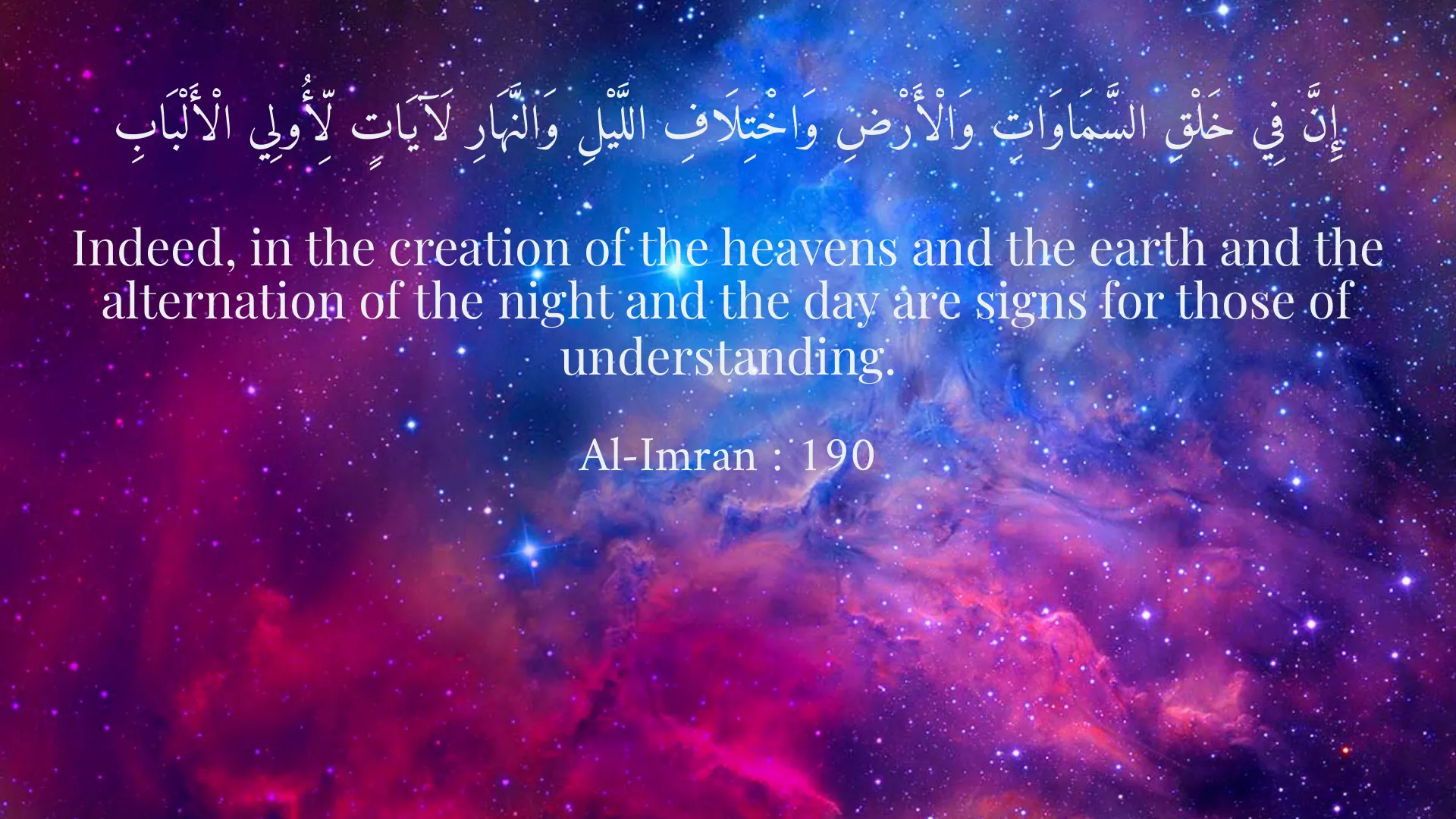
إِنَّ فِي خَلْقِ السَّمَاوَاتِ وَالْأَرْضِ وَاخْتِلَافِ اللَّيْلِ وَالنَّهَارِ لَآيَاتٍ لِّأُولِي الْأَلْبَابِ
Indeed, in the creation of the heavens and the earth and the alternation of the night and the day are signs for those of understanding.
Al-Imran : 190
وَإِذَا قُرِئَ الْقُرْآنُ فَاسْتَمِعُوا لَهُ وَأَنصِتُوا لَعَلَّكُمْ تُرْحَمُونَ
And when the Qur'an is recited, then listen to it and pay attention that you may receive mercy.
Al-A'raf : 204
يُؤْتِي الْحِكْمَةَ مَن يَشَاءُ ۚ وَمَن يُؤْتَ الْحِكْمَةَ فَقَدْ أُوتِيَ خَيْرًا كَثِيرًا ۗ وَمَا يَذَّكَّرُ إِلَّا أُولُو الْأَلْبَابِ
He gives wisdom to whom He wills, and whoever has been given wisdom has certainly been given much good. And none will remember except those of understanding.
Al-Baqarah : 269
Short Story
It is recounted in Saadi's Bustan that a wise and experienced man always sat with dignity and calm in gatherings and spoke little. Many in the assembly thought he either had nothing to say or lacked deep understanding. One day, a young man asked him: "O wise one, you are not devoid of knowledge and wisdom, so why do you speak so little? Is your silence a sign of disinterest?" The wise man replied with a gentle smile: "Young man, speaking is very easy, but speaking well is very difficult. I listen to learn, and I remain silent to ponder. I only utter words when I am certain that what I say is better than my silence and contains some good. For silence itself is a treasure trove of thought and contemplation, and if words are worthless, they squander that treasure. My silence is not a sign of ignorance, but rather a sign of abstaining from idle talk and striving for deeper understanding." This remark made the young man ponder, and he realized that the silence of the wise is itself a form of perfection and deep comprehension.