Quranic Answer
In the Holy Quran, silence is often revered as a notable aspect of human expression, particularly in contexts that foster reflection, spirituality, and connection with the divine. The concept of silence in Islam transcends mere absence of sound; it embodies a presence of thoughtfulness and dedication, encouraging believers to engage deeply with their faith and the world around them. This article explores the multifaceted significance of silence in Islam as elucidated in the Quran and Hadith, elucidating its role as an act of worship and a pathway to greater understanding. The Quran frequently emphasizes the importance of reflection and contemplation. One of the verses that highlight this significance is verse 191 of Surah Al-Imran, which states: 'Indeed, in the creation of the heavens and the earth and the alternation of night and day are signs for those of understanding.' This verse serves as a profound reminder that silence can enable individuals to observe and appreciate the signs of Allah present in the universe. When one allows oneself the space to be silent, one opens the door to contemplate the grandeur of creation and discern the wisdom behind it. The act of remaining quiet in such moments is not merely passive; it is a conscious choice to engage with the divine on a deeper level. Moreover, silence plays a critical role in conversations and speech, particularly when discussions might veer into misguidance or inconsequential chatter. In today's world, filled with noise and distractions, the ability to remain silent often emerges as a mark of both wisdom and self-discipline. The Hadith literature also sheds light on the virtue of maintaining silence when unnecessary words are on the tip of one's tongue. The Prophet Muhammad (peace be upon him) emphasized this principle when he said, 'If what you want to say is not good, then be silent.' This statement resonates profoundly in guiding individuals toward mindful communication, where silence becomes an essential practice to avoid unproductive discourses and self-regulation in interactions. In addition to safeguarding against useless talk, silence is especially critical during prayers. In these moments, when believers seek guidance from Allah, silence fosters an environment of tranquility and devotion. Silence allows individuals to center themselves, connect with their inner spiritual selves, and sincerely present their supplications. During prayer, the stillness can heighten one's consciousness of Allah’s presence, promoting a deeper sense of worship and submission. Silence, therefore, transforms into a form of act that enhances prayer experiences, making it not just a ritual but a heartfelt communion with the Creator. Furthermore, silence in a spiritual context can lead to significant personal insight and growth. It allows individuals to reflect on their actions, assess their intentions, and recalibrate their paths. Spiritual development often requires moments of solitude and silence, where one can introspect and connect with their conscience. Such theme of reflection resonates throughout Islam, encouraging individuals to regularly evaluate their lives in light of their faith. The act of silent reflection can also pave the way for a more profound understanding of the Quran itself. The Quran is often described as a book to be reflected upon. Silence enables the reader or listener to internalize the verses and consider their meanings in relation to their life experiences. As people engage with the divine text in states of quietness, intricate layers of understanding unfold, leading to greater clarity and awareness of Allah's message. In addition to personal reflection, silence cultivates stronger communal bonds within society. When individuals practice silence, especially in group settings such as discussions or classes about Islamic teachings, it leads to a more profound shared understanding and respect among participants. Silence creates an atmosphere where each member can listen actively, allowing for richer exchanges of knowledge and collective growth as a community. In a postmodern era characterized by noise, rapid social changes, and distractions from the digital age, the principle of silence bears even greater significance. Many contemporary issues require individuals to step back, observe, and reflect rather than react impulsively. Silence serves as a tool that cultivates a sense of mindfulness and patience, virtues that are increasingly vital in navigating life's complexities. The practice of silence can thus be seen as a form of spiritual resistance against the tumult of modern life, encouraging individuals to strive for a balance between action and contemplation, speech and silence. In summary, the notion of silence within Islam, as practiced in accordance with teachings from the Holy Quran and Hadith, is much more than a superficial cessation of sound. It is an intentional act of worship that promotes reflection and understanding, encourages wisdom in communication, and enhances personal and communal spiritual experiences. The myriad ways silence can manifest in a believer's life underscore its essential role not just as a spiritual practice but as a fundamental aspect of living a meaningful life in harmony with Allah's creation. By embracing silence, Muslims can navigate their spiritual journeys more profoundly, fostering a relationship with the divine enriched by contemplation, prayer, and a mindfulness of the ever-present signs of Allah that surround them.
Related Verses
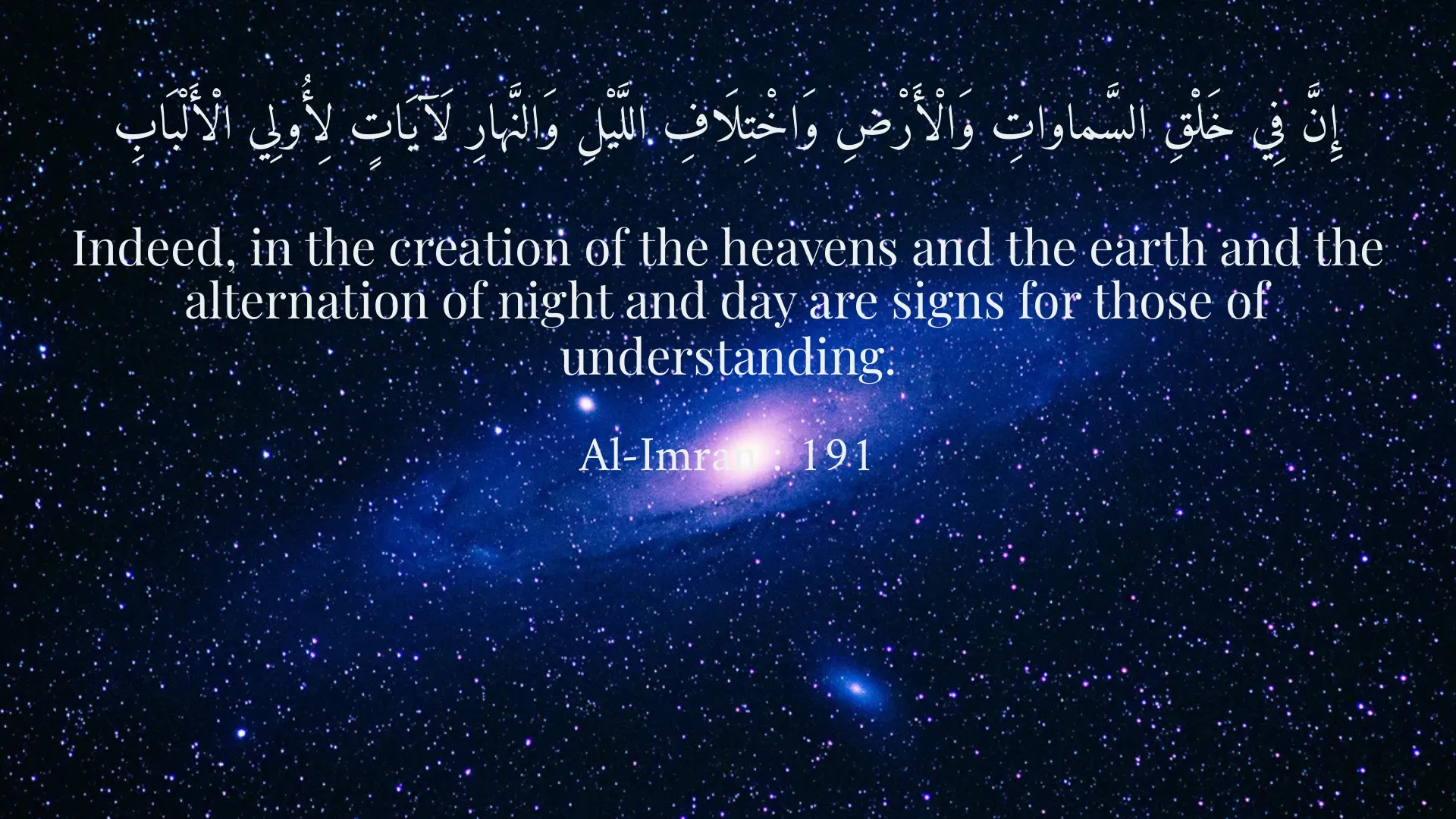
إِنَّ فِي خَلْقِ السَّماواتِ وَالْأَرْضِ وَاخْتِلَافِ اللَّيْلِ وَالنَّهارِ لَآيَاتٍ لِأُولِي الْأَلْبَابِ
Indeed, in the creation of the heavens and the earth and the alternation of night and day are signs for those of understanding.
Al-Imran : 191
Short Story
One day, a man was pondering in the forest when he noticed the beautiful silence of nature. He remembered the verses of the Quran that express the importance of contemplation and silence. He decided to incorporate more silence into his daily life and to reflect more in moments of prayer and connection with God. After some time, he experienced greater peace and a closer relationship with Allah.