Quranic Answer
In the rich and profound teachings of the Holy Quran, silence in the face of falsehood is not a simple, one-dimensional issue. Rather, it encompasses multiple layers of meaning, subject to different interpretations depending on intention, circumstances, and potential consequences. The Quran guides us not only on how individuals should confront falsehood but also addresses societal and ethical dimensions. To understand this matter, we must consider fundamental Quranic principles such as 'Amr bil Ma'ruf wa Nahi anil Munkar' (enjoining good and forbidding evil), 'Hikmah' (wisdom and insight in action), 'courage,' and 'patience.' On one hand, the Quran calls upon believers to stand firm against oppression and falsehood, condemning silence rooted in fear or indifference. This foundational principle is manifested in numerous verses. For instance, in Surah Al-Imran (Verse 104), Allah states: "And let there be [arising] from you a nation inviting to [all that is] good, enjoining what is right and forbidding what is wrong, and those will be the successful." This verse clearly emphasizes the collective responsibility of Muslims to reform society and does not consider absolute silence and indifference a path to success. In Surah An-Nisa (Verse 135), the necessity of upholding justice and bearing witness for Allah is stressed, even if it is against oneself or one's relatives: "O you who have believed, be persistently Qawwameen bil-Qist (maintainers of justice), witnesses for Allah, even if it be against yourselves or parents and relatives." These verses indicate that a true believer is one who possesses courage in the face of falsehood and defends the truth, rather than opting for silence out of fear or worldly expediency. Silence stemming from fear can lead to the proliferation of falsehood and the weakening of truth in society. In some cases, silence in the face of falsehood can be interpreted as tacit consent or even collaboration, which is severely condemned in the Quran. This type of silence signifies weakness of faith, lack of religious zeal, and prioritizing personal interests over divine values. However, on the other hand, the Holy Quran places great emphasis on 'wisdom' and 'insight' in actions and speech. Silence, under specific circumstances, can be a sign not of fear, but of prudence and discernment. In Surah An-Nahl (Verse 125), Allah says: "Invite to the way of your Lord with wisdom and good instruction, and argue with them in a way that is best." This verse demonstrates that the method of inviting to truth and confronting falsehood must be wise. Sometimes, speaking or acting against falsehood may not only be ineffective but could lead to greater harm and discord. In such situations, temporary silence, planning for a better opportunity, or choosing an indirect approach to confront falsehood can be a sign of rationality and wisdom. For example, during the Meccan period, despite the oppression and injustice of the polytheists, the Prophet Muhammad (PBUH) adopted a strategy of patience and resilience that did not lead to indiscriminate warfare and bloodshed, but gradually strengthened the foundations of Islam. This silence or delay in direct confrontation was not due to fear, but was born of divine insight and planning. Furthermore, an individual might lack the ability to directly confront falsehood, or their speaking out might, instead of rectifying the situation, cause greater discord and division. In this case, silence and refraining from fueling unproductive conflicts are signs of rationality and concern for preserving societal unity and peace, not fear. Even in such circumstances, the believer's duty is to at least oppose that falsehood in their heart and await the opportune moment for its change. This type of silence fundamentally differs from silence stemming from indifference or fear. Ultimately, judging whether silence in the face of falsehood is a sign of fear or wisdom depends entirely on the individual's intention, the specific time and place, and the potential consequences. If silence is due to fear of losing personal interests or fear of the power of falsehood, it is certainly reprehensible and a sign of weak faith. However, if silence is born of prudence, strategic planning, avoidance of greater discord, or waiting for a more opportune moment, it can be a sign of wisdom, true courage, and profound insight. The Quran teaches us that we must always tread the path of truth courageously, but this courage must be accompanied by discernment, wisdom, and foresight to achieve the most positive impact and cause the least harm. Therefore, the answer to this question is not an 'either/or' but a complex 'both,' encompassing both possibilities, and its discernment rests upon the individual's insight and faith.
Related Verses
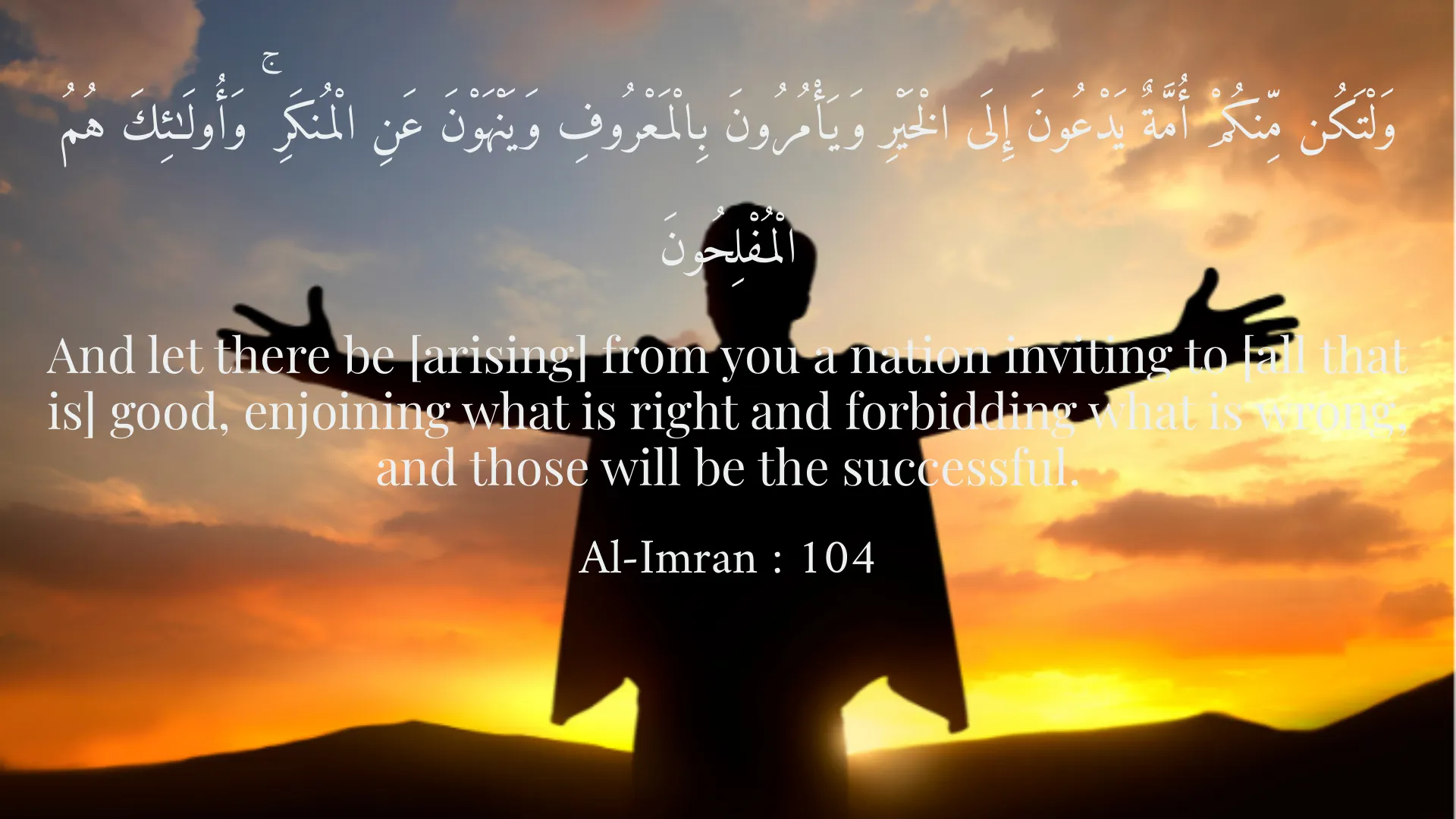
وَلْتَكُن مِّنكُمْ أُمَّةٌ يَدْعُونَ إِلَى الْخَيْرِ وَيَأْمُرُونَ بِالْمَعْرُوفِ وَيَنْهَوْنَ عَنِ الْمُنكَرِ ۚ وَأُولَٰئِكَ هُمُ الْمُفْلِحُونَ
And let there be [arising] from you a nation inviting to [all that is] good, enjoining what is right and forbidding what is wrong, and those will be the successful.
Al-Imran : 104
يَا أَيُّهَا الَّذِينَ آمَنُوا كُونُوا قَوَّامِينَ بِالْقِسْطِ شُهَدَاءَ لِلَّهِ وَلَوْ عَلَىٰ أَنفُسِكُمْ أَوِ الْوَالِدَيْنِ وَالْأَقْرَبِينَ ۚ إِن يَكُنْ غَنِيًّا أَوْ فَقِيرًا فَاللَّهُ أَوْلَىٰ بِهِمَا ۖ فَلَا تَتَّبِعُوا الْهَوَىٰ أَن تَعْدِلُوا ۚ وَإِن تَلْوُوا أَوْ تُعْرِضُوا فَإِنَّ اللَّهَ كَانَ بِمَا تَعْمَلُونَ خَبِيرًا
O you who have believed, be persistently Qawwameen bil-Qist (maintainers of justice), witnesses for Allah, even if it be against yourselves or parents and relatives. Whether one is rich or poor, Allah is more worthy of both. So follow not [personal] inclination, lest you deviate. And if you distort [your testimony] or turn away, then indeed Allah is ever, with what you do, Acquainted.
An-Nisa : 135
ادْعُ إِلَىٰ سَبِيلِ رَبِّكَ بِالْحِكْمَةِ وَالْمَوْعِظَةِ الْحَسَنَةِ ۖ وَجَادِلْهُم بِالَّتِي هِيَ أَحْسَنُ ۚ إِنَّ رَبَّكَ هُوَ أَعْلَمُ بِمَن ضَلَّ عَن سَبِيلِهِ ۖ وَهُوَ أَعْلَمُ بِالْمُهْتَدِينَ
Invite to the way of your Lord with wisdom and good instruction, and argue with them in a way that is best. Indeed, your Lord is most knowing of who has strayed from His way, and He is most knowing of who is [rightly] guided.
An-Nahl : 125
Short Story
It is said that a ruler was sitting in a gathering with his scholars and courtiers when a false and unjust word was uttered by one of those present. Everyone remained silent, and no one dared to respond. But a wise sage, who was sitting in a corner, smiled and remained silent. One of the courtiers whispered to him, 'O wise man, you who possess eloquent speech, why did you remain silent in the face of this falsehood? Are you afraid of the ruler's wrath?' The sage calmly replied, 'Courage is not only in shouting. Sometimes, courage is holding back your tongue from words spoken at an inappropriate time that would only fuel the fire of discord. I knew that at that moment, my words would only increase anger and malice, and that the scent of discord would rise from them. Wisdom was in silence until the opportune moment arrived, and the path of truth could be shown with prudence and without further harm.' When the ruler heard this, he honored the sage even more, saying, 'This man is brave both on the battlefield and wise in the arena of intellect.'