Quranic Answer
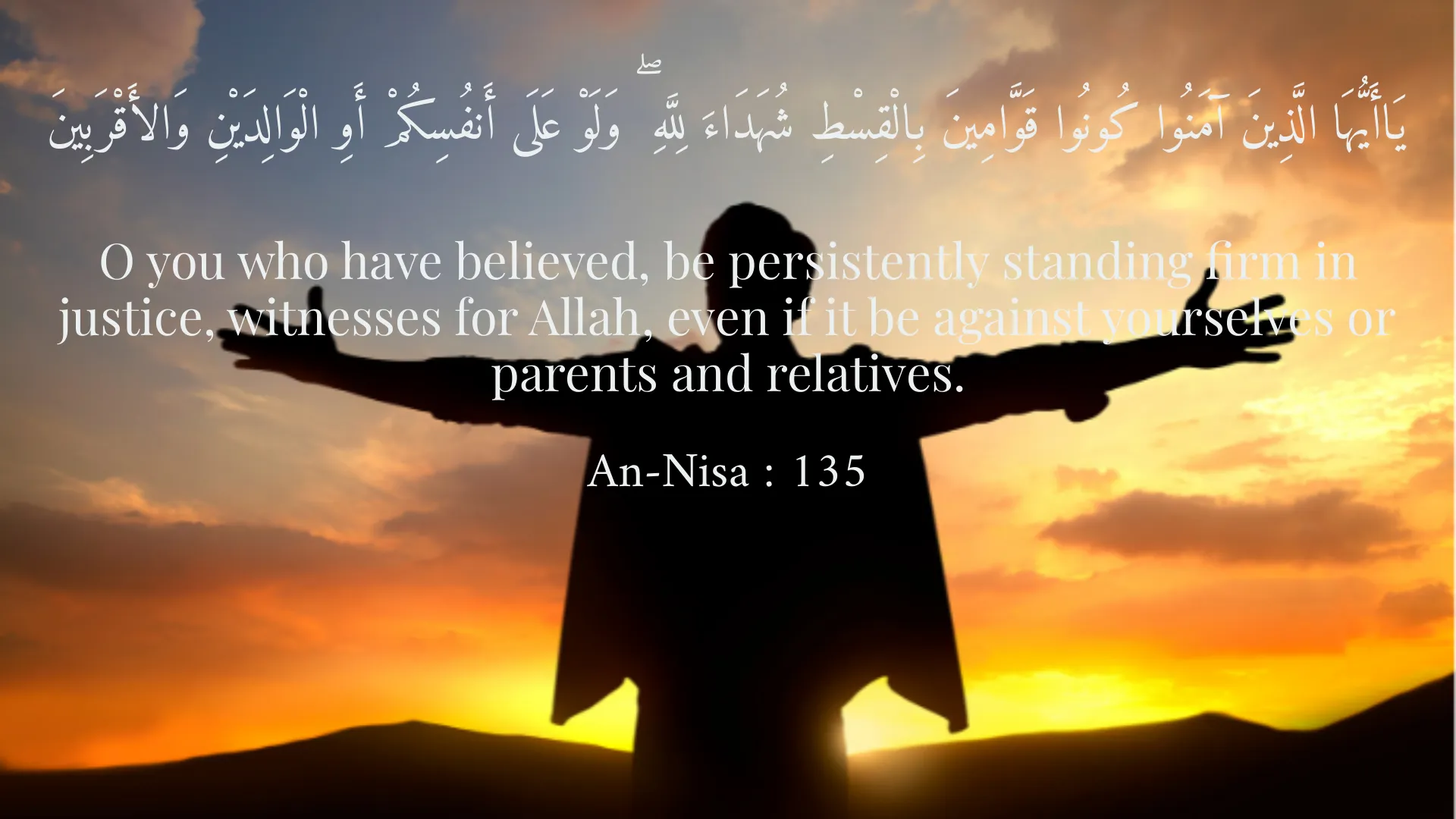
In the Holy Quran, the issues of oppression and justice are addressed with great significance, highlighting the importance for believers to confront injustice head-on. Allah's call for justice and the condemnation of oppression resonate through various verses, serving as moral guidance for individuals across societies. One of the most explicit instructions regarding this matter can be found in Surah An-Nisa, verse 135, where believers are commanded to uphold justice without exception. This directive signifies that no circumstance should lead to the silencing of the truth. Upholding justice is not just a personal obligation; it is a societal necessity that contributes to the moral fabric of the community. The verse states: "O you who have believed, be persistently standing firm in justice, witnesses in the cause of Allah, even if it be against yourselves or parents and relatives. To me, this strongly depicts that in the face of oppression, believers are not allowed to remain indifferent. Silence is not merely a passive choice; it often implies consent to the injustice taking place, thus indirectly supporting it. Therefore, turning a blind eye can be more detrimental than the actual oppression itself. Moreover, in Surah Al-Imran, verse 104, Allah emphasizes the responsibility of believers to enjoin what is good and forbid what is wrong. This verse manifests the active role that each individual must play in promoting righteousness and combating evil. Remaining silent when witnessing wrongdoing not only signifies a lack of courage but also deviates from one’s duty as prescribed by the divine. By not taking action, individuals fail to meet the expectations set upon them by their faith and therefore fall short of their moral responsibilities. Continuing this theme of accountability, in Surah Al-Ma'idah, verse 8, Allah advises His servants to stand firm in honesty and truthfulness, particularly against enemies and oppressors. This verse serves as a poignant reminder that true faith cannot coexist with complacency in injustice. Every believer has a role to play, and it requires strength and conviction to challenge corrupt practices. The essence of this teaching lies in the principle of active participation; believers must consistently vocalize their dissent against wrongdoings and uphold righteousness in their actions. The obligation to speak out against oppression extends beyond mere acknowledgment; it involves a commitment to take actions that challenge injustice effectively. Believers are encouraged to engage in various forms of activism—be it through dialogue, advocacy, or direct action—to ensure that the voices of the oppressed are heard. Furthermore, the moral imperative to act against oppression is intrinsic to the faith. The Quran reinforces this sense of responsibility as not just an obligation, but as an essential aspect of being a righteous believer. One of the critical aspects of resistance against oppression is understanding the consequences of inaction. Silence in oppressive situations acts as a form of enabling the oppressor; by failing to speak out, we risk becoming complicit in the systemic injustices surrounding us. The results of this indifference can be catastrophic, further entrenching oppressive systems that affect countless lives. It is imperative to realize that silence can lead to greater evils and injustices, as it permits perpetrators to continue their harmful acts without any opposition. Furthermore, in instances where individuals are unable to confront oppression directly, there are alternative ways to express solidarity with the oppressed. Supporting grassroots movements, amplifying marginalized voices, and educating oneself and others about the issues at hand are vital steps that can cultivate a culture of resistance. This underscores the collective responsibility of all individuals in confronting injustice and fostering a more equitable society. As believers, the call for justice goes beyond our personal lives; it obligates us to extend our reach into the greater community and advocate for those whose voices have been marginalized. Historical contexts illustrate this ethos in action; countless figures throughout history have exemplified the courage to stand against oppression. From civil rights movements to anti-colonial struggles, the acts of individuals and groups standing up against injustice highlight the impact of collective action. Drawing inspiration from these movements, believers can be encouraged to take similar stances when faced with injustice. It is crucial to harness this energy to mobilize for equitable policies and practices in contemporary society. In conclusion, the Quran provides a clear and unwavering stance against oppression, advocating for justice and moral accountability. Remaining silent in the face of injustice does not merely reflect passive disapproval; it equates to endorsing the very oppression that must be challenged. Allah's directives compel believers to not only recognize their duty to promote goodness and confront evil but to actively engage in the struggle against all forms of oppression. The call for justice is relentless, and it is a fundamental aspect of living a life guided by faith. Therefore, irrespective of situation or outcome, each believer has a role and responsibility to uphold the values of justice and compassion. Turkish philosopher and author Ahmet Altan once stated, "Silence in the face of injustice is complicity," reminding us that our voices, actions, and willingness to resist oppression profoundly affect the world around us. Together, we must strive to create a society where oppression is met with action, and justice prevails.
Related Verses
يَاأَيُّهَا الَّذِينَ آمَنُوا كُونُوا قَوَّامِينَ بِالْقِسْطِ شُهَدَاءَ لِلَّهِ ۖ وَلَوْ عَلَى أَنفُسِكُمْ أَوِ الْوَالِدَيْنِ وَالأَقْرَبِينَ
O you who have believed, be persistently standing firm in justice, witnesses for Allah, even if it be against yourselves or parents and relatives.
An-Nisa : 135
وَلْتَكُن مِّنكُمْ أُمَّةٌ يَدْعُونَ إِلَى الْخَيْرِ وَيَأْمُرُونَ بِالْمَعْرُوفِ وَيَنْهَوْنَ عَنِ الْمُنْكَرِ ۖ وَأُولَـٰئِكَ هُمُ الْمُفْلِحُونَ
And let there be [arising] from you a nation inviting to all that is good and enjoining what is right and forbidding what is wrong. And those will be the successful.
Al-Imran : 104
يَا أَيُّهَا الَّذِينَ آمَنُوا كُونُوا قَوَّامِينَ لِلَّهِ شُهَدَاءَ بِالْقِسْطِ ۚ وَلَا يَجْرِمَنَّكُمْ شَنَآنُ قَوْمٍ أَلَّا تَعْدِلُوا ۚ اِعْدِلُوا هُوَ أَقْرَبُ لِلتَّقْوَىٰ ۗ وَاتَّقُوا اللَّهَ ۚ إِنَّ اللَّهَ خَبِيرٌۭ بِمَا تَعْمَلُونَ
O you who have believed, be persistently standing firm in justice, witnesses for Allah. And do not let the hatred of a people prevent you from being just. Be just; it is nearer to righteousness. And fear Allah; indeed, Allah is Acquainted with what you do.
Al-Ma'idah : 8
Short Story
Once upon a time, there was a just man in his city. He witnessed the oppression of the people and felt compelled to strive for justice. One day, he saw an act of injustice by the king against his people and thought that remaining silent would only allow the oppression to grow. So, he stood up against the king and raised his voice for the rights of the people. This act inspired others to also stand against injustice and demand their rights. This story illustrates that silence in the face of oppression equates to endorsing injustice.