Quranic Answer
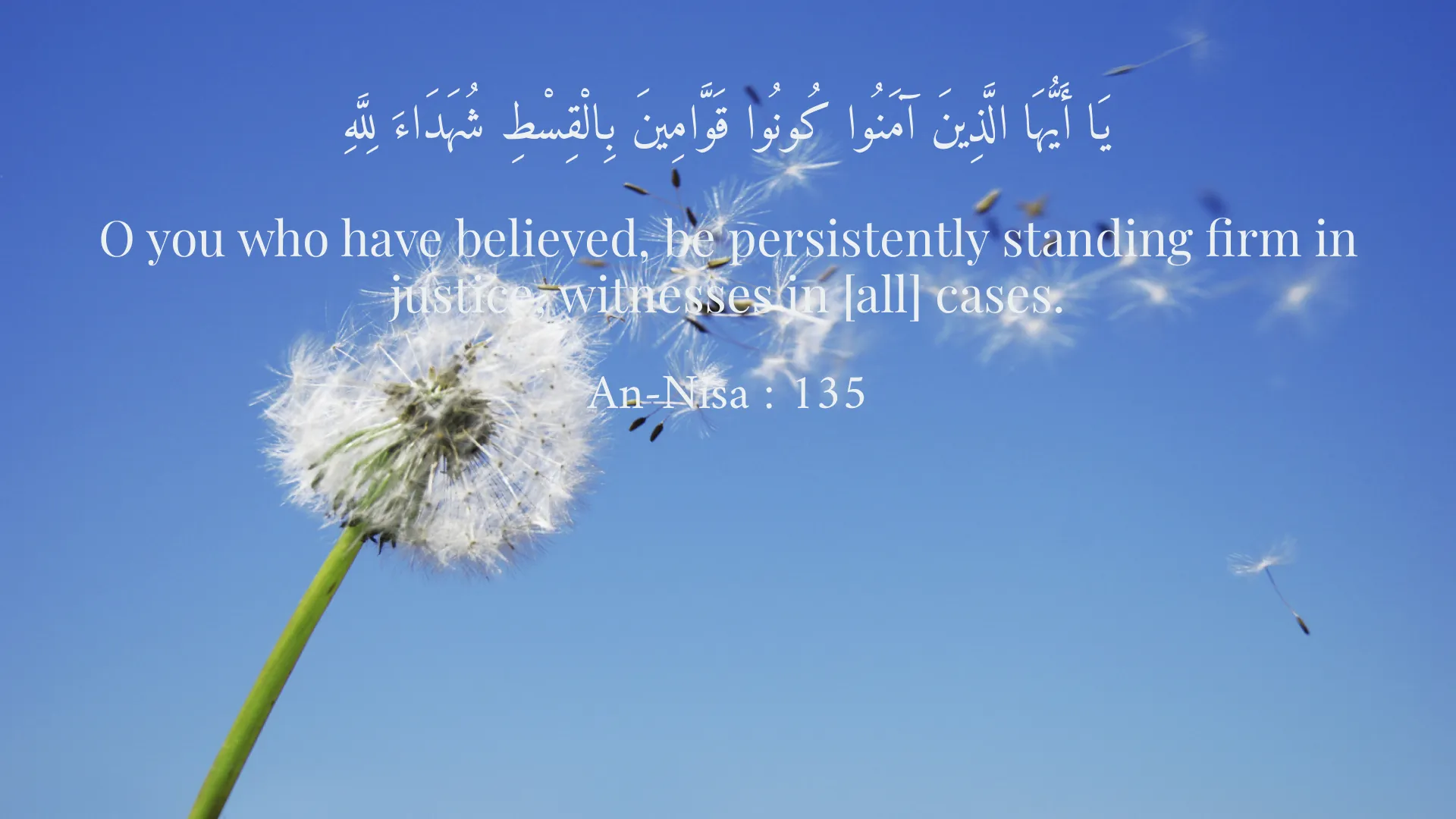
The Holy Quran explicitly discusses the significance of standing against oppression and not remaining silent in the face of injustices. This fundamental principle is woven throughout its verses, emphasizing the crucial role that believers play in promoting justice, truth, and righteousness within society. As individuals navigate through the complexities of life, they are often faced with situations that require them to take a stand, particularly when confronted with acts of oppression and injustice. In this article, we delve deeper into the Quranic injunctions that compel Muslims to actively resist oppression and articulate their stance against wrongdoing. The Quran addresses the gravity of injustice in multiple verses, one of the most prominent being found in Surah An-Nisa, verse 135. In this verse, Allah commands believers: 'O you who have believed, be persistently standing firm in justice, witnesses in [all] cases.' This powerful directive encompasses a broader call to action, urging Muslims to uphold justice consistently, without fear or favor. The expectation is clear: believers must not only be passive observers of justice but also active participants who courageously proclaim the truth, especially in the face of oppression. Remaining silent in the midst of injustice is not only a moral failing; it can contribute to the perpetuation of oppression. The Quran places significant emphasis on the concept that silence equates to complicity. By failing to speak up against injustice, individuals become passive enablers of the very wrongs they claim to oppose. This aligns closely with a core tenet in Islamic thought, which views standing against injustice as a solemn duty bestowed upon every believer. Furthermore, in Surah Al-Imran, verse 104, the Quran elucidates the imperative of communal solidarity among believers: 'And let there be [arising] from you a nation inviting to goodness, enjoining what is right and forbidding what is wrong.' This verse highlights the essential need for Muslims to foster an environment where good is promoted, and evil is challenged. The act of enjoining good and forbidding wrong is not merely an individual responsibility—it is a collective obligation that fosters community cohesion and strengthens the social fabric of society. Every member of the Muslim community is urged to act in concert, exemplifying a persistent commitment to truth and justice. The act of standing against oppression encompasses a range of responses, from vocal protest to social activism. Muslims are called to raise their voices against injustices that affect marginalized communities and to address any form of discrimination, violence, or exploitation that occurs in their societies. In doing so, they not only uphold their religious duties but also embody the principles of compassion, empathy, and justice that lie at the heart of Islamic teachings. Moreover, the Quran repeatedly emphasizes the importance of unity among believers, reinforcing that when they stand together against oppression, their collective voice carries more weight. One notable verse reinforcing this idea is found in Surah At-Tawbah, verse 71: 'And the believing men and believing women are allies of one another. They enjoin what is right and forbid what is wrong.' This verse serves as a reminder that believers are not solitary entities; rather, they are a cohesive unit that supports one another in the quest for justice. This mutual support serves to embolden individuals in their resolutions to act against injustices. When believers come together to challenge wrongdoings, they harness the strength of their faith and form a significant bulwark against oppression. Therefore, silence in the face of oppression is not only incorrect but should be perceived as an Islamic duty that every Muslim should adhere to at all times. The three verses discussed encapsulate a deeply held belief within the Islamic faith: that believers must engage in active resistance against oppression and injustice. The Quran sets a clear standard of behavior for Muslims, emphasizing the necessity of standing firm against wrongdoing, regardless of the potential risks involved. This teaching applies not only to personal obligations but extends to community engagement and social responsibility. It is vital to recognize that the necessity to address oppression does not merely pertain to overt forms of injustice; subtle and systemic issues are equally deserving of scrutiny and resistance. The concept of social justice is a guiding principle in Islam, and its application must be wide-reaching. From advocating for the rights of the oppressed to challenging unjust laws and structures, Muslims are called to embody the principles of justice in all facets of life. In conclusion, the Holy Quran serves as a powerful call to action for all Muslims to oppose oppression and advocate for justice. Through its verses, believers are reminded of their responsibilities to speak out, engage in social advocacy, and support one another in the pursuit of what is right. The teachings of Islam urge individuals to transcend their fears of speaking out and recognize the inherent dignity and worth of all humanity. By doing so, they not only fulfill their religious obligations but also pave the way for a more just, equitable, and compassionate society. Ultimately, the Quran encourages every believer to become a voice for the voiceless and a beacon of hope in the fight against oppression, reaffirming the significance of justice in the heart of the faith.
Related Verses
يَا أَيُّهَا الَّذِينَ آمَنُوا كُونُوا قَوَّامِينَ بِالْقِسْطِ شُهَدَاءَ لِلَّهِ
O you who have believed, be persistently standing firm in justice, witnesses in [all] cases.
An-Nisa : 135
وَلْتَكُن مِّنكُمْ أُمَّةٌ يَدْعُونَ إِلَى الْخَيْرِ وَيَأْمُرُونَ بِالْمَعْرُوفِ وَيَنْهَوْنَ عَنِ الْمُنْكَرِ
And let there be [arising] from you a nation inviting to goodness, enjoining what is right and forbidding what is wrong.
Al-Imran : 104
وَالْمُؤْمِنُونَ وَالْمُؤْمِنَاتُ بَعْضُهُمْ أَوْلِيَاءُ بَعْضٍ يَأْمُرُونَ بِالْمَعْرُوفِ وَيَنْهَوْنَ عَنِ الْمُنْكَرِ
And the believing men and believing women are allies of one another. They enjoin what is right and forbid what is wrong.
At-Tawbah : 71
Short Story
Once upon a time, in a small village, there lived a very pious man named Hassan. He knew well that silence in the face of oppression is never right. One day, he noticed that his neighbor was oppressing a young girl. Without hesitation, he bravely approached and shouted, 'This is wrong and it must stop!' With Hassan's stand, other villagers came to support him, and they prevented the injustice.