Quranic Answer
The question, "Is silence sometimes an act of worship?" invites us to delve into the broader dimensions of ibadah (worship) beyond its ritualistic forms. While silence might not immediately come to mind alongside prayer (salat), fasting (sawm), pilgrimage (hajj), or charity (zakat), a profound reflection on the teachings of the Holy Quran reveals that intentional and conscious silence can indeed be a prelude to inner and intellectual worship, and in certain contexts, even a high form of devotion and closeness to Allah. The Quran does not explicitly state "silence is worship" in a direct phrase, but it introduces concepts and encourages practices where silence plays a pivotal, spiritually enriching role, elevating it to an act imbued with worshipful significance. One of the most significant aspects of silence that can be considered worship is "contemplation and reflection" (Tafakkur and Tadabbur). The Quran repeatedly invites humanity to ponder upon the signs of Allah in the universe and within themselves. For instance, in Surah Al Imran, verse 191, Allah describes "those of understanding" (Ulul-Albab) as: "Those who remember Allah while standing or sitting or [lying] on their sides and contemplate the creation of the heavens and the earth, [saying], 'Our Lord, You have not created this in vain. Exalted are You! Protect us from the punishment of the Fire.'" This deep reflection and contemplation on creation is often facilitated by an atmosphere of inner or outer tranquility and silence. When an individual quiets their mind from the clamor of words and worldly distractions, they find an opportunity to meditate on the grandeur of creation and perceive the signs of divine power and wisdom. This contemplation not only increases one's knowledge of their Lord but also fosters humility and strengthens faith, which are fundamental pillars of worship. Here, silence serves as a powerful tool to achieve deeper spiritual insight and devotion, becoming an active component of seeking divine understanding. It is a deliberate choice to withdraw from external noise to better hear the internal voice of truth and the subtle messages embedded in existence, thereby transforming a simple absence of sound into a profound spiritual journey that nurtures the soul and brings it closer to its Creator. Another dimension is "listening with attention and humility" (Insat). In Surah Al-A'raf, verse 204, Allah commands: "So when the Quran is recited, then listen to it and pay attention that you may receive mercy." The Arabic word "Ansitu" specifically denotes listening attentively and being silent. This verse clearly demonstrates that silence during the recitation of the Quran is a highly virtuous act and a prerequisite for receiving divine mercy. This is not mere passive silence but an active silence that directs all of one's senses and heart towards the divine words. Such attentive listening with presence of heart is one of the noblest forms of worship, as accepting divine guidance necessitates hearing with one's whole being, and this cannot be achieved without silence and concentration. Thus, silence in this context is an embodiment of reverence in the presence of God's word and a pathway to receiving His guidance and mercy. It signifies an act of submission and receptiveness, allowing the sacred words to penetrate the heart and transform the soul. The quietude enables a profound engagement with the message, turning the act of hearing into an immersive spiritual experience that cultivates devotion and opens the gates of divine grace. Thirdly, "refraining from idle and sinful speech" is a crucial aspect where silence can become an act of worship. The Holy Quran, in numerous verses, emphasizes controlling one's tongue and avoiding vain talk, backbiting, slander, and falsehood. For instance, in Surah Al-Mu'minun, verse 3, one of the characteristics of true believers is described as "those who turn away from idle talk." Sometimes, the best way to avoid incorrect or vain speech is through silence. Silence undertaken with insight and piety, for the purpose of preserving oneself from sin or safeguarding the honor of others, is undoubtedly a form of self-struggle (jihad an-nafs) and a great act of worship. While this is a Hadith (Prophetic tradition), it perfectly resonates with the spirit of Quranic teachings regarding avoiding the harms of the tongue: "Whoever believes in Allah and the Last Day, let him speak good or remain silent." In this sense, silence is an act of self-restraint, discipline, and avoiding causing harm with one's speech, all of which are characteristics of the righteous (muttaqun) and lead to closeness to Allah. It demonstrates a deep awareness of the power of words and a commitment to moral integrity, effectively transforming a potential act of sin into an act of self-purification and worship. Furthermore, "inner peace and tranquility" (Sakinah), which the Quran describes as a divine gift (e.g., Surah Al-Fath, verses 4 and 26), is often accompanied by an atmosphere of silence and inner calmness. When an individual retreats into silence and solitude with their Lord, their heart finds peace. This tranquility provides a conducive environment for dhikr (remembrance), dua (supplication), and munajat (intimate conversation with God). This silence facilitates presence of heart and deepens the spiritual experience, which are among the highest levels of servitude. Silence helps individuals detach from mental clutter and external distractions, allowing them to connect with the true source of peace, Allah. It's in this quiet inner space that the soul can truly listen, truly reflect, and truly connect with the divine, making silence a profound facilitator of spiritual communion and growth. In conclusion, while silence itself is not a specific ritualistic worship act like prayer, silence that stems from knowledge, humility, contemplation, avoidance of sin, or for listening to the divine word, not only acquires worshipful value but also assists humanity on the path of servitude and closeness to Allah. This silence is active and results in nothing but spiritual and moral elevation. Silence becomes worship when it serves as a bridge to the depth of devotion and a gateway to a higher understanding of the Creator of existence. This type of silence signifies insight, wisdom, and self-restraint, and can pave the way for numerous spiritual blessings in one's life. Indeed, purposeful silence is a practice for presence of heart, focus on the remembrance of God, and turning away from worldly frivolities. It is in this context that silence truly transforms into the heart's call for divine proximity, embodying a profound spiritual discipline that manifests as a silent, yet powerful, act of devotion.
Related Verses
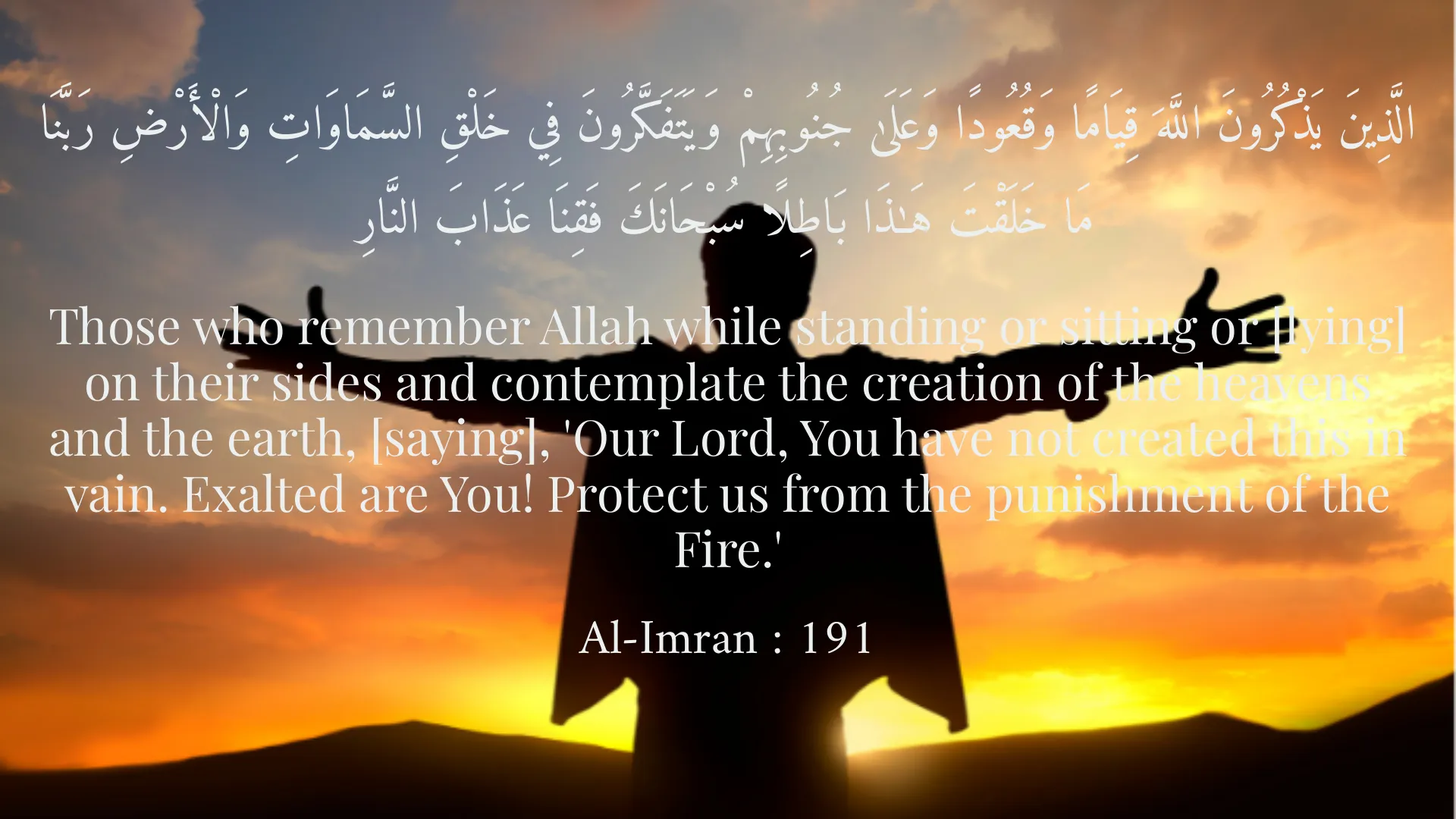
الَّذِينَ يَذْكُرُونَ اللَّهَ قِيَامًا وَقُعُودًا وَعَلَىٰ جُنُوبِهِمْ وَيَتَفَكَّرُونَ فِي خَلْقِ السَّمَاوَاتِ وَالْأَرْضِ رَبَّنَا مَا خَلَقْتَ هَٰذَا بَاطِلًا سُبْحَانَكَ فَقِنَا عَذَابَ النَّارِ
Those who remember Allah while standing or sitting or [lying] on their sides and contemplate the creation of the heavens and the earth, [saying], 'Our Lord, You have not created this in vain. Exalted are You! Protect us from the punishment of the Fire.'
Al-Imran : 191
وَإِذَا قُرِئَ الْقُرْآنُ فَاسْتَمِعُوا لَهُ وَأَنصِتُوا لَعَلَّكُمْ تُرْحَمُونَ
So when the Quran is recited, then listen to it and pay attention that you may receive mercy.
Al-A'raf : 204
وَالَّذِينَ هُمْ عَنِ اللَّغْوِ مُعْرِضُونَ
And those who turn away from idle talk.
Al-Mu'minun : 3
Short Story
In the tales of Saadi's Bustan, it is narrated that a certain king had a vizier who was exceedingly wise and knowledgeable, yet spoke very little. People often wondered at his reticence, saying, "This vizier, with all his learning, why does he rarely break his silence to grace us with his wise words?" One day, the king asked him, "O sagacious vizier, you who are paramount in knowledge and wisdom, why do you speak so little? Is there a hidden wisdom in your silence?" The vizier bowed respectfully and replied, "O benevolent King, I have observed that many words, like a sharp sword, wound hearts, and sometimes, like tainted water, they cloud the clarity of the mind. Good words are like rare pearls, and silence is like a treasury of priceless jewels. Whenever I have not found words better than my silence, I have held my tongue. For in silence, there is opportunity for contemplation and reflection, and safety from error. Many a time have I remained silent and not regretted it, but I have learned many a lesson from words I have spoken that brought regret. My silence is not from lack of knowledge, but from fear of slip-ups and from deep thought and contemplation. One who speaks constantly has less opportunity to listen and ponder, and one who sits in quietude has the ear of their heart more open to hear the call of truth." The king was pleased with these words and understood that the vizier's silence was itself an act of profound wisdom and devotion, for it preserved him from the harms of detrimental speech and prompted him towards deeper contemplation.