Quranic Answer
In the teachings of the Holy Quran, suffering and hardship are presented as an inevitable part of human life and a powerful tool for purification and spiritual growth, though not necessarily as an exclusive 'condition' without which growth is impossible. Rather, suffering acts as a crucible that refines the essence of human existence and brings one closer to perfection, provided that one responds to it appropriately. The Quran describes this worldly life as a place of trials and tests (ibtila'). In Surah Al-Baqarah, verse 155, Allah states: "And We will surely test you with something of fear and hunger and a loss of wealth and lives and fruits, but give good tidings to the patient." This verse clearly indicates that trials and hardships are a natural and planned part of the path of faith. The purpose of these tests is not merely to inflict suffering, but to distinguish the truthful from the liars, to purify believers, and to elevate the ranks of those who emerge successfully from these trials with patience and reliance on God. In Surah Al-Ankabut, verses 2 and 3, we read: "Do people think that they will be left alone because they say, 'We believe,' and will not be tested? * But We have certainly tested those before them, and Allah will surely make evident those who are truthful, and He will surely make evident the liars." These verses emphasize that true faith is tested and reveals its worth only when confronted with challenges and difficulties. Sufferings can make a person aware of their weaknesses, the limitations of worldly existence, and their absolute dependence on the infinite power of the Divine. In moments of hardship, many veils are lifted, and one comprehends the depth of their reliance and need for Allah. This realization itself is a significant step on the path of spiritual growth. Patience (sabr) in the face of calamities is one of the main pillars of spiritual growth in Islam. The Holy Quran has repeatedly emphasized the virtue of patience and considered the reward for the patient to be immense. In Surah Al-Baqarah, verse 153, it states: "O you who have believed, seek help through patience and prayer. Indeed, Allah is with the patient." Patience here does not merely mean passive endurance but active perseverance on the path of truth, resistance against sin, and steadfastness in the face of adversities. Whenever a person faces suffering and accepts it with patience, reliance, and submission to divine decree, their soul is purified, reaching a state of tranquility and contentment rarely achieved under normal circumstances. This process leads to the purification of the heart from worldly attachments, the elimination of pride and self-conceit, and an increase in humility before the Lord. The Prophets of Allah are prime examples of those who, by enduring great suffering and calamities, reached the highest spiritual ranks. Stories such as the patience of Ayub (Job) in the face of illness and loss of wealth and children, the endurance of Yunus (Jonah) in the belly of the fish, and the steadfastness of Prophet Muhammad (PBUH) against the persecution of the Quraish, all demonstrate the truth that hardships can be the ascension for a believer. Therefore, suffering can be a factor in strengthening faith, increasing piety, and solidifying the servant's relationship with their Lord. This does not mean that God deliberately causes humans to suffer for growth; rather, sufferings are part of the cosmic order and divine laws that have a higher purpose, including awakening humans from heedlessness, returning them to the right path, and providing an opportunity for the soul to ascend. Of course, it is important to note that spiritual growth does not only occur through suffering. Gratitude in prosperity, sincere worship, seeking knowledge, and serving humanity are also important ways to draw closer to Allah and achieve spiritual elevation. However, suffering is a dimension of life that holds the potential for deeper transformation within a person, because in it, one is forced to confront oneself and the reality of existence. In other words, suffering is an opportunity for a deeper look within and without, and a window to understanding divine wisdom behind apparent circumstances. The way one responds to suffering is key to spiritual growth. Does one succumb to despair or transform it into an opportunity for closeness to God and purification of the soul through reliance and patience? The Holy Quran clearly shows the latter path and gives glad tidings to those who show patience in suffering. Therefore, suffering is not a necessary and sufficient condition for spiritual growth, but rather a strong foundation and a catalyst for it. These trials are not for punishment, but for training and perfection. When a person successfully navigates these trials, their faith not only becomes stronger, but they gain a deeper understanding of themselves and their Creator, attaining higher degrees of divine proximity. Ultimately, suffering can be a strict but just teacher that imparts invaluable lessons about life, reliance, and the truth of servitude, guiding one toward spiritual perfection. This experience can enhance empathy, broaden one's perspective, and make one more aware of the fragility of worldly life, all of which are key elements in a profound spiritual journey.
Related Verses
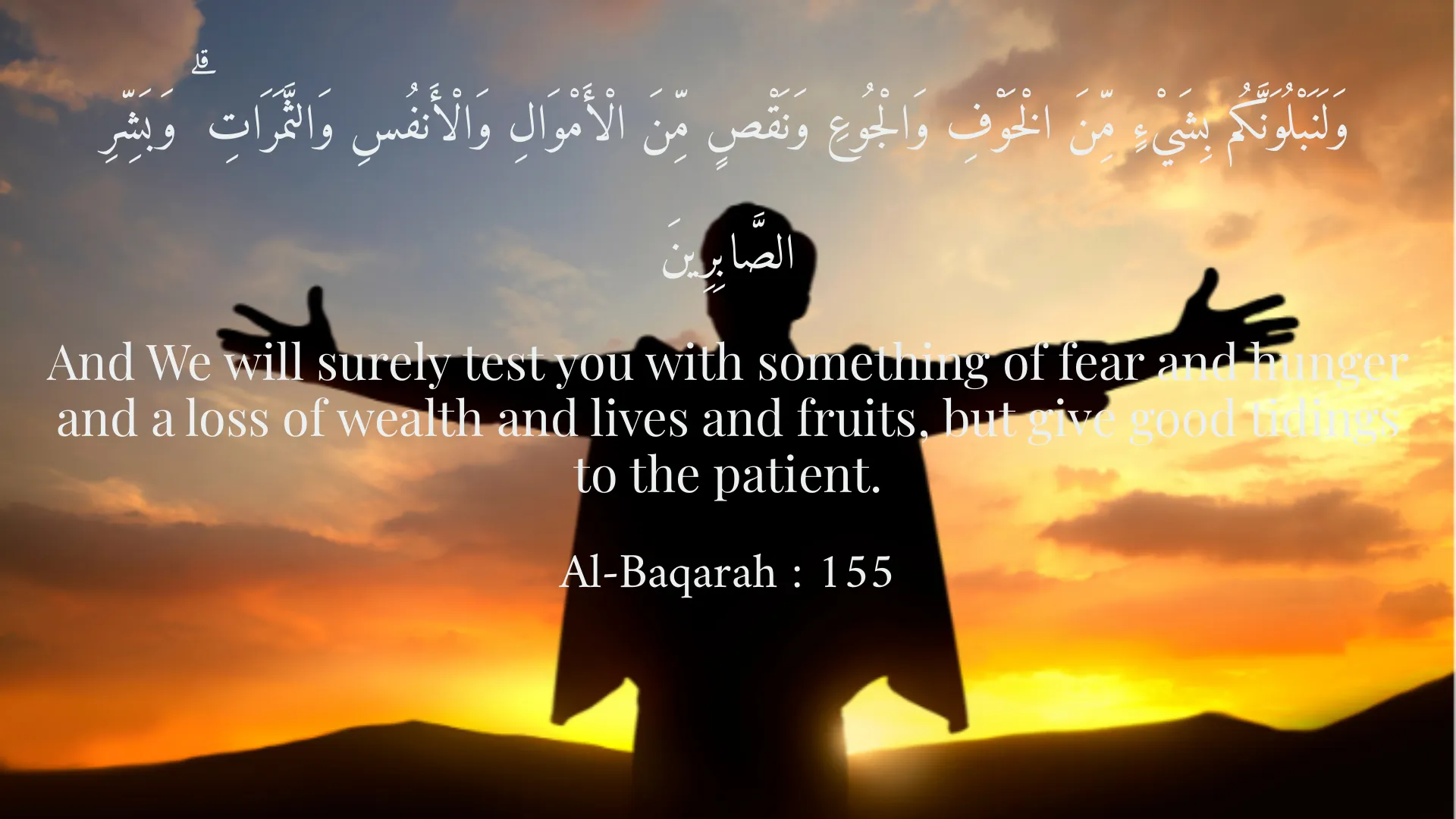
وَلَنَبْلُوَنَّكُم بِشَيْءٍ مِّنَ الْخَوْفِ وَالْجُوعِ وَنَقْصٍ مِّنَ الْأَمْوَالِ وَالْأَنفُسِ وَالثَّمَرَاتِ ۗ وَبَشِّرِ الصَّابِرِينَ
And We will surely test you with something of fear and hunger and a loss of wealth and lives and fruits, but give good tidings to the patient.
Al-Baqarah : 155
أَحَسِبَ النَّاسُ أَن يُتْرَكُوا أَن يَقُولُوا آمَنَّا وَهُمْ لَا يُفْتَنُونَ
Do people think that they will be left alone because they say, 'We believe,' and will not be tested?
Al-Ankabut : 2
وَلَقَدْ فَتَنَّا الَّذِينَ مِن قَبْلِهِمْ ۖ فَلَيَعْلَمَنَّ اللَّهُ الَّذِينَ صَدَقُوا وَلَيَعْلَمَنَّ الْكَاذِبِينَ
But We have certainly tested those before them, and Allah will surely make evident those who are truthful, and He will surely make evident the liars.
Al-Ankabut : 3
يَا أَيُّهَا الَّذِينَ آمَنُوا اسْتَعِينُوا بِالصَّبْرِ وَالصَّلَاةِ ۚ إِنَّ اللَّهَ مَعَ الصَّابِرِينَ
O you who have believed, seek help through patience and prayer. Indeed, Allah is with the patient.
Al-Baqarah : 153
Short Story
It is narrated that there was a king, exceedingly wealthy and mighty. One day, he fell ill, and despite all efforts of physicians, no recovery was made. When he despaired of treatment, he detached his heart from worldly affairs and remembered God. He distributed his vast wealth, handed his crown and throne to his son, and withdrew to a secluded corner, devoting himself to worship. After some time, his illness healed, and his being was filled with profound tranquility. His companions asked him: 'O King, you abandoned all that power and wealth and became a recluse, are you not regretful?' The king replied: 'That illness and suffering that befell me was like a teacher who awakened me from worldly heedlessness and taught me the truth of servitude. It was in that state of weakness and helplessness that I learned there is no power but the Divine power, and no peace except in detachment from worldly possessions and closeness to Him. That pain was a gateway to a world I had been unaware of until then. Now, with apparent poverty, I have found a spiritual treasure that I would not exchange for any kingdom.'