Quranic Answer
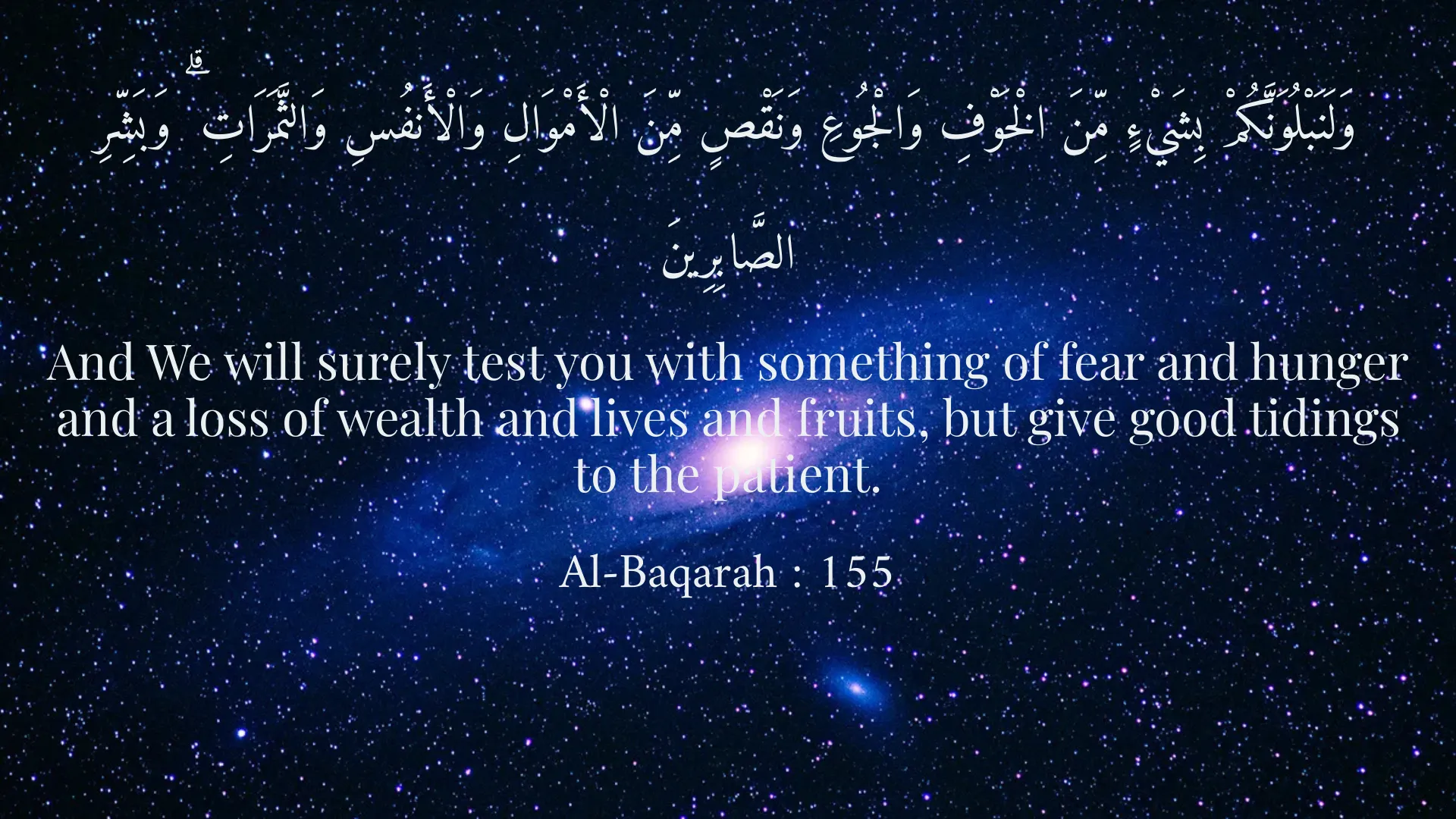
This profound and thought-provoking question delves into one of the fundamental inquiries on the path of faith and understanding God, confronting countless individuals throughout their lives. At first glance, suffering and hardship appear to be unwelcome concepts, and human nature instinctively recoils from them. However, the sublime teachings of the Holy Quran offer a new perspective on the true nature of suffering, revealing that behind the veil of these difficulties lies immense wisdom and layers of hidden divine grace. The Quran does not explicitly state that "suffering is hidden grace," but it clearly articulates that trials and tribulations serve lofty purposes, the outcome of which is good and blessing for the believer, and this good and blessing are nothing but divine grace. The Holy Quran repeatedly emphasizes that worldly life is a realm of trials and tests. Almighty God states in Surah Al-Baqarah, verse 155: "And We will surely test you with something of fear and hunger and a loss of wealth and lives and fruits, but give good tidings to the patient." This verse unequivocally demonstrates that facing difficulties is an inseparable part of human destiny in this world. What is the purpose of these trials? Are they merely punishment? No, rather, they are means for growth, elevation, and purification of the soul. Just as gold is put into fire to remove its impurities, hardships polish the human soul, preparing it to reach higher spiritual ranks. This purification process itself is the greatest hidden grace and mercy, which might be less evident during the peak of suffering. One of the most significant aspects of hidden grace within suffering is the opportunity it provides for "patience" (sabr). Patience, in the Islamic context, is not merely passive endurance but an active resilience coupled with hope in the face of adversity. Patience holds an exceedingly high status in the Quran. God states in Surah Az-Zumar, verse 10: "Indeed, the patient will be given their reward without account." Imagine an immeasurable reward! This divine promise is a clear sign of God's boundless grace, hidden behind every hardship that is endured with patience and faith. The patient are those who, amidst the storms of life, hold firm to the anchor of their faith, knowing that God's hand of support never lets go. This patience illuminates the heart and empowers the soul. Furthermore, trials can serve as a profound bridge to a deeper connection between the servant and the Creator. In times of ease, humans sometimes become heedless of God or pray less. However, when difficulties besiege them from all sides, human nature instinctively turns to its ultimate refuge: Almighty God. The cries, prayers, and supplications uttered at the peak of despair from creation are, in reality, the closest states of a servant to their Creator. This return and repentance (inabah) is itself a manifestation of divine grace, where God calls His servant back to Him through suffering and embraces them in His mercy. In Surah Al-Ankabut, verses 2-3, we read: "Do people think that they will be left to say, 'We believe' and they will not be tried? But We have certainly tried those before them, and Allah will surely make evident those who are truthful and will surely make evident the liars." These verses demonstrate that trials are a means of revealing the sincerity of faith, and this discernment and purification are themselves of the utmost grace. Moreover, hardships can unveil many truths. In comfort and prosperity, humans sometimes succumb to arrogance and heedlessness, but it is in difficulties that one truly comes to know oneself better, understands one's weaknesses, and realizes the instability of this world. This deep self-knowledge and awareness of worldly impermanence lead to humility, contentment, and less attachment to material possessions. In essence, suffering acts as a stern teacher, imparting invaluable lessons about life, gratitude, and the true value of happy moments. The hidden grace here lies in the fact that through these bitter experiences, humans attain deeper knowledge and broader insight that cannot be acquired through any ease or comfort. Sometimes, divine grace manifests itself in averting greater calamities through smaller ones. Perhaps the hardship we experience today prevents us from taking a wrong path or saves us from a greater disaster lurking ahead. This perspective requires strong faith in God's absolute wisdom, as stated in Surah At-Taghabun, verse 11: "No disaster strikes except by permission of Allah. And whoever believes in Allah - He will guide his heart. And Allah is Knowing of all things." This verse emphasizes that every affliction, even if seemingly painful, is not outside the sphere of God's wise will and planning. And for one who believes and surrenders to His will, God will guide their heart. This guidance of the heart in the midst of extreme difficulties is itself the epitome of hidden grace. For instance, the lives of divine prophets are replete with suffering and hardship. Prophet Ayyub (Job), upon losing his wealth, children, and health, became the epitome of patience and was ultimately encompassed by boundless divine grace. Prophet Yusuf (Joseph) rose from a well and prison to the pinnacle of power and wisdom. These examples illustrate that suffering can be a ladder to progress and a test for attaining perfection. In conclusion, suffering is not an end in itself but a means to achieve lofty and hidden goals. These hardships are not signs of God's unkindness; rather, they are like tests a teacher gives to a student to propel them to higher stages. The hidden grace in suffering lies in the reward the patient receive, in the purification the soul experiences, in the knowledge gained, in the proximity to God achieved, and in the divine wisdom concealed behind every event. Therefore, although the experience of suffering is difficult, with a Quranic perspective and reliance on God, it can be seen not just as a sign of hidden grace, but as a path to perfection and closeness to God. The crucial element is how one responds to suffering: with impatience and ingratitude, or with patience, reliance, and gratitude. It is this response that transforms suffering into a ladder of felicity.
Related Verses
وَلَنَبْلُوَنَّكُمْ بِشَيْءٍ مِّنَ الْخَوْفِ وَالْجُوعِ وَنَقْصٍ مِّنَ الْأَمْوَالِ وَالْأَنفُسِ وَالثَّمَرَاتِ ۗ وَبَشِّرِ الصَّابِرِينَ
And We will surely test you with something of fear and hunger and a loss of wealth and lives and fruits, but give good tidings to the patient.
Al-Baqarah : 155
أَحَسِبَ النَّاسُ أَن يُتْرَكُوا أَن يَقُولُوا آمَنَّا وَهُمْ لَا يُفْتَنُونَ
Do people think that they will be left to say, 'We believe' and they will not be tried?
Al-Ankabut : 2
وَلَقَدْ فَتَنَّا الَّذِينَ مِن قَبْلِهِمْ ۖ فَلَيَعْلَمَنَّ اللَّهُ الَّذِينَ صَدَقُوا وَلَيَعْلَمَنَّ الْكَاذِبِينَ
But We have certainly tried those before them, and Allah will surely make evident those who are truthful and will surely make evident the liars.
Al-Ankabut : 3
مَا أَصَابَ مِن مُّصِيبَةٍ إِلَّا بِإِذْنِ اللَّهِ ۗ وَمَن يُؤْمِن بِاللَّهِ يَهْدِ قَلْبَهُ ۗ وَاللَّهُ بِكُلِّ شَيْءٍ عَلِيمٌ
No disaster strikes except by permission of Allah. And whoever believes in Allah - He will guide his heart. And Allah is Knowing of all things.
At-Taghabun : 11
Short Story
It is said that one day, a dervish was walking in the desert, complaining bitterly about his poverty and lack of means. Suddenly, his foot struck a stone, and he cried out in pain. At that very moment, he noticed a man crawling on the ground, without legs and wandering aimlessly. When the dervish saw this, he tearfully thanked God and said, 'My Lord, I had legs and did not show gratitude. This small suffering taught me that I possess greater blessings of which I was heedless.' And so, he realized that sometimes a small hardship opens a door to recognizing greater blessings and hidden divine grace.