Quranic Answer
The feeling of loneliness is a profound and universal human experience that every person, regardless of their social or economic status, or even their level of faith, might encounter at various points in their lives. Therefore, it cannot be unequivocally stated that the mere feeling of loneliness contradicts faith. Faith, in its true sense, does not prevent the occurrence of human emotions; rather, it provides a path and tools to manage, give meaning to, and even elevate these feelings. Loneliness does not necessarily mean the absence of others; sometimes, one can feel lonely even amidst a crowd, when they feel misunderstood, lack deep connections, or are distant from a spiritual source of support. Hence, the Quran's perspective on this phenomenon is both realistic and resourceful. The Holy Quran teaches us that Allah Almighty is always present and observant of our conditions, and He is never far from His servants. This fundamental truth is the first and most important antidote to deep loneliness. The noble verse “And We are closer to him than [his] jugular vein” (Surah Qaf, 50:16) clearly states that Allah is closer to humans than their jugular vein. This proximity is not only in terms of divine knowledge and awareness but also in terms of mercy and support. One who truly comprehends this fact will never feel alone or abandoned, even if they are in solitude. This divine presence is a source of peace and assurance that grants a person the strength to face challenges and navigate difficult moments. Loneliness often stems from a lack of connection or support, but faith in God fills this void with an eternal and boundless connection with the Creator of the universe. Whenever a person embraces this Quranic reality, the feeling of loneliness transforms from a sense of deprivation into an opportunity for solitude with the Beloved and contemplation of His grandeur. Furthermore, the Quran places great emphasis on the remembrance of Allah (Dhikr). “Unquestionably, by the remembrance of Allah hearts are assured” (Surah Ar-Ra'd, 13:28) indicates that only through the remembrance of Allah do hearts find peace. When a person feels lonely, their heart might become restless and anxious. Dhikr, supplication (Du'a), recitation of the Quran, and prayer (Salat) are all ways to establish a direct connection with Allah and fill spiritual voids. These acts of worship are not only comforting but also give a person a sense of purpose and connection to an infinite source of power. In moments of solitude and silence, this spiritual connection can be so powerful that the individual does not feel lonely at all; on the contrary, they might experience a profound spiritual richness and divine presence. This continuous remembrance helps a person understand that they are not alone on their life's journey, and Allah is always with them, their Helper and Supporter, in joys and sorrows, in the company of others, and in solitude. The Quran also stresses the importance of patience (Sabr) and reliance on Allah (Tawakkul). Life is full of ups and downs and challenges that can lead a person to feelings of isolation and loneliness. However, reliance on Allah and patience in the face of difficulties give the believer the strength to know that whatever happens is by divine will and wisdom, and ultimately for their good. “And whoever relies upon Allah – then He is sufficient for him” (Surah At-Talaq, 65:3) means that for whoever trusts in Allah, Allah is enough for him. This sense of divine sufficiency and assistance prevents one from drowning in loneliness and despair. Faith in divine decree and reliance on Him gives the individual the peace of mind that even in the deepest loneliness and helplessness, they have a firm and eternal support that will never abandon them. This belief frees a person from merely worldly dependencies and provides them with a spiritual reliance that prevents any destructive loneliness. Moreover, Islam places great emphasis on community and human relationships. Congregational prayers, Hajj, Zakat, and attention to maintaining family ties and showing kindness to neighbors are all indications of Islam's emphasis on establishing healthy relationships and mutual support. While faith strengthens an individual's connection with God, it never means reclusion or isolation. Believers are encouraged to be part of an active and vibrant community, to help one another, and to share in each other's joys and sorrows. These social interactions, especially within the framework of faith, can largely prevent the onset of chronic feelings of loneliness. The Prophet Muhammad (peace be upon him) said: “The believer to the believer is like a solid structure, one part supporting the other.” This social approach helps an individual feel a sense of belonging and connection to a larger group, knowing that within the Islamic Ummah, they are not alone and always have brothers and sisters who can be their helpers in difficult times. In conclusion, the feeling of loneliness in itself does not contradict faith; rather, it is a type of divine test and an opportunity to deepen one's connection with Allah. Instead of denying this feeling, faith offers spiritual and practical strategies to cope with it. Faith teaches us that even in the height of loneliness, Allah is closer than anyone else, and by His remembrance, hearts find peace. This perspective transforms loneliness from a painful state into a meaningful solitude where one can draw closer to oneself and the Creator of the universe. Therefore, a person of faith may sometimes feel lonely, but this feeling does not detract from their faith; rather, it can lead them to greater reliance on Allah and, in doing so, bring deeper meaning to their life and experience a continuous sense of peace and connection.
Related Verses
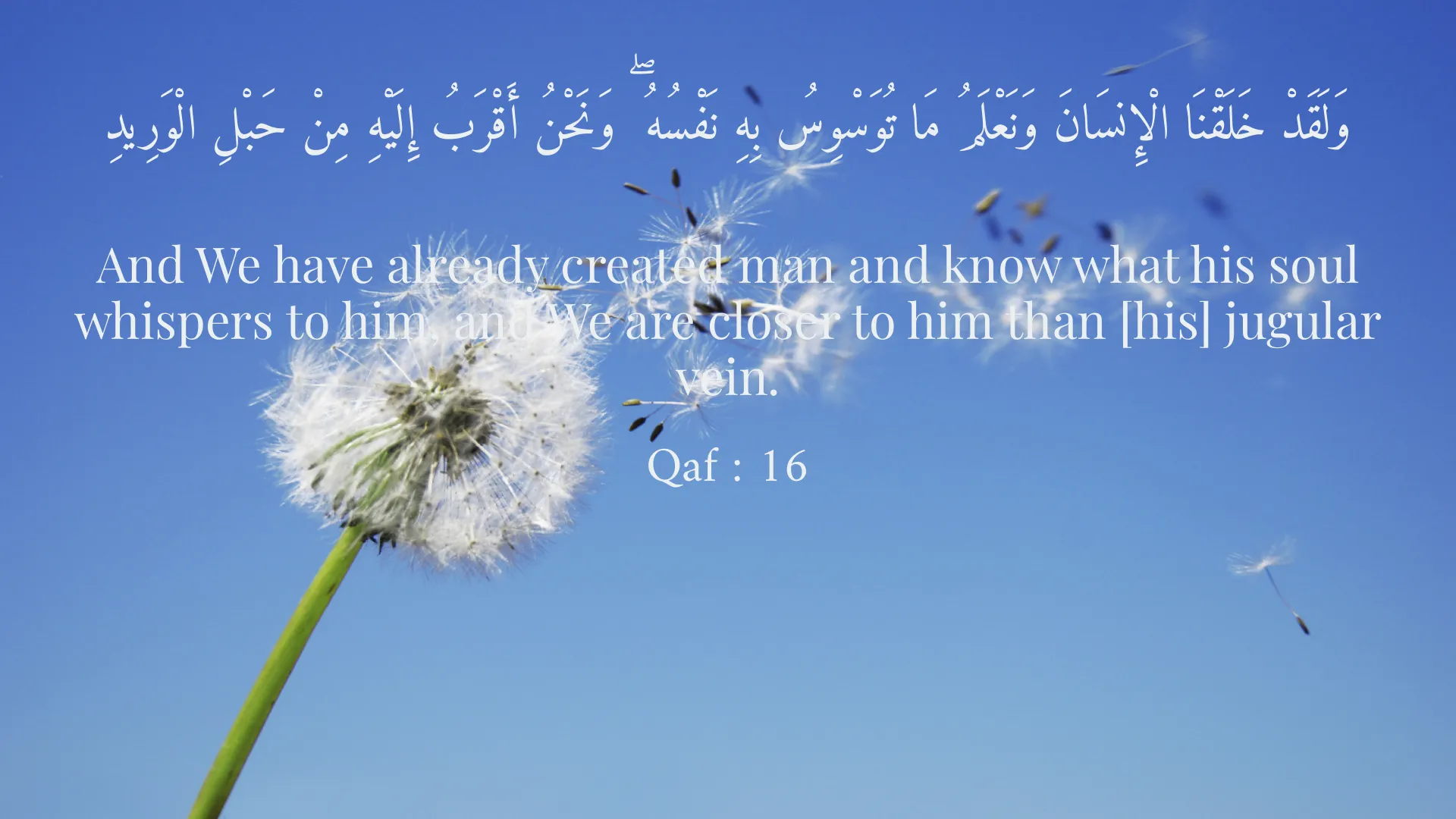
وَلَقَدْ خَلَقْنَا الْإِنسَانَ وَنَعْلَمُ مَا تُوَسْوِسُ بِهِ نَفْسُهُ ۖ وَنَحْنُ أَقْرَبُ إِلَيْهِ مِنْ حَبْلِ الْوَرِيدِ
And We have already created man and know what his soul whispers to him, and We are closer to him than [his] jugular vein.
Qaf : 16
الَّذِينَ آمَنُوا وَتَطْمَئِنُّ قُلُوبُهُم بِذِكْرِ اللَّهِ ۗ أَلَا بِذِكْرِ اللَّهِ تَطْمَئِنُّ الْقُلُوبُ
Those who have believed and whose hearts are assured by the remembrance of Allah. Unquestionably, by the remembrance of Allah hearts are assured.
Ar-Ra'd : 28
إِلَّا تَنصُرُوهُ فَقَدْ نَصَرَهُ اللَّهُ إِذْ أَخْرَجَهُ الَّذِينَ كَفَرُوا ثَانِيَ اثْنَيْنِ إِذْ هُمَا فِي الْغَارِ إِذْ يَقُولُ لِصَاحِبِهِ لَا تَحْزَنْ إِنَّ اللَّهَ مَعَنَا ۖ فَأَنزَلَ اللَّهُ سَكِينَتَهُ عَلَيْهِ وَأَيَّدَهُ بِجُنُودٍ لَّمْ تَرَوْهَا وَجَعَلَ كَلِمَةَ الَّذِينَ كَفَرُوا السُّفْلَىٰ ۗ وَكَلِمَةُ اللَّهِ هِيَ الْعُلْيَا ۗ وَاللَّهُ عَزِيزٌ حَكِيمٌ
If you do not aid him - Allah has already aided him when those who disbelieved expelled him, he being the second of two; when they were in the cave and he said to his companion, "Do not grieve; indeed Allah is with us." Then Allah sent down His tranquillity upon him and supported him with soldiers [angels] you did not see and made the word of those who disbelieved the lowest, while the word of Allah - that is the highest. And Allah is Exalted in Might and Wise.
At-Tawbah : 40
Short Story
It is narrated that a pious and righteous man, in a secluded corner of the world, was engrossed in worship, having cast aside the pains of worldly life. One day, a king passed by that region. The king observed that the man sat alone, and despite his apparent poverty, his face was radiant and serene. The king asked in surprise, "O man, in this solitude and loneliness, how is your heart at peace, and why do you keep away from people?" The pious man replied with a warm smile, "O King, if the heart is connected to its Creator, it never feels lonely. It is the bodies that separate from each other, but souls, in connection with God, are always in a gathering of light and peace. Whenever I feel the need for companionship, I remember my Lord and know that He is closer to me than my jugular vein and will never leave me alone. This is where my solitude becomes filled with His infinite presence, and in this presence, no sorrow of loneliness can enter." The king pondered over these words and understood that intimacy with God is the best companion and cure for any loneliness. For even if you are among thousands but your heart is far from God, you are lonely and wretched; but if your heart is with Him, even in solitude, you are a king.