Quranic Answer
In the Holy Quran, the significance of intention and its impact on deeds is profoundly emphasized. The concept of intention, or 'niyyah,' serves as a foundational principle in Islam, serving as the lens through which actions are evaluated and judged by Allah. This principle is encapsulated elegantly in the prophetic saying, "Actions are judged by intentions" (Bukhari & Muslim). The statement highlights that the value of an action lies not solely in its execution but fundamentally in the intention behind it. This understanding fosters a sense of awareness in Muslims regarding their thoughts and motives that ultimately culminate in their actions. One of the key verses in the Quran that addresses this theme is from Surah Al-Baqarah, verse 271, where Allah states, "If you disclose your charitable expenditures, it is good; but if you conceal them and give them to the poor, it is better for you, and it will remove from you some of your misdeeds." This verse not only reinforces the importance of intention but also illustrates the concept of sincerity in charitable actions. The act of giving charity is emphasized, but the verse additionally underscores that the motivations driving the act are of paramount importance. In essence, Allah acknowledges both the overt action of charity and the concealed intention behind it. The latter becomes a fundamental aspect of individual accountability in the eyes of Allah. The encouragement to conceal charitable acts points to the idea of humility and selflessness, where the intention is to benefit others without seeking recognition or praise. Thus, the intentions behind charitable giving alter the results recorded in one’s deeds book, demonstrating that Allah’s mercy encompasses not just the actions performed, but also the unfulfilled desires to do good. Furthermore, the Quran asserts in Surah Al-Imran, verse 29, "Say, 'Whatever is in your breasts is known to Allah.'" This verse serves as a reminder that intentions are intimately known to Allah, emphasizing that no thought, yearning, or potential good deed escapes His awareness. It reassures believers that their good intentions, even if they do not materialize into actions, are acknowledged by Allah. This knowledge gives comfort to individuals striving for piety and reinforces the need for self-reflection and purity of intention in all endeavors. The significance of good intention in Islam does not merely pertain to acts of charity; rather, it spans across various aspects of life, influencing a person’s relationships, dealings, and overall conduct. Muslims are urged to cultivate a sincere intention behind every deed, whether it is performing daily prayers, fasting during Ramadan, or engaging with others in a kind manner. Each action, when aligned with a pure intention, contributes to the spiritual elevation of an individual and their standing before Allah. Moreover, on the Day of Judgment, every individual will be held accountable not only for their actions but also for the intentions behind those actions. This principle introduces a profound moral responsibility on every Muslim to assess their motivations consistently. Good intentions, therefore, have far-reaching implications on an individual’s spiritual journey, reinforcing the significance of internal purity as a precursor to righteous external actions. The teachings of Islam emphasize that good intentions act as a guiding light, leading individuals on a path toward righteous living. When intentions align with the will of Allah, they tend to bring about positive outcomes and inspire acts of kindness, compassion, and service to others. The inherent message is that while individuals may face challenges in executing their plans, the efforts toward good intentions are valued significantly in the eyes of Allah. The concept of intention also serves as a remedy for feelings of disappointment or inadequacy that can arise when good intentions do not lead to expected outcomes. Individuals may find solace in knowing that even the mere intention to do good is recorded and rewarded by Allah. It cultivates a spirit of resilience and prompts believers to persist in their efforts toward righteousness, regardless of immediate success. In this manner, the emphasis on good intentions aligns with the broader framework of Islam, which promotes self-improvement, compassionate dealings with others, and the overarching pursuit of goodness. In one's daily life, it serves as a call to mindfulness, ensuring that actions are not merely performed out of habit or obligation, but are infused with sincerity and a conscious desire to please Allah. In conclusion, the Quran and the teachings of the Prophet Muhammad (peace be upon him) provide a comprehensive framework for understanding the crucial role of intention in Islam. The significance of 'niyyah' transcends beyond mere words; it is an intrinsic element specified in the evaluation of deeds. Good intentions are linked to charity, relationships, and one's entire conduct as a Muslim. They influence the recording of deeds and affirm the importance of sincere efforts in the pursuit of righteousness. Ultimately, these principles guide Muslims towards living a life that is not only reflective of their beliefs but also rooted in compassion, humility, and service to humanity. As we navigate through daily life, it is imperative for believers to uphold pure intentions, as they lead not only to divine rewards but also to a harmonious existence with oneself and the community at large.
Related Verses
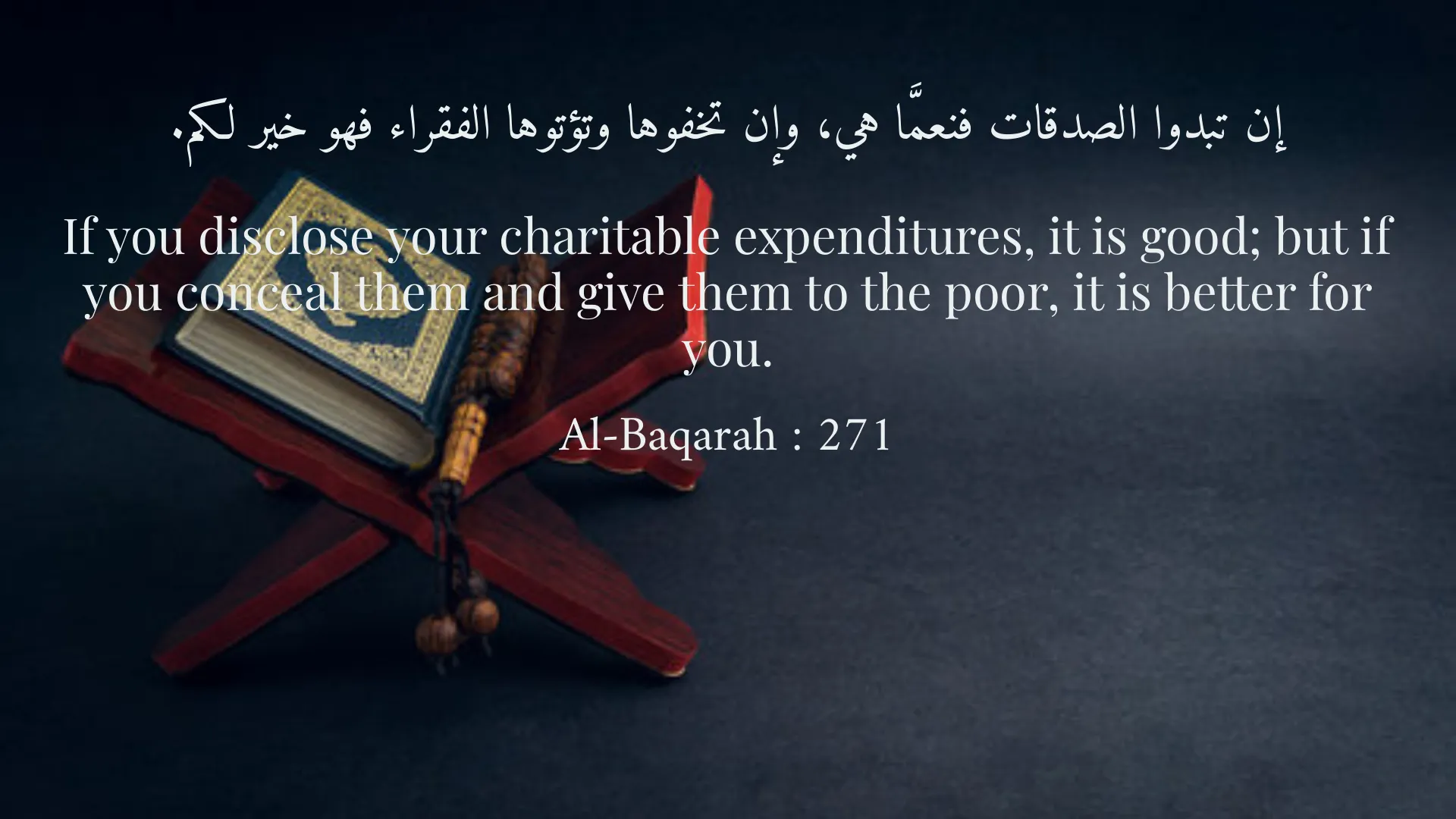
إن تبدوا الصدقات فنعمَّا هي، وإن تخفوها وتؤتوها الفقراء فهو خير لكم.
If you disclose your charitable expenditures, it is good; but if you conceal them and give them to the poor, it is better for you.
Al-Baqarah : 271
قل: ما في قلوبكم يعلمه الله.
Say, 'Whatever is in your breasts is known to Allah.'
Al-Imran : 29
Short Story
One day, a friend of mine told me that he decided to have a good intention to help those in need. He wanted to do everything openly. I reminded him that intentions and acts of kindness, even when done secretly, are recorded in the deeds book. He started acting on this thought, and since then, his life has been filled with blessings.