Quranic Answer
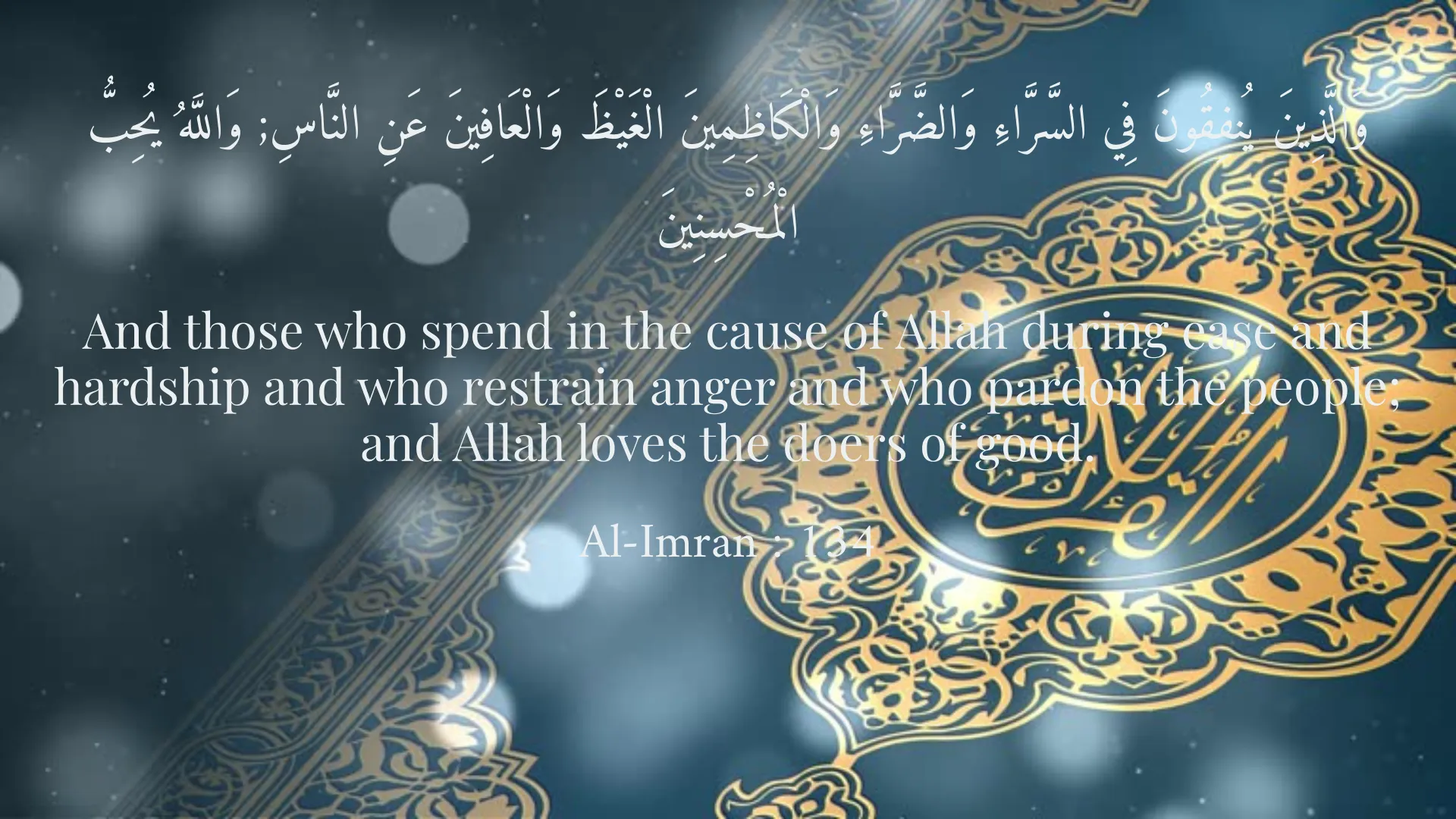
The concept of managing anger and exhibiting appropriate behavior in challenging situations is a significant theme within the Holy Quran. In today’s fast-paced and often stressful world, the ability to manage one's emotions, particularly anger, is essential for maintaining personal peace and harmonious relationships. The Quran provides timeless guidance on how to navigate the complex emotions that arise in daily life, and among its many teachings, the principles surrounding anger management stand out as particularly impactful. In this article, we explore the Quranic verses that address anger management, the importance of forgiveness, and the positive behavioral responses that not only benefit the individual but also enhance the community as a whole. One of the focal points in this discourse is Surah Al-Imran, verse 134, where Allah emphasizes the qualities of a true believer: "And those who spend in the cause of Allah during ease and hardship and who restrain anger and who pardon the people; and Allah loves the doers of good." This verse illuminates the necessity of controlling anger, particularly in moments of distress. Anger, if left unchecked, can lead to destructive behavior that harms oneself and others. Thus, the verse highlights the virtue of restraint, showing that channeling our emotions constructively is a hallmark of strength and faith. Here, the act of spending, whether in giving charity or supporting others, reiterates that flourishing relationships and community involvement can buffer against feelings of anger. By working towards the greater good of humanity, an individual often finds a sense of purpose and fulfillment that diminishes feelings of resentment and anger. Moreover, the command to ‘pardon the people’ is a profound reminder of the importance of forgiveness. This is not merely about forgetting grievances or letting go of hurt but recognizing that forgiveness is a vital step in healing oneself and promoting compassion in society. It acknowledges the imperfections inherent in human nature and promotes the idea that everyone is capable of error. Thus, forgiving others serves as a way to release negativity and foster peace within oneself and among peers. The Quran places great importance on fostering relationships built on trust and empathy, reinforcing community rather than division. In Surah Fussilat, verse 34, the Quran further elaborates on this theme: "And not equal are the good deed and the bad. Repel by that [deed] which is best." This verse serves as a powerful reminder that one should not respond to wrongdoing with further negativity; rather, the best way to counteract a bad deed is through goodness. This approach to conflicts aligns perfectly with anger management principles, suggesting that acting with kindness, even in the face of aggression or offense, can diffuse tension and restore dignity to the interaction. The practice of responding with goodness brings a transformative element into interpersonal relationships, encouraging an environment of understanding and support rather than hostility. The Quran continues to explore the importance of speech and kindness in Surah Al-Baqarah, verse 263, which states: "A good word and forgiveness are better than a charity followed by injury." This emphasizes not only the importance of charitable deeds but also the impact of our everyday interactions. Words possess incredible power; they can uplift and motivate or harm and discourage. In moments of anger, choosing to express oneself through kind and constructive dialogue can prevent escalation and promote mutual respect. It is critical to recognize that while philanthropy and charitable acts are valuable, they lose significance if accompanied by harshness or animosity. The Quran emphasizes the necessity of maintaining integrity and good character in all transactions, whether they are financial, social, or interpersonal. These teachings build a foundation for emotional intelligence, encouraging individuals to pause and reflect rather than react impulsively. The Quran encourages believers to develop self-control and mindfulness, enabling them to respond to life's challenges with dignity and grace. Managing anger is not merely about suppression; it involves understanding the triggers, engaging in self-reflection, and responding with a balanced perspective. Therefore, the verses mentioned prompt us to cultivate an inner fortitude that can withstand life's adversities. In addition to personal benefits, embracing forgiveness and kindness also contributes to a more harmonious society. When individuals practice restraint and resolution through goodness, they set an example for others. This cultivation of positive behavior generates a ripple effect; communities surrounded by kindness and understanding often experience less conflict and more collaboration. Accordingly, as the Quranic verses enlighten us, the challenge of anger management is not solely an individual endeavor but a collective responsibility that shapes our social environment. In conclusion, the teachings of the Holy Quran concerning anger management speak profoundly to the human condition. In a world filled with challenges and potential provocations, the exhortation to control one’s anger, show forgiveness, and respond to grievances with goodness is as relevant today as it was centuries ago. The guidance of the Quran not only equips us with tools to navigate anger effectively but also promotes a broader ethos of compassion and understanding. Following these teachings, we can foster not only our own well-being but also contribute to a more peaceful and empathetic society. Encouraged to be ambassadors of peace and kindness, we find that not only do we cultivate inner tranquility, but we also inspire a change that resonates through our communities.
Related Verses
وَالَّذِينَ يُنفِقُونَ فِي السَّرَّاءِ وَالضَّرَّاءِ وَالْكَاظِمِينَ الْغَيْظَ وَالْعَافِينَ عَنِ النَّاسِ; وَاللَّهُ يُحِبُّ الْمُحْسِنِينَ
And those who spend in the cause of Allah during ease and hardship and who restrain anger and who pardon the people; and Allah loves the doers of good.
Al-Imran : 134
وَلَا تَسْتَوِي الْحَسَنَةُ وَالسَّيِّئَةُ; ادْفَعْ بِالَّتِي هِيَ أَحْسَنُ
And not equal are the good deed and the bad. Repel by that [deed] which is best.
Fussilat : 34
قَوْلٌ مَّعْرُوفٌ وَمَغْفِرَةٌ خَيْرٌ مِّن صَدَقَةٍ يَتْبَعُهَا أَذًى
A good word and forgiveness are better than a charity followed by injury.
Al-Baqarah : 263
Short Story
Once upon a time, there was a man known for his anger and wrath among his tribe. He recalled the Quranic wisdom, "controlling anger," and decided to manage his anger when faced with challenges and difficulties. From that day onward, instead of getting into conflicts, he would smile at those who annoyed him and treat them kindly. This change in his behavior led others to show him affection, and he became calmer and happier each day.