Quranic Answer
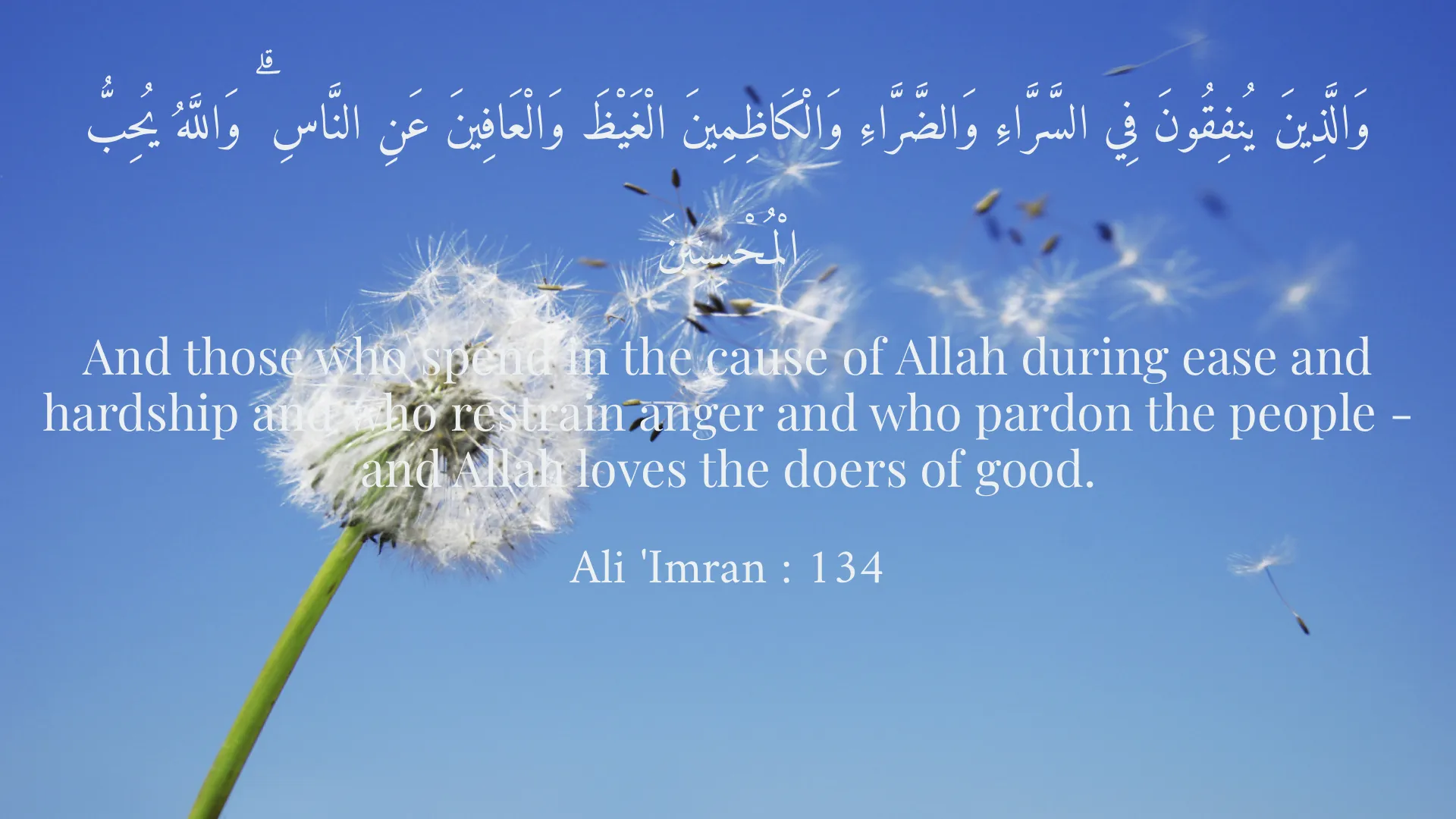
The Holy Quran provides profound insights on managing anger, a universal emotion that can lead to destructive behaviors if left unchecked. One of the most valuable aspects of the Quran is its guidance on emotional regulation. Among the verses dedicated to this theme, a particularly striking one is found in Surah Ali 'Imran, verse 134: 'And those who spend in the cause of Allah during ease and hardship and who restrain anger and who pardon the people - and Allah loves the doers of good.' This verse encapsulates a core principle in Islamic teachings: the importance of controlling one's emotions, particularly in challenging circumstances. It emphasizes not only the act of restraining anger but also the virtues of forgiveness and charity. Anger, if not managed properly, can lead to adverse consequences, both on individual and societal levels. The Quran recognizes the human tendency to feel anger and offers ways to navigate this natural emotion. By advocating for emotional regulation, it encourages believers to reflect on their thoughts and reactions during moments of anger. Instead of breeding resentment, the Quran promotes forgiveness as an alternative. The two key components highlighted in this verse—restraining anger and forgiving others—reflect the moral expectations placed upon believers. In another relevant verse, Surah Ash-Shura, verse 37, states: 'And those who avoid the major sins and immoralities, and when they are angry, they forgive.' This verse provides a further understanding of the Quran's perspective on emotional management. It links the avoidance of major sins to the ability to forgive in moments of anger, suggesting that moral integrity plays a crucial role in emotional regulation. Furthermore, it implies that individuals who lead virtuous lives are more equipped to handle anger gracefully, thus fostering a more compassionate society. The teachings of the Quran highlight that the management of anger is not merely a personal achievement but a community responsibility. Emotional intelligence, as promoted by these verses, extends beyond one's internal struggles and affects interactions with others. When we manage our anger appropriately, we create an environment where understanding, respect, and goodwill can flourish. Implementing the teachings of the Quran in daily life can transform personal and interpersonal dynamics. For instance, when faced with conflicts at home, work, or within the community, reminding ourselves of relevant Quranic verses can serve as a grounding tool. This practice does not only encourage self-reflection but also promotes patience, a vital trait in difficult interactions. Here are some practical strategies for applying these concepts in real-life situations: 1. Mindfulness and Reflection: When feelings of anger arise, take a moment to pause and reflect. Mindfulness techniques, such as deep breathing or taking a brief walk, can help clear your mind before reacting. 2. Positive Affirmations: Recall Quranic verses that emphasize patience and forgiveness. Internalizing these messages can shift your perspective and encourage a more constructive response. 3. Communication Skills: Practice active listening during conflicts. By genuinely trying to understand the other party's perspective, you may find releasing your anger and extending forgiveness to be more feasible. 4. Focused Agreements: In group settings, agree with peers on how to manage disagreements constructively, perhaps by invoking mutual values such as respect and compassion, as highlighted in the Quran. 5. Forgiveness Practice: Cultivate a habit of forgiveness in daily interactions. Remind yourself that holding onto anger only breeds negativity, whereas letting go opens paths toward reconciliation. Moreover, developing emotional management skills, such as controlling anger and embracing forgiveness, can induce a cascade of positive effects. These skills not only contribute to individual well-being but also help foster healthier relationships, improved mental health, and a more harmonious society. By practicing patience, understanding, and forgiveness, we mirror the examples set forth in the Quran and contribute positively to our surroundings. In conclusion, the Quran's perspective on anger management serves as a vital reminder of the importance of emotional control in our lives. By practicing the principles of patience and forgiveness, as laid out in its verses, we can cultivate a more peaceful existence for ourselves and those around us. In a world where anger can lead to division and conflict, these teachings present a path to tranquility and understanding. Whether it's in personal relationships, professional encounters, or broader social issues, the principles found in the Quran can guide us towards emotional maturity and create a more compassionate world.
Related Verses
وَالَّذِينَ يُنفِقُونَ فِي السَّرَّاءِ وَالضَّرَّاءِ وَالْكَاظِمِينَ الْغَيْظَ وَالْعَافِينَ عَنِ النَّاسِ ۗ وَاللَّهُ يُحِبُّ الْمُحْسِنِينَ
And those who spend in the cause of Allah during ease and hardship and who restrain anger and who pardon the people - and Allah loves the doers of good.
Ali 'Imran : 134
وَ الَّذِينَ يَجْتَنِبُونَ كَبَائِرَ الْإِثْمِ وَ الْفَوَاحِشَ وَ إِذَا مَا غَضِبُوا هُمْ يَغْفِرُونَ
And those who avoid the major sins and immoralities, and when they are angry, they forgive.
Ash-Shura : 37
Short Story
One day, Hossam was upset by his friends' behavior. In this moment, he remembered a verse from the Quran that says: 'And those who restrain anger' and concluded that it would be better to control his anger and apologize. After a while, he felt a greater sense of growth and realized that controlling his anger improved his relationships with his friends.