Quranic Answer
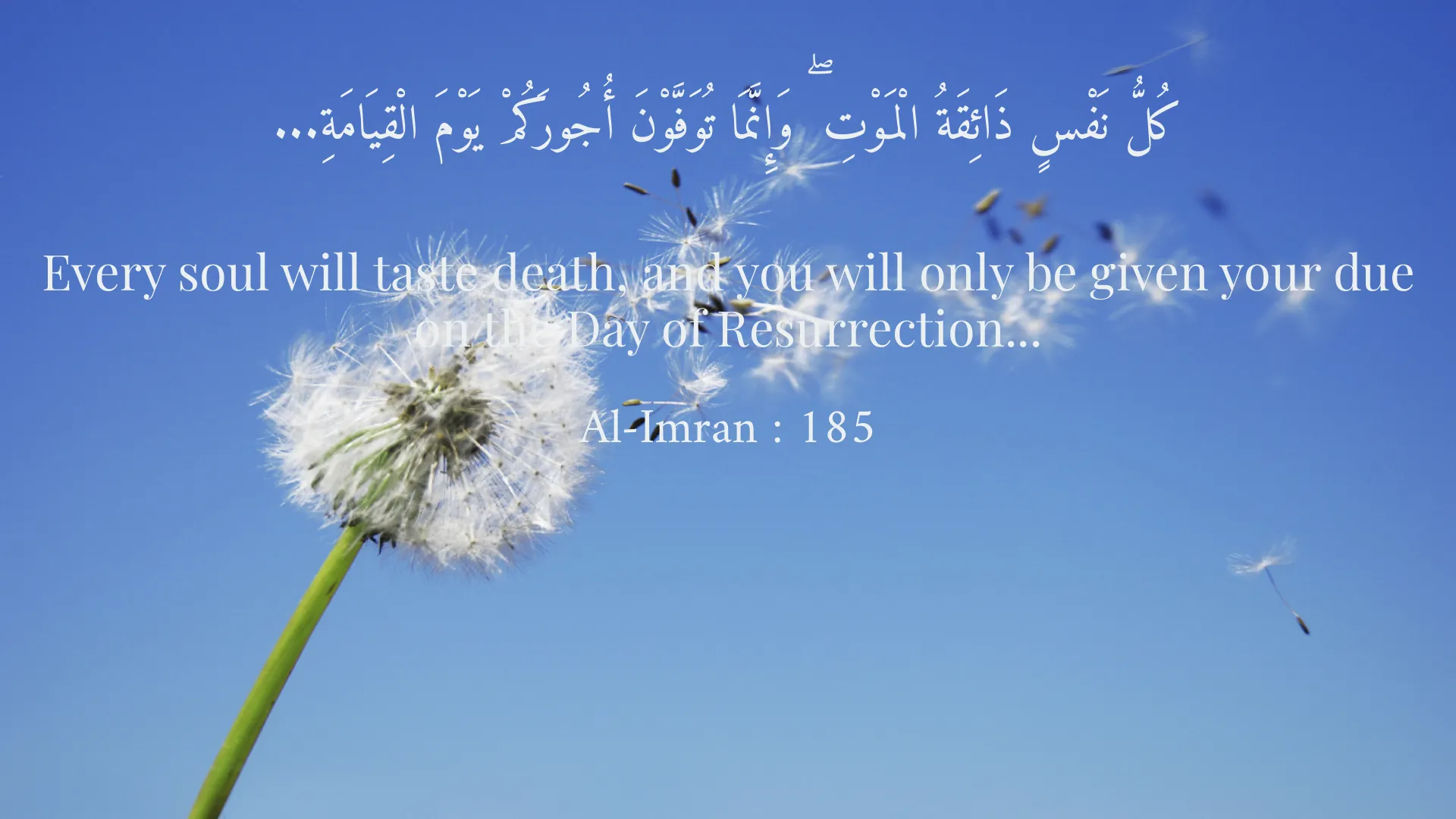
In the Holy Quran, the concept of death is approached with a sense of realism and inevitability, serving as a reminder of the transient nature of life and the importance of ethical conduct. Rather than invoking gloom and despair, the Quran presents death as a critical aspect of the human experience, encouraging individuals to engage in self-reflection and to reassess their actions and intentions. This introspection, driven by the awareness of mortality, can serve as a powerful motivator for self-improvement and ethical living. One of the most prominent verses that encapsulates this idea is found in Surah Al-Imran, verse 185, which states, 'Every soul will taste death, and you will only be given your due on the Day of Resurrection...' This profound statement emphasizes the universal reality of death. No matter one's status or accomplishments, death is an equalizer that affects all living beings. This acknowledgment invites individuals to consider the implications of their actions and the moral choices they make throughout their lives. The Quran urges believers to live with purpose, understanding that the consequences of their earthly actions will be weighed on the Day of Judgment. Additionally, the notion of rewards and accountability as depicted in this verse reflects a core tenet of Islamic belief, wherein one’s deeds are recognized and rewarded accordingly in the afterlife. The concept of receiving 'your due’ serves as a crucial reminder that life is not merely a journey of unbridled enjoyment but rather a test that shapes an individual’s ultimate fate. In adopting this perspective, the fear of death transforms from a source of dread into a catalyst for ethical behavior and personal growth. Furthermore, turning one’s thoughts towards mortality can ignite a spark of motivation. In recognizing the finite nature of time, individuals are compelled to make the most of every moment. Each day provides an opportunity to cultivate virtues, mend relationships, and contribute positively to society. The awareness of death encourages a proactive approach to life, prompting individuals to prioritize meaningful experiences over trivial pursuits. This perspective fosters a mindset that values connections with others as well as personal fulfillment, thereby elevating the overall quality of life. In Surah Ya-Sin, verse 65, the Quran adds another dimension to this understanding, stating, 'And Our messengers came to them with clear proofs, then We raised their hands to the heavens...' This verse highlights the divine responsibility that humans bear concerning their own lives and choices. Reflecting on the afterlife and accountability is not merely a philosophical exercise; it is about embracing the duty to act righteously in the present. Recognizing the significance of one's actions fuels a desire to engage with life meaningfully and ethically, thus reinforcing the transformative potential of contemplating mortality. The implications of thinking about death extend beyond individual self-reflection and can enhance interpersonal relationships. When people are mindful of life's impermanence, they are more inclined to cherish their relationships with family, friends, and community. This sentiment can lead to a greater sense of compassion and empathy, as individuals understand that everyone shares the common human experience of life and eventual death. By prioritizing kindness and support for others, individuals can forge deeper bonds and improve their social connections. Moreover, communal reflections on death can foster stronger communities. When members of a society engage in conversations about mortality, they often find common ground that transcends cultural and ideological boundaries. This collective acknowledgment of mortality can lead to a greater sense of unity and shared purpose, where individuals seek to uplift one another in the pursuit of a life well-lived. As people convey their thoughts about death and life, they develop an environment that encourages honesty, vulnerability, and authentic communication. In contrast to the often-negative associations with discussing death, the Quranic perspective encourages a thoughtful discourse. By embracing the inevitability of death as a natural and expected part of existence, individuals can approach life with renewed vigor and determination. The aim is not to fixate on the end but rather to enrich the journey, focusing on personal development, community cohesion, and the pursuit of ethical living. As society navigates the complexities of modern life, it is crucial to integrate these teachings into our daily existence. By reflecting on the lessons provided in the Quran regarding death and the afterlife, individuals can cultivate a mindset centered on self-improvement and collective support. It’s this dual approach that empowers believers to not only live purposefully but also uplift those around them, fostering a culture of compassion and ethical responsibility. In conclusion, the Quran’s teachings on death serve as profound reminders of life’s transient nature, urging individuals to pay heed to their actions and intentions. Rather than inciting fear or despair, reflecting on death can become a powerful tool for personal growth and improvement, inspiring individuals to engage in lives grounded in moral and ethical principles. By cherishing each moment and nurturing relationships with others, the contemplation of mortality can truly enrich the human experience, leading to a fulfilling and harmonious existence.
Related Verses
كُلُّ نَفْسٍ ذَائِقَةُ الْمَوْتِ ۖ وَإِنَّمَا تُوَفَّوْنَ أُجُورَكُمْ يَوْمَ الْقِيَامَةِ...
Every soul will taste death, and you will only be given your due on the Day of Resurrection...
Al-Imran : 185
وَجَاءَتْهُم رَسُلُنَا بِالْبَيِّنَاتِ ثُمَّ رَفَعْنَا أَيْدِيَهُمْ إِلَى السَّمَاءِ فَاحْشَرُوهُمْ.
And Our messengers came to them with clear proofs, then We raised their hands to the heavens...
Ya-Sin : 65
Short Story
One day, a man named Hossein pondered whether death is the end of everything or a new beginning. He thought of the verses of the Quran and realized that death is not just a reality but also an opportunity to live better. After that, he decided to spend more time with his family and participate in good deeds recommended in the Quran. Hossein realized that by accepting death as part of life, he could create a better life for himself and others.