Quranic Answer
The Holy Quran does not explicitly mention waking up early, but there are numerous verses and points that emphasize the importance of worship and prayer, particularly at night and in the morning. The significance of waking up early in Islamic tradition is often derived from various teachings and practices of the Prophet Muhammad (peace be upon him) and other sources of Islamic scripture, which highlight the spiritual benefits associated with early rising and morning worship. One significant verse that sheds light on the relevance of night and morning prayers is Surah Al-Isra, verse 79. The verse states, "And during part of the night, pray with it as additional [worship] for you..." This particular verse emphasizes the importance of dedicating time to prayer, especially during the night when the world is quiet and the soul is contemplative. While the verse focuses primarily on night prayer, it implicitly suggests that the early morning hours, which follow a night of devotion, dive deeper into the spiritual realm and serve as a vital opportunity for individuals to connect with Allah, seeking His guidance and mercy. The predilection for early rising is also found in the Hadith literature, which provides various narrations attributed to Prophet Muhammad (peace be upon him). Numerous traditions underscore his teachings on the benefits of early morning prayers and activities. For instance, it is narrated in Sahih Bukhari that the Prophet (peace be upon him) said, "O Allah, bless my nation in their early mornings." This statement makes it clear that the morning is a blessed time when prayers and endeavors yield significant spiritual rewards. Moreover, waking up early is seen as an opportunity for individuals to engage in worship and reflection while the surrounding environment is at peace. The Qur'an and the Sunnah encourage Muslims to start their day with a fresh perspective, dedicating time not just to obligatory prayers like Fajr but also to voluntary acts of worship such as reading the Qur'an or performing extra prayers (Nafl). The tranquility of the early morning hours allows for a focused and undistracted connection with Allah, which is immeasurably valuable for a believer’s spiritual growth. In addition to the spiritual benefits, waking up early can positively impact a person's daily life. It provides individuals with the chance to gather their thoughts, make plans for the day, and prioritize important tasks before the hustle and bustle of daily activities begin. Engaging in morning worship sets a tone of tranquility and purpose, encouraging a more organized and peaceful day ahead. The act of starting the day with prayer cultivates a sense of gratitude and mindfulness, allowing individuals to appreciate the blessings they have received and to seek divine guidance in every endeavor. Islamic culture places considerable significance on specific days and times, with mornings seen as a particularly blessed time. Friday mornings, for instance, hold special importance in Islam, as the day itself is regarded as a day of congregational worship. Many Muslims believe that waking up early on Fridays and engaging in worship enhances their connection to the Divine and opens the doors to mercy and forgiveness. The teachings surrounding the significance of mornings extend to other important occasions such as Ramadan, where early rising provides spiritual and physical benefits through preparations for fasting and devotion. Furthermore, the communal aspect of worship in the early morning serves to strengthen relationships among community members. When individuals come together for early morning prayers, they experience unity, share blessings, and encourage one another in their faith. The camaraderie established during morning prayers fosters a sense of belonging and responsibility within the community, essential elements for a healthy and thriving society in Islam. In summary, although the Holy Quran may not explicitly mention the act of waking up early, the themes of worship, prayer, and reflection resonate throughout its verses and are reaffirmed by the teachings of Prophet Muhammad (peace be upon him). The traditions surrounding early rising are deeply rooted in Islamic faith and highlight the profound benefits of starting the day with prayer and supplication. The importance of morning worship and night prayer serves as a subtle yet powerful reminder of the virtues that accompany the early morning hours, fostering spiritual growth, tranquility, and a purposeful life. Ultimately, by incorporating the practice of waking up early into one’s daily routine, Muslims can align their lives more closely with the principles of their faith, embracing the blessings and opportunities that come with this essential practice.
Related Verses
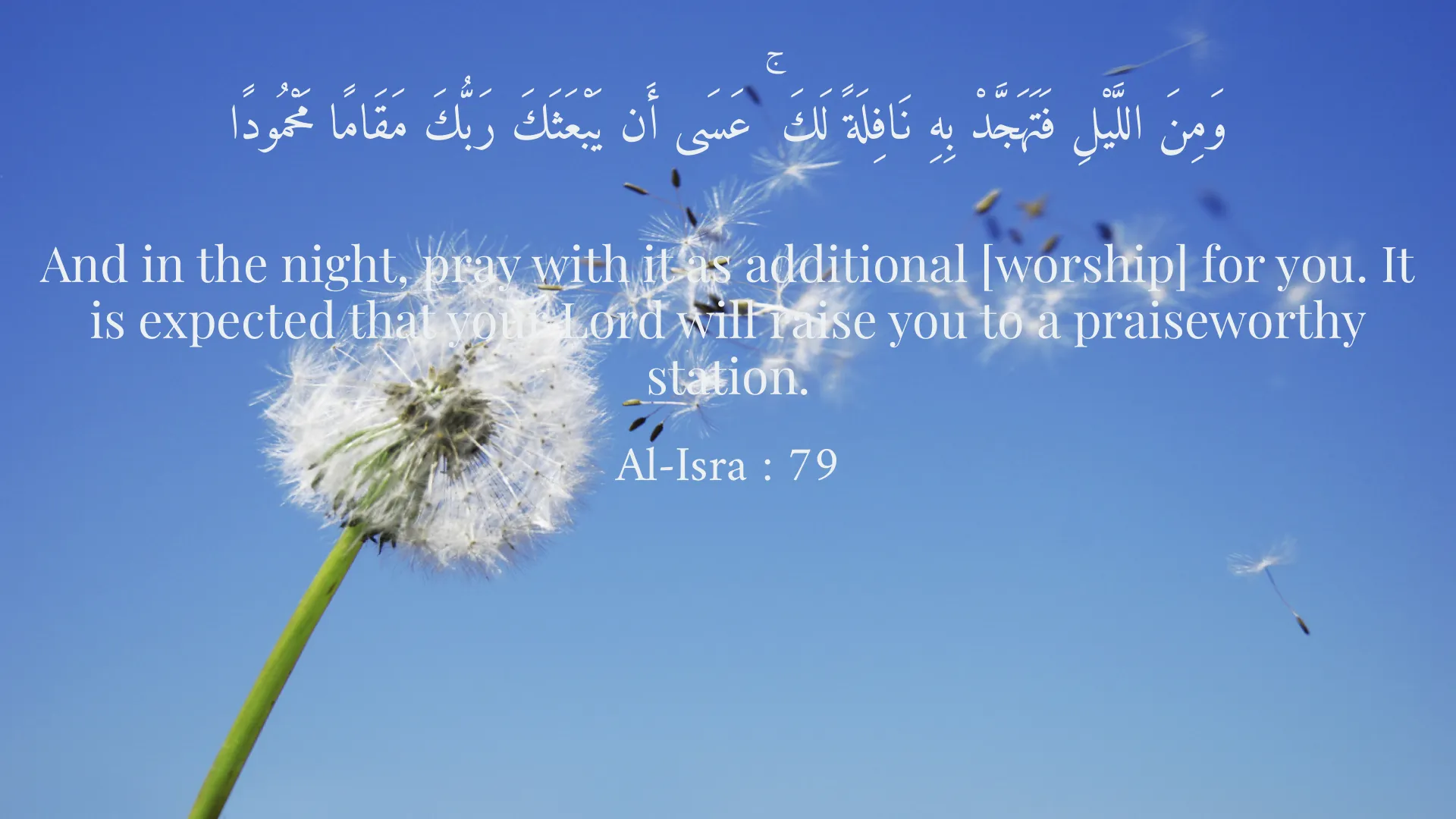
وَمِنَ اللَّيْلِ فَتَهَجَّدْ بِهِ نَافِلَةً لَكَ ۚ عَسَى أَن يَبْعَثَكَ رَبُّكَ مَقَامًا مَحْمُودًا
And in the night, pray with it as additional [worship] for you. It is expected that your Lord will raise you to a praiseworthy station.
Al-Isra : 79
يَٰٓأَيُّهَا الَّذِينَ آمَنُوا إِذَا قُمْتُمْ إِلَى ٱلصَّلَوٰةِ فَٱغْسِلُوا۟ وُجُوهَكُمْ وَأَيْدِيَكُمْ إِلَى ٱلْمَرافقِ وَٱمسَحُوا۟ بِرُؤُوسِكُمْ وَأَرْجُلَكُمْ إِلَى ٱلْكَعْبَيْنِ ۚ وَإِن كُنتُمْ جُنُبًۭا فَٱطَّهَّرُوا۟ ۗ وَإِن كُنتُمْ مَرْضَى أَوْ عَلَىٰ سَفَرٍۢ أَوْ جَاءَ أَحَدٌۭ مِّنكُم مِّنَ ٱلْغَائِطِ أَوْ لَمَسْتُمُ ٱلنِّسَآءَ فَلَمْ تَجِدُوا۟ مَآءًۭ فَتَيَمَّمُوا۟ صَعِيدًۭا طَيِّبًۭا ۖ فَٱمْسَحُوا۟ بِوُجُوهِكُمْ وَأَيْدِيكُمْ ۚ مَا يُرِيدُ ٱللَّهُ لِيَجْعَلَ عَلَيْكُم مِّنْ حَرَجٍۢ وَلَـٰكِن يُرِيدُ لِيُطَهِّرَكُمْ وَلِيُتِمَّ نِعْمَتَهُ عَلَيْكُمْ لَعَلَّكُمْ تَشْكُرُونَ
O you who have believed, when you rise to [perform] prayer, wash your faces and your forearms to the elbows and wipe over your heads and wash your legs to the ankles. And if you are in a state of janabah, then purify yourselves. And if you are ill or on a journey or one of you comes from the place of relieving himself or you have contacted women and do not find water, then seek clean earth...
Al-Ma'idah : 6
Short Story
Once upon a time, there was a young man named Ali who always overslept and woke up late in the mornings. He would hang out with his friends and never found time for worship and prayer. One day, his friends told him that waking up early brings blessings and is an opportunity for prayer and connection with God. Ali decided to wake up early the next day to worship in the peaceful morning. When he woke up early and prayed, he felt a wave of tranquility and happiness fill his heart. He realized that waking up early not only brought him closer to God but also helped him start his day with renewed energy.