Quranic Answer
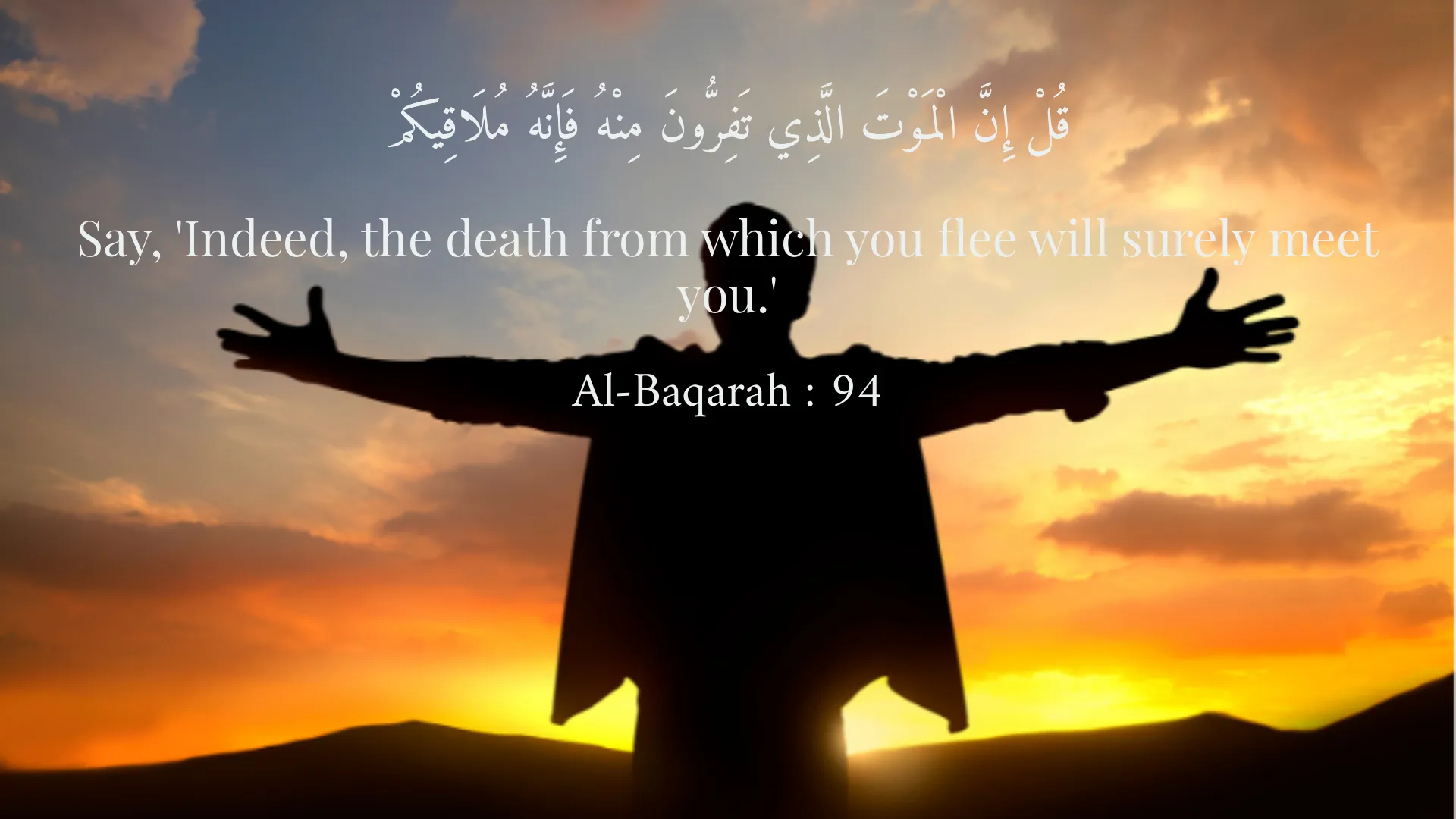
In the Holy Quran, the teachings regarding life, death, and the attitude of individuals towards their existence hold significant importance. The text encourages believers to approach life with resilience, patience, and a focus on positive actions rather than surrendering to despair over life's difficulties. While there is no explicit prohibition against wishing for death, Islamic teachings impart a clear message that desiring death as a means of escape from worldly troubles is not in alignment with the faith. The inevitability of death is a recurring theme in the Quran, encapsulated in the verse from Surah Al-Baqarah (2:94), which states: 'Say, indeed, the death from which you flee will surely meet you.' This profound statement highlights the inescapable truth of mortality. It serves as a reminder to humankind that fearing death or wishing for it does not alleviate our struggles but rather indicates a deeper spiritual malaise. The human experience is inherently intertwined with challenges, and retreating from life situations—or wishing for an end—does not provide solutions to one's issues. Instead, it is through confronting these problems with faith and perseverance that one finds meaning in their existence. Moreover, the Quran advocates for the cultivation of patience as a valuable virtue. In Surah Az-Zumar (39:10), Allah emphasizes that 'Indeed, the patient will be given their reward without account.' This verse illuminates the idea that those who endure hardships with a steadfast heart are not just surviving, but are destined for immeasurable rewards from Allah. Patience is viewed not merely as an act of waiting, but as an active engagement with life's trials—an essential component of spiritual growth and personal development. The role of the Prophet Muhammad (peace be upon him) further enriches the understanding of the Islamic perspective on life and death. He cautioned against longing for death, stating, 'None of you should wish for death, as this request could reflect despair. Instead, ask Allah for a life filled with goodness and blessings.' This profound guidance from the Prophet underscores a significant principle within Islam: the importance of valuing life and seeking a fulfilling and enriching existence. Rather than yearning for death, believers are encouraged to renew their intentions, pray for a life imbued with positivity, and work towards attaining a higher state of being. The Quranic injunctions and the teachings of the Prophet reflect an overarching theme—the sanctity of life. Each moment of existence carries the potential for growth, learning, and the opportunity to engage in good deeds. This perspective not only enhances an individual's approach to life's challenges but also ultimately aligns with the broader Islamic ethos of fostering community support and helping others in need. By promoting a view of life that values resilience, compassion, and continuous improvement, individuals can contribute to a more constructive and harmonious society. Additionally, the Islamic tradition presents various narratives and examples of historical figures who exemplified unwavering patience and perseverance. These stories serve as beacons of hope, reinforcing the belief that, despite adversities, individuals can overcome challenges through faith and determination. There are numerous accounts within Islamic history where prophets and righteous people faced immense trials yet emerged victorious through their steadfastness. Such examples are not only motivational but also offer practical ways to handle struggles. While it might be easy to surrender to despair during trying times, the essence of Islamic belief calls for active participation in life and reliance on God’s mercy. Believers are encouraged to take practical steps towards bettering their conditions rather than resigning themselves to a wish for death. This translates into seeking solutions, improving one’s circumstances, and being a source of support for others facing similar challenges. In summary, while the Quran does not explicitly prohibit wishing for death, it emphasizes the importance of patience, perseverance, and actively striving to improve one's life. The inevitability of death reminds us of our temporary existence, and fleeing from it serves no purpose. Instead, through patience and dedication, we can navigate the trials of life with our heads held high, knowing that there is profound merit in our struggles and that every challenge faced is a stepping stone toward our ultimate reward. Therefore, rather than wishing for death, we should embrace life, engage in meaningful pursuits, and pray for goodness and blessings. In doing so, we echo the teachings of the Quran and the Prophet Muhammad, ensuring that our lives are not only worthwhile but also aligned with the greater purpose ordained by God.
Related Verses
قُلْ إِنَّ الْمَوْتَ الَّذِي تَفِرُّونَ مِنْهُ فَإِنَّهُ مُلَاقِيكُمْ
Say, 'Indeed, the death from which you flee will surely meet you.'
Al-Baqarah : 94
إنما يُوَفَّى الصَّابِرُونَ أَجْرَهُم بِغَيْرِ حِسَابٍ
Indeed, the patient will be given their reward without account.
Az-Zumar : 10
Short Story
One day, Mr. Seyyed felt a deep sorrow in his heart. He thought about death due to the hardships of life. However, at that moment, a verse from the Quran came to his mind, reminding him to be patient and strive. He decided instead of wishing for death, to overcome his problems and bring new life to his existence through prayer and charity.