Quranic Answer
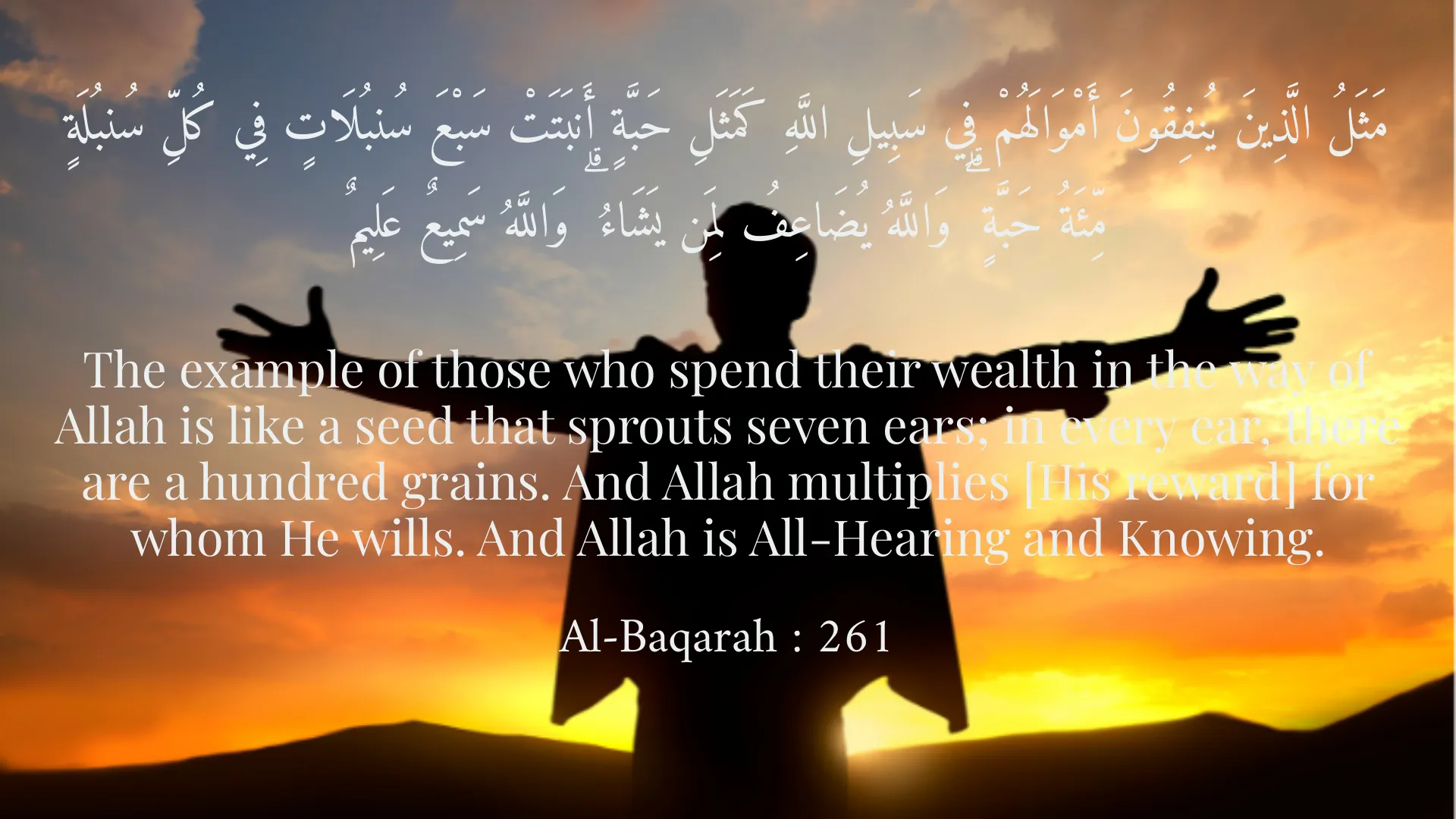
Title: The Concept of Charity in the Holy Quran: A Comprehensive Overview Introduction The notion of charity, or "Sadaqah," holds a paramount place in the Islamic faith, as extensively discussed throughout the Holy Quran. The Quran serves not only as a spiritual guide but also as a comprehensive framework for social justice and economic equity. This article explores the concept of charity as presented in the Quran, highlighting its significance, the mechanisms of giving, and the ethical dimensions involved in charitable practices. Body 1. The Importance of Charity in Islam One of the foundational principles in Islam is the obligation for those who are financially able to assist those in need. The Quran emphasizes the necessity and importance of charity in various chapters and verses. Specifically, in Surah Al-Baqarah, verse 261, it states, 'The example of those who spend their wealth in the way of Allah is like a seed that sprouts seven ears; in every ear, there are a hundred grains.' This vivid imagery not only illustrates the abundant rewards for those who give but also reinforces the idea that financial assistance in the name of Allah is fertile ground for personal spiritual growth. 2. Understanding the Rewards of Giving In engaging with the Quranic texts, we find numerous references that elucidate the rewards associated with charitable deeds. The metaphor of seeds growing into a bountiful harvest exemplifies the idea that charitable actions lead to multiplied blessings, both in this life and the hereafter. The rewards do not merely pertain to material gains; they also encompass spiritual benefits that enhance the giver's relationship with Allah, promoting feelings of satisfaction and inner peace. 3. The Spirit of Concealed Charity In addition to encouraging open acts of charity, the Quran emphasizes the concept of concealed charity. In Surah Al-Baqarah, verse 273, Allah states, 'Concealed charity is better for those in need among the believers.' This verse highlights the importance of discretion in giving, as publicly displaying acts of charity may inadvertently compromise the dignity and honor of the recipients. This teaching is pivotal, reflecting a deep understanding of human psychology and the social dynamics surrounding aid. It encourages believers to perform acts of kindness without seeking praise or recognition, thereby protecting the self-esteem of those receiving assistance. 4. Ethical Dimensions of Charity Charity in Islam transcends mere financial transactions; it encompasses a multifaceted ethical dimension. The Quran teaches that assistance should be rooted in genuine compassion and empathy towards the less fortunate. Surah At-Tawbah, verse 60, affirms that 'charities are the best deeds in the sight of Allah,' indicating that the quality of the intention behind giving, coupled with the act itself, enhances the deed's merit. Thus, charity is not simply about giving but about doing so with the right intention, ensuring that the dignity of the receiver remains intact. 5. Practical Applications of Charity While the Quran provides spiritual insights into the importance of charity, it also lays the groundwork for practical applications in daily life. This includes not only financial contributions but also volunteering time and resources to support community welfare. Islamic teachings encourage believers to engage in a holistic approach that incorporates both direct monetary support and community building activities, such as education and healthcare. 6. The Role of Community in Charity The Quran's guidance on charity underscores the collective responsibility of community members in providing assistance. The act of giving is seen as a communal obligation, fostering a sense of solidarity and mutual support among believers. This collective approach helps to form stronger bonds within society, ultimately leading to a more resilient and compassionate community. Programs such as Zakat, which is a mandatory form of almsgiving, reflect this communal ethos, establishing a system of social welfare that aids in poverty alleviation. 7. Charity as a Means of Social Justice Moreover, charity is depicted as a powerful tool for achieving social justice. The Quran explicitly addresses the disparities between the wealthy and the poor, urging those who have means to uplift the marginalized through consistent acts of generosity. By mitigating the gap between different socio-economic classes, charity helps to create a more equitable society. In this context, the Quran calls upon every individual to recognize their social responsibility, propelling them towards active participation in humanitarian efforts. Conclusion In conclusion, the concept of charity in the Holy Quran encompasses a comprehensive understanding of social responsibility that goes beyond mere obligation. It highlights the significance of intention, the ethics of giving, and the profound impact of both public and private acts of charity. The teachings within the Quran remind us that financial assistance, whether manifested openly or discreetly, can have vast implications for both the giver and receiver, fostering a spirit of compassion and social unity. As Muslims, engaging in acts of charity not only fulfills religious duties but also contributes to developing a more just and compassionate world, adhering to the values set by the Quran. Through understanding and implementing these principles, believers can leave lasting positive effects on society, reflecting the essence of Islam's teachings on charity.
Related Verses
مَثَلُ الَّذِينَ يُنفِقُونَ أَمْوَالَهُمْ فِي سَبِيلِ اللَّهِ كَمَثَلِ حَبَّةٍ أَنبَتَتْ سَبْعَ سُنبُلَاتٍ فِي كُلِّ سُنبُلَةٍ مِّئَةُ حَبَّةٍ ۗ وَاللَّهُ يُضَاعِفُ لِمَن يَشَاءُ ۗ وَاللَّهُ سَمِيعٌ عَلِيمٌ
The example of those who spend their wealth in the way of Allah is like a seed that sprouts seven ears; in every ear, there are a hundred grains. And Allah multiplies [His reward] for whom He wills. And Allah is All-Hearing and Knowing.
Al-Baqarah : 261
لَا يُؤَاخِذُكَ اللَّهُ بِالَّتِي تُخْفِيهَا مِنَ الْخَيْرَاتِ ۖ وَإِن تُؤْمِنُوا وَتَزَكُّوا فَإِنَّ ذَلِكَ خَيْرٌ لَّكُمْ ە وَإِن تَخْفُوا مَا تُنْفِقُونَ مِنْ خَيْرٍ فَإِنَّهُ أَعْظَمُ أَجْرًا.
Allah does not impose upon you the blame of what is unintentional in your oaths, but He will impose upon you for your deliberate oaths. And Allah is Exalted in Might and Wise.
Al-Baqarah : 273
إنما الصدقات للفقراء والمساكين والعاملين عليها والمؤلفه قلوبهم وفي الرقاب والغارمين وفي سبيل الله وابن السبيل فريضة من الله ۚ والله عليم حكيم.
The charities are only for the poor and the needy and those who administer them and for those whose hearts are reconciled and for freeing the captives and for those in debt and for the cause of Allah and for the wayfarer. This is an obligation [imposed] by Allah. And Allah is Knowing and Wise.
At-Tawbah : 60
Short Story
One day, a wealthy man passed a group of needy people. He felt the urge to help them, but he didn't want anyone around him to know about it. Therefore, he found a way to assist them quietly, ensuring that their needs were met while preserving their dignity. As a result of this benevolent act, everyone witnessed positive changes within their community.