Quranic Answer
The Holy Quran is the central religious text of Islam, revered by Muslims as the word of God as revealed to the Prophet Muhammad. It covers a wide range of topics, including moral guidance, legal principles, and personal conduct. Among various issues addressed in the Quran is the concept of gambling, which stands out as a particularly significant topic in discussing ethical behavior and social responsibility. While the Quran does not explicitly mention modern gambling games such as poker, it provides broad principles that underline the Islamic stance against all forms of gambling. This article aims to explore the Islamic perspective on gambling, the implications of such activities, and the overarching ethics derived from Quranic teachings. The term 'gambling' in the context of Islam is broadly defined to include any game or activity where money or valuables are wagered and won or lost based purely on chance. In Surah Al-Ma'idah, verse 90, Allah lays down a clear command to the believers, categorizing gambling alongside intoxicants and idol worship as elements of ‘defilement’ and ‘the work of Satan’. The verse reads: "O you who have believed, indeed, intoxicants, gambling, [sacrificing on] stone alters [to other than Allah], and divining arrows are but defilement from the work of Satan, so avoid it that you may be successful." This part of the Quran unequivocally identifies gambling as a forbidden act that believers should steer clear of, reinforcing the idea that it is an unwholesome activity that detracts from spiritual and moral success. Gambling is understood to promote addiction, financial irresponsibility, and interpersonal conflict. Individuals engrossed in gambling often prioritize their pursuits over their moral obligations, leading to an erosion of family ties and social bonds. Poker, for instance, may be portrayed as an innocuous social activity in certain cultures, but it often leads participants into a realm of competition that can breed animosity, jealousy, and deceit. The Islamic perspective goes beyond labeling such activities as mere vices; it highlights the potential harm they pose to social cohesion and community welfare. As emphasized in many Islamic teachings, the principles of transparency and justice must prevail in all transactions. The inherent nature of gambling defies these principles, as it is built upon uncertainty, manipulation, and, effectively, the redistribution of wealth from one individual to another without the necessary rigor of ethical justification. In simple terms, winning at gambling is frequently positioned as winning at the expense of others, and this clashes with the core Islamic values of fairness and justice. Wealth is considered a blessing that should be earned through lawful and honorable means, not acquired through games of chance that can lead to disparities and grievances among individuals. Moreover, the Quranic teachings highlight the broader implications of gambling on an individual's spiritual journey. The act of gambling can lead one astray from the righteous path, creating distractions that draw believers away from worship, self-reflection, and meaningful community involvement. Islam encourages individuals to engage in activities that foster community bonds and build character, such as charity, education, and social service. By choosing gambling over these productive alternatives, one risks sliding into a lifestyle that may lead to disillusionment, regret, and a betrayal of one's spiritual commitments. The ethical stance on gambling in Islam can also be reinforced through the teachings of the Prophet Muhammad, who emphasized the importance of engaging in activities that contribute positively to both individual lives and the collective good of society. Many narrations from the Hadith draw attention to the risks associated with gambling, portraying it not only as a sinful act but also as a hindrance to personal growth and societal harmony. In a society that is structured around the ideals of compassion, collaboration, and responsibility, engaging in such questionable activities is fundamentally contradictory to the Islamic way of life. Another important dimension to consider is the influence of gambling on mental health and societal well-being. Psychological studies have shown that individuals involved in gambling often face heightened levels of anxiety, depression, and other mental health issues stemming from financial troubles, failed expectations, and the social stigma attached to gambling losses. The cyclical nature of gambling addiction can lead to desperation and estrangement, with many seeking solace in further gambling, thereby perpetuating the cycle of harm. Islam's strict prohibition acts as a preventive measure against this cycle, advocating for a life that prioritizes mental and emotional well-being through healthy, constructive pursuits. The conversation around gambling in the context of poker and similar games leads to further ethical dilemmas, particularly in how such activities can affect family dynamics and community relations. Time spent in gambling establishments is time taken away from family interactions, community participation, and personal growth. The family unit is central in Islam, and any activity that threatens to disrupt family cohesiveness and support networks must be scrutinized critically. The danger of gambling lies not merely in financial loss, but also in the potential disintegration of familial bonds and social structures that are integral to an Islamic way of life. In conclusion, while the Holy Quran does not specifically reference gambling games such as poker, it establishes a clear stance against gambling through its teachings. The principles of avoidance presented in Surah Al-Ma'idah serve as a reminder of the potential perils associated with chance-based games. The ethical framework provided by Islam guides believers away from gambling due to the adverse effects it can have on individual well-being, societal equity, and spiritual integrity. Therefore, it is vital to consider the implications of our choices and align them with the values and teachings of Islam, striving always for actions that contribute to justice, welfare, and the collective good of the community. As Muslims, the emphasis should be on earning through fair means and engaging in pursuits that uplift the self and society, fostering environments of support, compassion, and mutual respect.
Related Verses
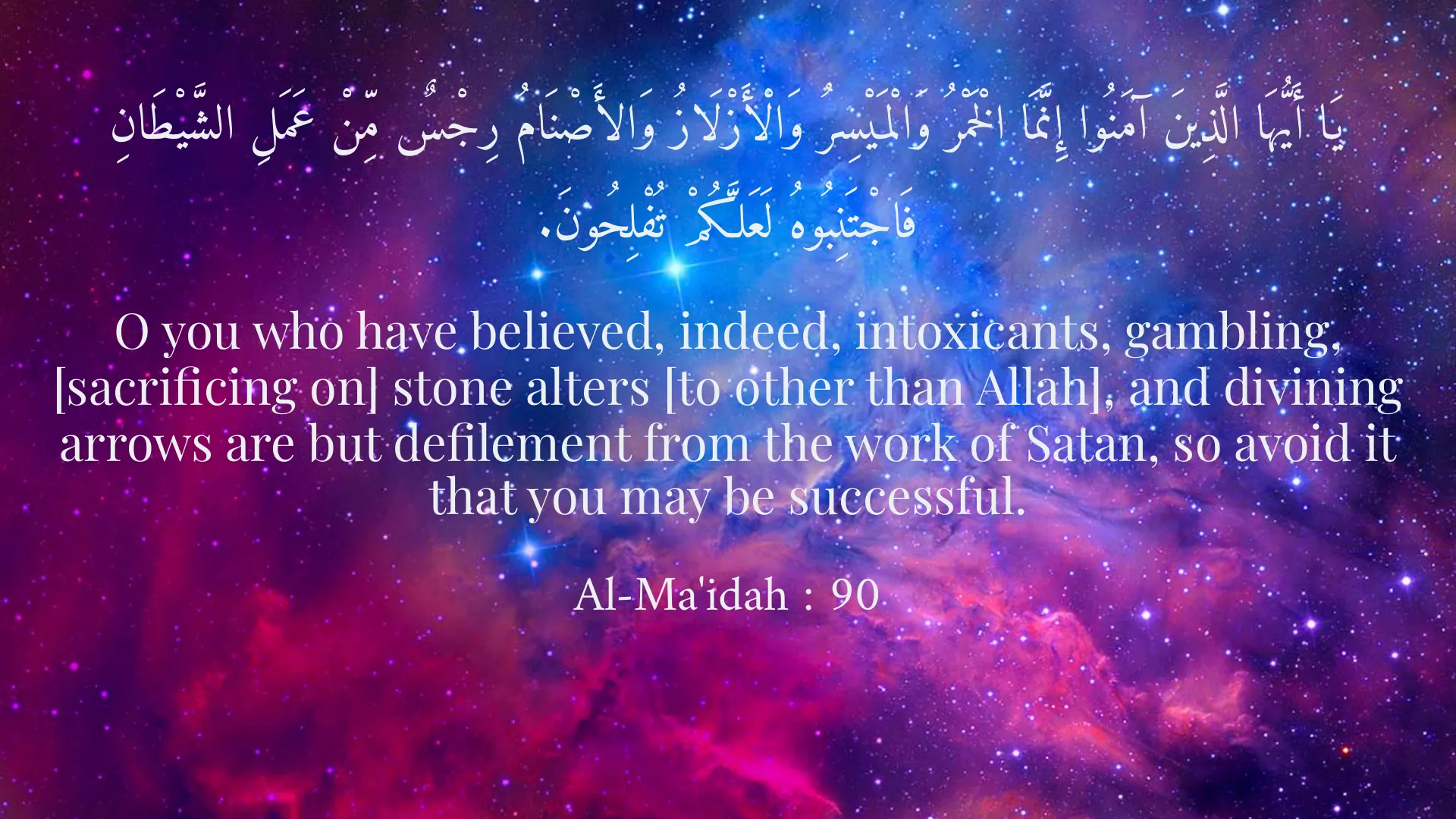
يَا أَيُّهَا الَّذِينَ آمَنُوا إِنَّمَا الْخَمْرُ وَالْمَيْسِرُ وَالْأَزْلَازُ وَالأَصْنَامُ رِجْسٌ مِّنْ عَمَلِ الشَّيْطَانِ فَاجْتَنِبُوهُ لَعَلَّكُمْ تُفْلِحُونَ.
O you who have believed, indeed, intoxicants, gambling, [sacrificing on] stone alters [to other than Allah], and divining arrows are but defilement from the work of Satan, so avoid it that you may be successful.
Al-Ma'idah : 90
Short Story
Once upon a time, a man named Masoud turned to gambling and spent his nights playing poker. Gradually, he distanced himself from his family and friends and found himself in financial troubles. One day, while reflecting on his life, Masoud remembered a verse from the Quran that emphasized avoiding gambling. He decided to quit this bad habit and return to his family. From that day on, Masoud sought to rebuild his human connections and experienced a more successful life.