Quranic Answer
The Holy Quran is a profound source of guidance for Muslims and touches upon various aspects of human behavior and interaction. Among these teachings, the concepts of speech and truth are profoundly emphasized, as they are essential components of fostering goodwill, harmony, and compassion among individuals. Through its verses, the Quran provides a moral framework for how one should communicate with others and the intrinsic value of truthfulness in our discourse. One of the most notable verses that reflect this notion is found in Surah Al-Baqarah, verse 83, where Allah commands humanity to treat others with kindness and to speak good words. This directive is telling us that communication is not solely about the factual content of what we say, but also about the manner in which we convey our messages. The emphasis on the manner of speech indicates that effective communication involves not only the truthfulness of our statements but also our approach to delivering them. In a world rife with misunderstandings and conflicts, the need for thoughtful, compassionate communication is more important than ever. By instructing us to speak with kindness, the Quran encourages a culture of respect and empathy, where individuals feel valued and understood. This principle encourages us to think carefully about the words we choose and to recognize the impact that our speech has on others. In another significant verse, Surah Al-Isra, verse 53, Allah directs that His servants should speak in the best manner. This instruction implies that communication must be imbued with truth and goodness. It serves as a reminder that honesty in our discourse should not be devoid of consideration for the feelings and dignity of those we are addressing. Therefore, we are called to be conscious of our language and to strive to ensure that our words serve to uplift and improve relationships, rather than detract from them. To speak with goodness means to prioritize the well-being of others in our conversations. Often, individuals may find themselves in situations where they possess knowledge that would be classified as true but could potentially harm others if expressed insensitively. The Quran suggests here that individuals should exercise great caution when expressing such truths. The act of communicating should be founded on goodwill and the overall improvement of human relations. The recognition of the potential repercussions of our words is foundational to this teaching. Thus, one must carefully evaluate the necessity and implications of sharing particular truths before speaking. In addition to promoting kind speech, the Quran also highlights the importance of listening and conjecturing responsibly. Surah Al-Hujurat, verse 12, reinforces this notion by urging individuals to be cautious in how they listen and form suppositions. In an age of rampant misinformation and snap judgments, the call for careful consideration in our interpretation of others' words is more relevant than ever. This verse serves as a reminder that not every truth is appropriate to voice, as the delivery and context can significantly alter the message's overall impact. Therefore, adhering to the principles of good speech involves not just the act of speaking itself but also an awareness of when and how to articulate our thoughts and opinions. Ultimately, the intrinsic values advocated in these verses compel us to engage thoughtfully and mindfully in our communications. Each truth we choose to communicate should be shared with care, wisdom, and good intentions to ensure it fosters a spirit of unity and respect rather than division. Those who follow these Quranic principles contribute significantly to a more harmonious society, where understanding and cooperation prevail over discord. Additionally, by practicing self-restraint and compassion in our speech, we not only improve our relations with others but also cultivate an environment in which individuals feel safe and respected. Moreover, it is vital to recognize that the significance of these teachings can be applied beyond religious contexts. They resonate with anyone seeking to navigate the complexities of human interaction constructively. In professions that rely heavily on communication, such as counseling, education, and conflict resolution, integrating the Quranic principles of kind speech and truth can facilitate deeper understanding and conflict de-escalation. Ultimately, the emphasis on careful, respectful, and purposeful communication can lead to the empowerment of individuals and help build stronger communities. In conclusion, the Holy Quran intricately discusses the importance of speech and truth, underscoring the necessity of kindness and caution in our interactions. Principles found in Surah Al-Baqarah, Surah Al-Isra, and Surah Al-Hujurat serve as timeless reminders that respectable and truthful communication can be a powerful tool for creating lasting positive relationships. By adopting this approach, individuals can contribute to a society rooted in understanding, compassion, and mutual respect.
Related Verses
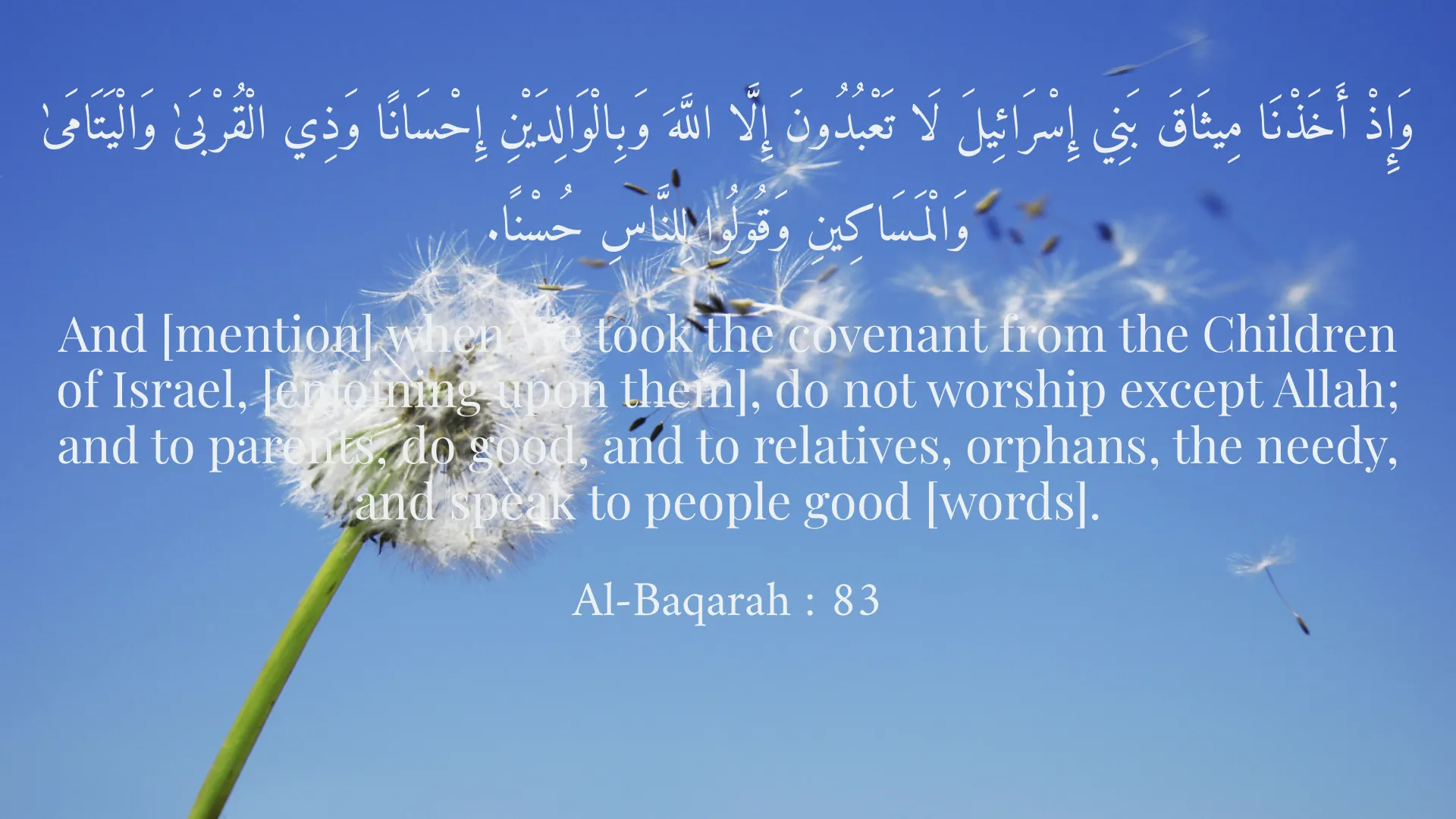
وَإِذْ أَخَذْنَا مِيثَاقَ بَنِي إِسْرَائِيلَ لَا تَعْبُدُونَ إِلَّا اللَّهَ وَبِالْوَالِدَيْنِ إِحْسَانًا وَذِي الْقُرْبَىٰ وَالْيَتَامَىٰ وَالْمَسَاكِينِ وَقُولُوا لِلنَّاسِ حُسْنًا.
And [mention] when We took the covenant from the Children of Israel, [enjoining upon them], do not worship except Allah; and to parents, do good, and to relatives, orphans, the needy, and speak to people good [words].
Al-Baqarah : 83
وَأَنَّ هذا صِرَاطِي مُسْتَقِيمًۭا فَاتَّبِعُوهُ ۖ وَلَا تَتَّبِعُوا السُّبُلَ فَتَفَرَّقَ بِكُمْ عَن سَبِيلِهِ ۚ ذَٰلِكُمْ وَصَّاكُمْ بِهِ لَعَلَّكُمْ تَتَّقُونَ.
And that is My straight path, so follow it; and do not follow [other] paths, for they will separate you from His way. This has He instructed you that you may become righteous.
Al-Isra : 53
يَا أَيُّهَا الَّذِينَ آمَنُوا اجْتَنِبُوا كَثِيرًا مِّنَ الظَّنِّ ۚ إِنَّ بَعْضَ الظَّنِّ إِثْمٌۭ ۚ وَلَا تَجَسَّسُوا وَلَا يَغْتَب بَّعْضُكُمْ بَعْضًا.
O you who have believed, avoid much [negative] assumption. Indeed, some assumption is sin. And do not spy or backbite each other.
Al-Hujurat : 12
Short Story
Once, a man lived in a village known for his honesty. He always paid attention to ensuring that his words were expressed with good intentions and aimed at reconciliation. One day, one of his neighbors said in gathering, 'Someone told me you speak ill of me.' The man calmly replied, 'If I have said something, I did so with goodwill and to enhance our relationships, but if it is false, it is better left unsaid.' His gentle demeanor and politeness helped ease the tension in the community and made everyone realize that conversation should be done with care and sincere intentions.