Quranic Answer
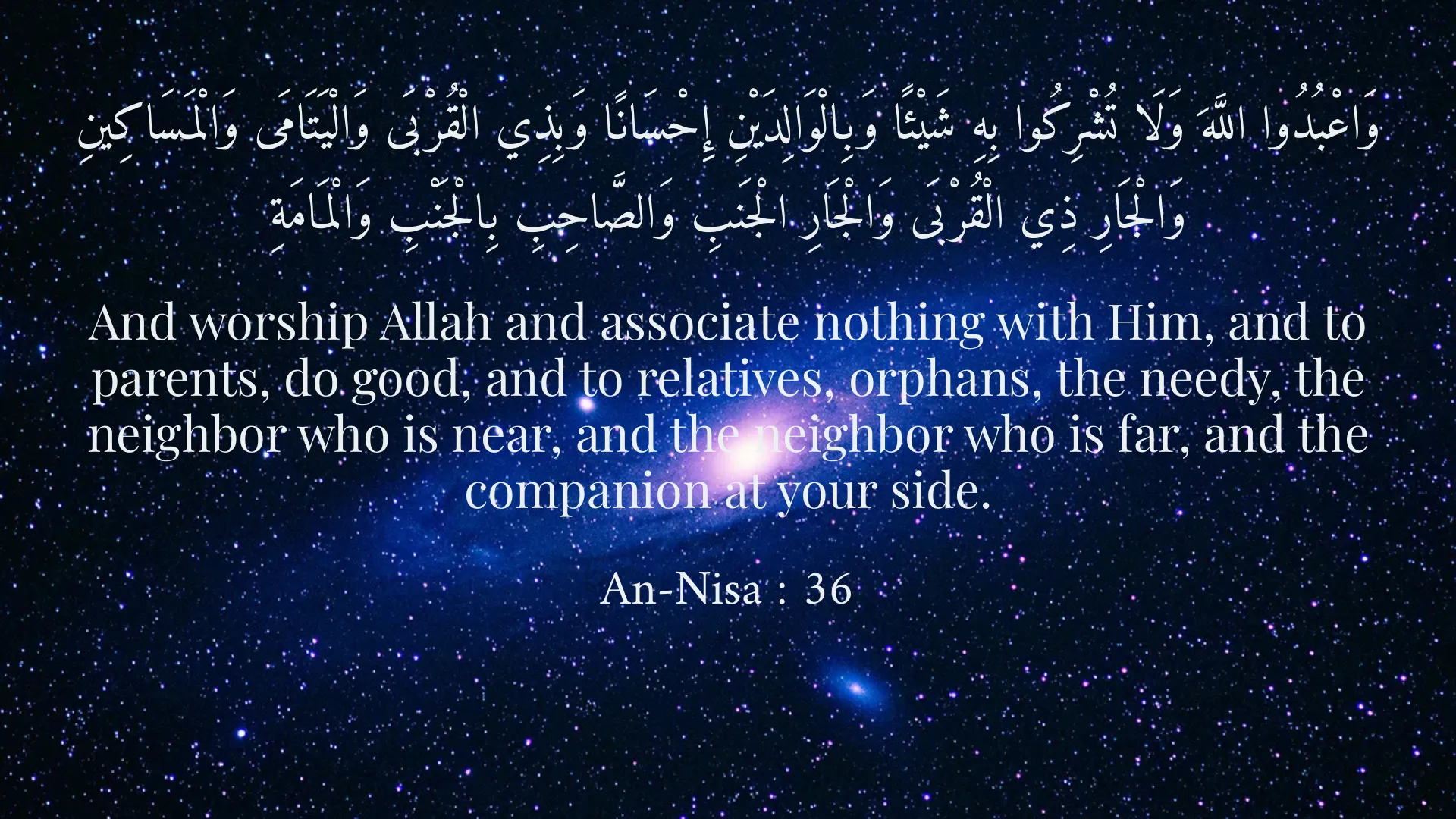
The Holy Quran places great emphasis on the rights of neighbors, a topic that plays a vital role in the Islamic code of ethics. In Surah An-Nisa, verse 36, Allah explicitly commands believers to show goodness to a variety of groups, including parents, relatives, orphans, the needy, and neighbors, whether they are near or far. This illustrates that neighbors are not mere acquaintances; they represent a significant part of the community that deserves care, respect, and kindness. The guidance provided by the Quran offers profound insights into how individuals should coexist harmoniously, fostering an environment filled with compassion and mutual respect. Neighborly rights are further elaborated upon in Surah Al-Baqarah, verse 177, where Allah reminds the believers that genuine benevolence transcends acts of worship in solitude. It emphasizes that our behavior towards others—especially those living close to us—defines our moral standing. This verse serves as a reminder that acts of kindness and charity should be rooted in our daily interactions, particularly with our neighbors, echoing the sentiment that our spiritual lives are interconnected with our social responsibilities. The Prophet Muhammad (peace be upon him) extensively highlighted the importance of neighborly rights in his teachings. He stated, "Gabriel kept advising me about neighbors until I thought he would make them inherit." This remarkable narration underscores an expected ideal: neighbors hold such esteemed positions in our lives that their rights are akin to those of family. This statement invites us to reflect upon how we treat those living around us. The love and respect that we extend toward our neighbors not only fulfill their rights but also enrich our lives, binding us together in a web of social harmony. By recognizing and respecting these rights, we can build strong, compassionate communities that reflect the teachings of Islam. The Quran serves both as a spiritual guide and a foundation for social ethics, and thus it urges us to consider the needs of our neighbors not solely as a moral obligation but as a divine command. The relationship we foster with our neighbors can lead to blessings and prosperity in our lives and communities. Furthermore, the significant focus placed on neighbors in Islamic teachings is not merely about physical proximity but also emphasizes emotional and spiritual proximity. It beckons us to cultivate relationships that transcend superficial interactions and foster genuine concern for each other’s well-being. This calls for examining our own actions and attitudes towards our neighbors, ensuring that we are supportive, helpful, and respectful. In a world that is often characterized by individualism and separation, these teachings serve as a reminder that community matters. The Quran's emphasis on neighborly rights invites everyone to create a safe and nurturing environment where care is mutual. When people approach their neighbors with empathy, kindness, and consideration, we move closer to establishing a thriving community based on trust and respect. Such an atmosphere can combat the growing sentiments of isolation and division that plague modern societies. It is important to recognize the various forms that neighborly rights can take. Being a good neighbor can involve multiple actions: showing hospitality, offering help in times of need, participating in community activities, or simply lending a listening ear to those around us. Each of these acts contributes to weaving a richer social fabric where admiration and cooperation are at the core of our interactions. By nurturing bonds with our neighbors, we transform our homes and neighborhoods into havens of love and friendship. Moreover, the obligations towards neighbors span across all facets of life, including social, economic, and spiritual realms. It is essential to remember that neighbors may belong to different cultures or backgrounds; thus, our approach must be inclusive and respectful of diversity. Recognizing the rights of our neighbors can inspire cross-cultural dialogue, understanding, and cooperation, ultimately leading to the enrichment of our own lives and the community at large. To expound further on the significance of neighborly bonds, one must consider the role these relationships play in protecting and uplifting communities. When individuals within a community actively support one another, they harness collective strength. This not only ensures that the voices of all individuals are heard, but also fosters societal resilience in times of hardship. Through acts of kindness, communities can thrive, effectively addressing issues like poverty and social injustice that often disproportionately affect the vulnerable. In conclusion, the rights of neighbors outlined in the Quran serve as a vital aspect of Islamic teachings that resonate beyond mere religious obligation. They inspire a lifestyle rooted in love, respect, and empathy that can be transformative for individuals and communities. The essence of these teachings embodies the spirit of friendship and compassion, highlighting the importance of mutual support. Hence, embracing our responsibilities towards our neighbors can not only lead to personal blessings but also cultivate a collective environment where everyone feels valued and connected. Thus, the essence of practicing these teachings lies not just in the words of scripture, but in their manifestation through daily actions. Being good to our neighbors is a divine command that encapsulates the core values of Islam, guiding us towards a life of fulfillment, harmony, and shared societal prosperity.
Related Verses
وَاعْبُدُوا اللَّهَ وَلَا تُشْرِكُوا بِهِ شَيْئًا وَبِالْوَالِدَيْنِ إِحْسَانًا وَبِذِي الْقُرْبَى وَالْيَتَامَى وَالْمَسَاكِينِ وَالْجَارِ ذِي الْقُرْبَى وَالْجَارِ الْجَنبِ وَالصَّاحِبِ بِالْجَنْبِ وَالْمَامَةِ
And worship Allah and associate nothing with Him, and to parents, do good, and to relatives, orphans, the needy, the neighbor who is near, and the neighbor who is far, and the companion at your side.
An-Nisa : 36
لَيْسَ الْبِرَّ أَنْ تُولُّوا وَجُوهَكُمْ قِبَلَ الْمَشْرِقِ وَالْمَغْرِبِ وَلَكِنَّ الْبِرَّ مَنْ آمَنَ بِاللَّهِ وَالْيَوْمِ الْآخِرِ وَالْمَلَائِكَةِ وَالْكِتَابِ وَالنَّبِيِّينَ وَآتَى الْمَالَ عَلَى حُبِّهِ ذَوِي الْقُرْبَى وَالْيَتَامَى وَالْمَسَاكِينَ وَالْقَائِمِينَ وَالْمُعْصِرِينَ وَالْسَّائِلِينَ وَالْمُعْتَرِينَ وَأَلَّفَ عَلَى حُبِّهِ الْمَسَاكِينَ.
Righteousness is not that you turn your faces toward the east or the west, but [true] righteousness is in one who believes in Allah, the Last Day, the Angels, the Book, and the Prophets and gives his wealth, in spite of his love for it, to relatives, orphans, the needy, the traveler, those who ask [for help], and for freeing slaves.
Al-Baqarah : 177
Short Story
One day, a man named Hassan moved to a new neighborhood. He noticed that his neighbor was an elderly man living alone and facing financial difficulties. Hassan decided to help the old man by talking to him weekly and addressing some of his needs. Over time, this relationship helped not only the old man feel better but also taught Hassan how beautiful life is when filled with love and cooperation with others.