Quranic Answer
The signs of the End Times are a subject that has intrigued believers and scholars alike across various traditions, particularly within Islam. The Holy Quran addresses these signs in an indirect yet profound manner, embedding hints and warnings throughout its verses. For Muslims, the Quran serves not just as a scripture but as a guide that provides insights into both personal conduct and the collective fate of humanity as it approaches the Day of Judgment. A critical examination of the Holy Quran reveals several verses that refer to signs indicating the nearing End Times, compelling believers to reflect upon their actions and beliefs. One prominent example can be found in Surah Al-Ma'idah, verse 54, which states, "O you who have believed, if one of you should revert from his religion - Allah will bring forth for the people whom He will love and who will love Him." This verse serves as a stark warning about the potential for believers to deviate from their faith. It emphasizes that during the End Times, religious beliefs and values may face alteration and distortion. In this context, the Quran stresses the importance of steadfastness and sincerity in one’s faith. The verse suggests that God has the power to replace individuals who forsake their beliefs with loyal followers who maintain the essence of their faith. This could imply that the trials of the End Times can lead to a sifting of true believers from those who may only superficially hold onto their faith. The urgency of this message underscores the necessity for Muslims to remain vigilant and committed to the tenets of their faith, even as external circumstances may change. Further highlighting the heedlessness often observed during the End Times, Surah Al-Anbiya, verse 1 states, "The Hour has approached, and people are in heedlessness as to it, wandering in their worldly affairs." This depiction captures the essence of humanity’s preoccupation with worldly matters—be it material wealth, social status, or mundane activities—while neglecting the looming reality of the Day of Judgment. The verse indicates a spiritual blindness that many may fall into, engrossed in the transient pleasures of life while overlooking the profound spiritual truths that govern existence. The portrayal of humanity’s heedlessness serves as a timely reminder for believers. It compels them to introspect and reassess priorities, urging them to place greater significance on their spiritual obligations rather than getting lost in the distractions of everyday life. This juxtaposition of the mundane versus the divine highlights a recurring theme in the Quran: the necessity for awareness and recognition of the eventual return to God. Moreover, the warnings in the Quran extend beyond personal faith. They encompass a collective moral responsibility embedded in social conduct. Surah Muhammad, verse 38 states, "If you do not aid Allah, He will not aid you." This verse sheds light on the reciprocal relationship between divine assistance and human actions. It suggests that neglecting the responsibilities of faith—such as promoting justice, helping the oppressed, and adhering to moral values—can lead to consequences not just for individuals, but for communities at large. In essence, the signs of the End Times, as laid out in the Quran, advocate for a return to faith-based morality. They emphasize that the challenges and trials faced during these times are not random; rather, they are manifestations of a larger spiritual struggle against negligence and immorality. The verse implies that genuine aid to God, manifested through righteous actions and societal contributions, is fundamental to receiving divine support and mercy. As believers ponder these signs, it becomes essential to cultivate a sense of awareness around their personal conduct and the state of their communities. The End Times signal an invitation for a collective awakening—a re-evaluation of values, principles, and behaviors. It urges humanity to recognize the temporal nature of worldly affairs and the eternal significance of the choices they make. The Quran’s indirect references to the signs of the End Times serve as both warnings and guidance. They remind believers to stay steadfast in their faith, to act righteously, and to not become distracted by worldly pursuits that could lead to spiritual oblivion. Ultimately, the Quran encourages believers to establish a deeper connection with their faith, to seek knowledge, and to actively engage in positive actions that resonate with the core teachings of Islam. This understanding offers a framework for navigating the complexities of modern life while remaining anchored in spiritual principles. By recognizing the signs of the End Times, individuals can better position themselves towards a path of guidance, ensuring they remain vigilant and engaged in their spiritual journeys. The Quran not only highlights the potential challenges of the End Times but also serves as a roadmap to navigate through them, illustrating that true faith is demonstrated through action, awareness, and a commitment to righteousness. In conclusion, as the Day of Judgment approaches, recognizing and responding to the signs outlined in the Quran is essential for every believer. It is an age to engage with faith actively and to foster a community built on moral integrity and spiritual consciousness. The call to faithfulness resonates through the ages, reminding humanity that the time to act is now, lest we find ourselves among those who wander heedlessly into the unknown.
Related Verses
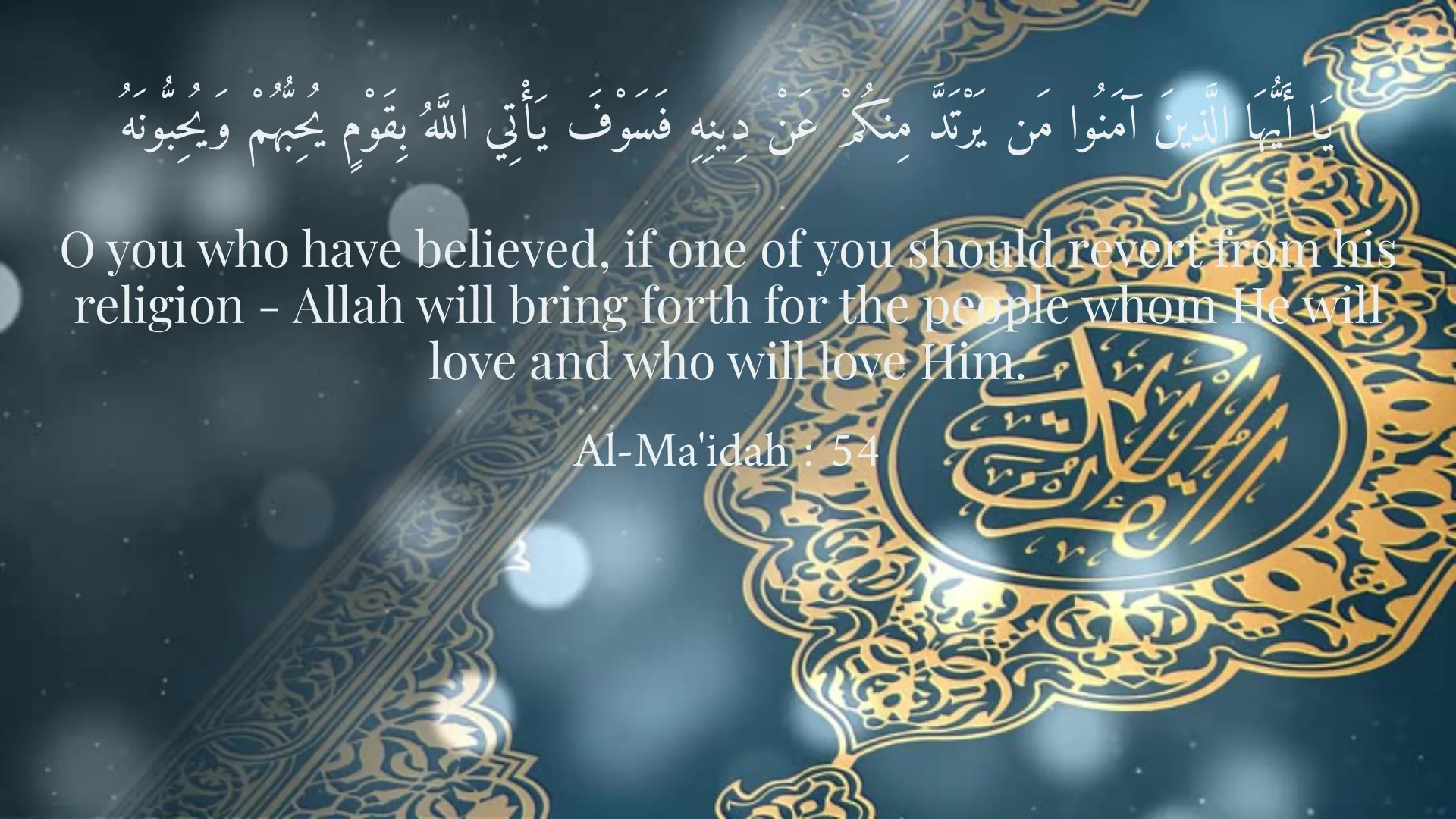
يَا أَيُّهَا الَّذِينَ آمَنُوا مَن يَرْتَدَّ مِنكُمْ عَنْ دِينِهِ فَسَوْفَ يَأْتِي اللَّهُ بِقَوْمٍ يُحِبُّهُمْ وَيُحِبُّونَهُ
O you who have believed, if one of you should revert from his religion - Allah will bring forth for the people whom He will love and who will love Him.
Al-Ma'idah : 54
اقْتَرَبَ لِلنَّاسِ حِسَابُهُمْ وَهُمْ فِي غَفْلَةٍ مُعْرِضُونَ
The Hour has approached, and people are in heedlessness as to it, wandering in their worldly affairs.
Al-Anbiya : 1
وَإِن لا تَنصُرُوهُ فَقَدْ نَصَرَهُ اللَّهُ
If you do not aid Allah, He will not aid you.
Muhammad : 38
Short Story
One day in the marketplace, Mohammed was sitting and contemplating the consequences of his actions. He recalled the verses of the Quran and felt that he needed to pay more attention to the signs of the End Times. Looking around him, he saw many people caught up in their daily lives, neglecting the remembrance of God. Mohammed decided to focus on prayer and the Quran regularly, reminding others of its importance. He discovered that as he embraced such practices, he positioned himself on the right path, and his life transformed with a profound spiritual essence.