Quranic Answer
The Holy Quran, as a comprehensive guide for humanity, not only clarifies fundamental beliefs but also provides extensive guidelines for individual and social conduct. The purpose of these guidelines is to cultivate noble human beings and foster a healthy, dynamic society. In this journey, the Quran explicitly condemns certain actions and attributes, prohibiting them so that people do not deviate from the path of perfection and can attain eternal salvation. These undesirable behaviors are the roots of corruption in both the individual and society, and avoiding them is essential for well-being in this life and the hereafter. Below, we delve into some of the most significant undesirable behaviors from the Quran’s perspective: 1. Shirk (Associating partners with Allah): Shirk, which means setting up anything or anyone alongside the One God in worship or attributing absolute power to other than Him, is the gravest sin in the sight of the Quran. This act undermines the foundation of Tawhid (Monotheism), which is the very basis of Islamic faith. The Quran explicitly states that Allah does not forgive associating partners with Him, unless one repents before death. (Surah An-Nisa, verse 48: “Indeed, Allah does not forgive association with Him, but He forgives what is less than that for whom He wills. And he who associates others with Allah has certainly fabricated a tremendous sin.”). Shirk can manifest in various forms, from idol worship and worshipping other than God, to relying on others instead of Him in times of difficulty, or prioritizing worldly desires over divine commands. The Quran emphasizes that whoever associates partners with Allah has committed a grave sin and has strayed far from the path of truth. This prohibition of shirk is not merely a religious command but also the basis for preserving human dignity and intellectual independence, as it liberates humanity from the servitude of anything other than its Creator, revealing the path to true salvation. 2. Injustice and Oppression (ظلم و ستم): Injustice, meaning violating the rights of others, transgressing divine limits, and putting something in its improper place, is unequivocally condemned by the Quran. This applies whether it’s injustice to oneself (such as committing sins) or to others (such as usurping property, neglecting rights, oppressing the weak, and bias in judgment). Allah repeatedly emphasizes in the Quran that oppressors will not succeed and promises severe punishment for them. Justice (adl) is the antithesis of injustice, and the Quran praises a society built upon fairness and equity. Oppressive behavior leads to corruption on earth, mistrust in society, and the loss of peace. The Quran commands believers to uphold justice and bear witness truthfully, even if it is against themselves or their relatives. (Surah An-Nahl, verse 90: “Indeed, Allah orders justice and good conduct and giving to relatives and forbids immorality and wrongdoing and oppression. He admonishes you that perhaps you will be reminded.”). 3. Murder (قتل نفس): The sanctity of human life is exceptionally high in Islam. The Holy Quran considers the unjust killing of an innocent life as akin to killing all of humanity, and saving a life as akin to saving all humanity. (Surah Al-Ma'idah, verse 32: “Because of that, We decreed upon the Children of Israel that whoever kills a soul unless for a soul or for corruption [done] in the land – it is as if he had slain mankind entirely. And whoever saves one – it is as if he had saved mankind entirely.”). This verse illustrates the immense value and sanctity of human life in Islam. Murder is not only a major sin deserving of divine punishment but also leads to the breakdown of security and peace in society. The Quran permits killing only in specific cases, such as retribution for a murderer or combating major corruption, but even in these instances, with the strictest adherence to ethical and legal regulations. 4. Backbiting, Slander, and Gossip (غیبت، تهمت، سخنچینی): These behaviors are among the most detestable moral and social sins, strongly prohibited by the Quran. Backbiting, meaning speaking ill of someone behind their back and revealing their hidden flaws, is likened in the Quran to eating the flesh of one's dead brother, which is spiritually and morally repulsive. (Surah Al-Hujurat, verse 12: “O you who have believed, avoid much [negative] assumption. Indeed, some assumption is sin. And do not spy or backbite one another. Would one of you like to eat the flesh of his brother when dead? You would detest it. And fear Allah; indeed, Allah is Accepting of repentance and Merciful.”). Slander, which involves falsely accusing someone without proof, and gossip, which is relaying words between two people to create discord, all lead to the erosion of trust, animosity, and the collapse of social relationships. The Quran advises believers to avoid negative assumptions and spying on others' affairs, as these acts are the roots of backbiting and slander, gradually leading society towards moral degradation. 5. Lying and False Witness (دروغ و شهادت دروغ): Truthfulness (sidq) is one of the fundamental ethical principles in Islam. In contrast, lying is among the moral vices strongly prohibited by the Quran. Lying leads to the destruction of honesty, deceit, and mistrust in human relationships. False witness, a subset of lying, has devastating consequences for social justice and turns truth into falsehood. The Quran commands believers to always be truthful and to refrain from bearing false witness, as lying is not only an individual sin but also undermines the foundation of a healthy, truth-based society. The Prophet Muhammad (PBUH) also emphasized the importance of truthfulness and avoiding falsehood in numerous traditions. 6. Arrogance and Pride (تکبر و غرور): Arrogance, meaning seeing oneself as superior to others and refusing to accept the truth, is among the blameworthy attributes in the Quran. Iblis was expelled due to his arrogance in disobeying God's command. Allah does not love the arrogant and does not guide them. (Surah Luqman, verse 18: “And do not turn your cheek in contempt toward people or walk through the earth exultantly. Indeed, Allah does not like those who are self-deluded and boastful.”). Arrogance hinders the acceptance of truth and advice, distancing individuals from the path of perfection. This attribute is the root cause of many injustices and selfish behaviors, as the arrogant individual sees themselves above divine laws and the rights of others, refusing to listen to any advice or guidance. 7. Greed and Usury (حرص و آز و ربا): Excessive worldly greed and accumulating wealth through illicit means, such as usury (riba), are strongly condemned in the Quran. Usury is considered a declaration of war against Allah and His Messenger and carries severe worldly and otherworldly consequences. (Surah Al-Baqarah, verse 275: “Those who consume interest will not stand [on the Day of Resurrection] except as one stands who is being beaten by Satan into insanity. That is because they say, 'Trade is only like interest.' But Allah has permitted trade and has forbidden interest.”). The Quran denounces excessive hoarding of wealth and neglecting the rights of the poor, instead encouraging charity and giving. Greed leads to forgetting the hereafter and focusing solely on materialism, potentially leading to the exploitation of others and creating severe economic inequalities in society. 8. Hypocrisy (نفاق): Hypocrisy, meaning being two-faced and feigning faith while harboring disbelief or ill-will inwardly, is one of the worst attributes in the Quran. Hypocrites will be in the lowest depths of Hell in the Hereafter. (Surah An-Nisa, verse 145: “Indeed, the hypocrites will be in the lowest depths of the Fire, and never will you find for them a helper.”). Hypocrisy severely damages society, as it destroys trust and undermines social unity. The Quran strongly exposes the nature of hypocrites and urges believers to avoid this attribute and always be sincere and truthful in their words and deeds. This attribute is not only a sign of weak faith but also sets the stage for various betrayals and conspiracies. 9. Disobedience to Parents (نافرمانی از والدین): After the right of Allah, the rights of parents are among the most important in the Quran. Disobeying parents, disrespecting them, and even uttering the word “uff” (a word of contempt) to them, are considered major sins. (Surah Al-Isra, verse 23: “And your Lord has decreed that you not worship except Him, and to parents, good treatment. Whether one or both of them reach old age [while] with you, say not to them [so much as], 'uff,' and do not repel them but speak to them a noble word.”). The Quran strongly emphasizes showing kindness and doing good to parents, especially in their old age when they require more care. Respecting parents and attending to their needs is a sign of gratitude and manners, highly valued in Islamic society. Conclusion: These are only some of the undesirable behaviors prohibited in the Quran. This divine book, by clearly depicting what is blameworthy, paves the way for the salvation of individuals and society. Avoiding these attributes and behaviors not only helps with one's spiritual peace and moral elevation but also lays the foundation for a healthy, just, and humane society. Every Muslim is obliged to reflect upon the Quranic verses and follow its guidance, building their life upon moral virtues and avoiding vices, so that they may attain peace and prosperity in this world and be recipients of God's mercy in the Hereafter.
Related Verses
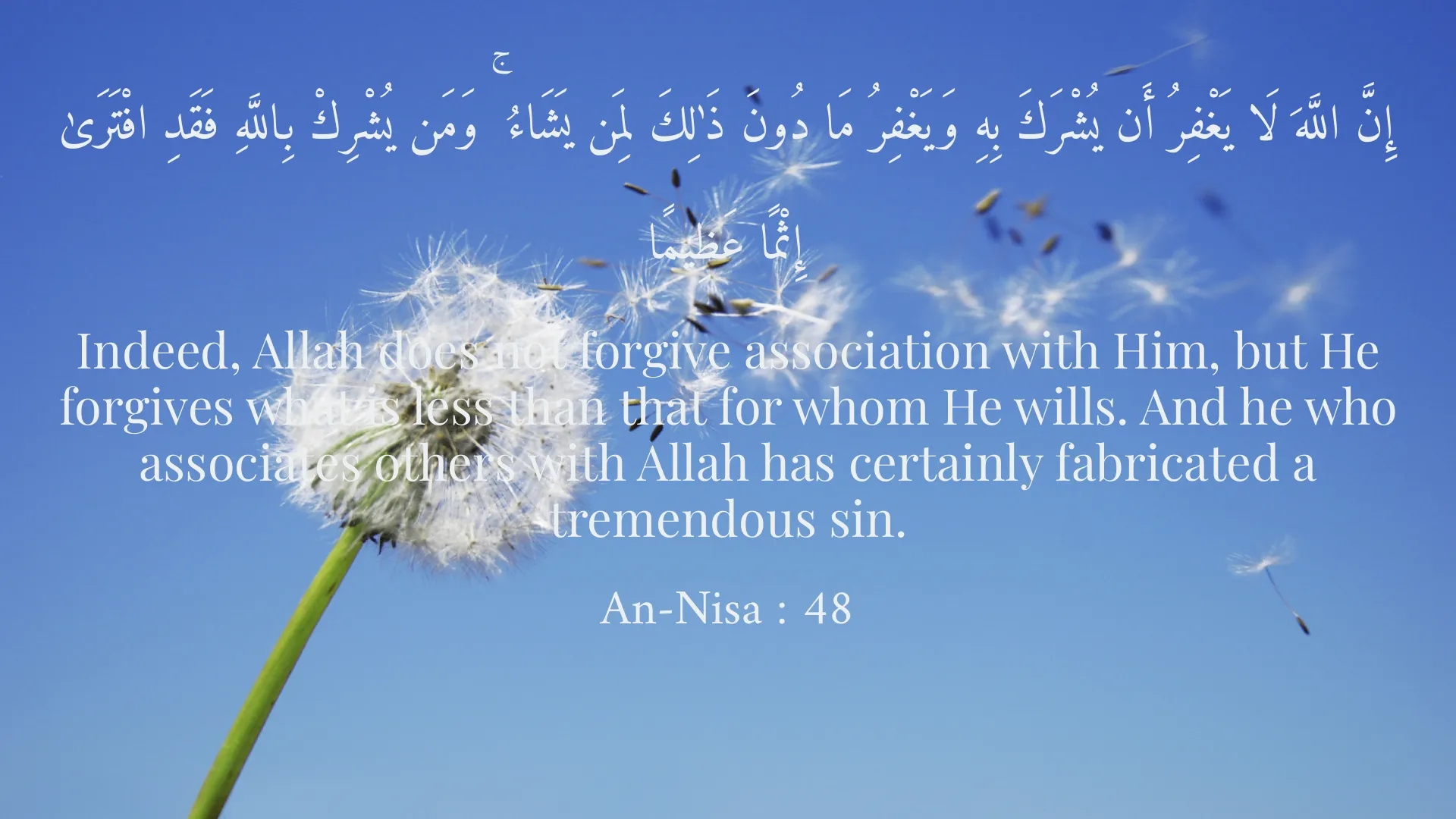
إِنَّ اللَّهَ لَا يَغْفِرُ أَن يُشْرَكَ بِهِ وَيَغْفِرُ مَا دُونَ ذَٰلِكَ لِمَن يَشَاءُ ۚ وَمَن يُشْرِكْ بِاللَّهِ فَقَدِ افْتَرَىٰ إِثْمًا عَظِيمًا
Indeed, Allah does not forgive association with Him, but He forgives what is less than that for whom He wills. And he who associates others with Allah has certainly fabricated a tremendous sin.
An-Nisa : 48
يَا أَيُّهَا الَّذِينَ آمَنُوا اجْتَنِبُوا كَثِيرًا مِّنَ الظَّنِّ إِنَّ بَعْضَ الظَّنِّ إِثْمٌ ۖ وَلَا تَجَسَّسُوا وَلَا يَغْتَب بَّعْضُكُم بَعْضًا ۚ أَيُحِبُّ أَحَدُكُمْ أَن يَأْكُلَ لَحْمَ أَخِيهِ مَيْتًا فَكَرِهْتُمُوهُ ۚ وَاتَّقُوا اللَّهَ ۚ إِنَّ اللَّهَ تَوَّابٌ رَّحِيمٌ
O you who have believed, avoid much [negative] assumption. Indeed, some assumption is sin. And do not spy or backbite one another. Would one of you like to eat the flesh of his brother when dead? You would detest it. And fear Allah; indeed, Allah is Accepting of repentance and Merciful.
Al-Hujurat : 12
إِنَّ اللَّهَ يَأْمُرُ بِالْعَدْلِ وَالْإِحْسَانِ وَإِيتَاءِ ذِي الْقُرْبَىٰ وَيَنْهَىٰ عَنِ الْفَحْشَاءِ وَالْمُنكَرِ وَالْبَغْيِ ۚ يَعِظُكُمْ لَعَلَّكُمْ تَذَكَّرُونَ
Indeed, Allah orders justice and good conduct and giving to relatives and forbids immorality and wrongdoing and oppression. He admonishes you that perhaps you will be reminded.
An-Nahl : 90
Short Story
They say there was once a just and kind king who ruled over his people. One day, as he sat on his palace veranda, a cheerful fisherman passed by with his freshly caught fish. The king, drawn by the delightful aroma of the fresh fish, asked him, "Where did you catch this fish, and for how much do you sell it?" The fisherman replied, "Your Majesty, I caught it from the river in this city, and I sell it for a dirham." The king ordered his men to buy the fish and give the fisherman more than its price, along with an additional reward. The minister was surprised by the king's generosity and asked, "Your Majesty, what great favor is this you bestow upon a poor fisherman?" The king smiled and said, "You don't know! What a pleasure it is when a fresh and fragrant fish reaches us at this hour of the day? If I hadn't shown kindness to this fisherman at the very first moment, he would have left disheartened, and perhaps such fresh and high-quality fish would never reach the court again. Know that hurting the hearts of the subjects is the beginning of the downfall of a kingdom." From this sweet tale by Saadi, we can learn that even in small interactions, one must avoid injustice and hurting others, and instead practice kindness and justice. By this act, the king not only enjoyed his pleasant moment but also taught a great lesson to his minister and those present on how to treat people with kindness and justice so that blessings may always flow in their lives and rule.