Quranic Answer
The Holy Quran describes several characteristics of the ungrateful person, or one who denies God's blessings. These traits not only indicate a lack of faith or denial of God's existence but also reveal the depth of spiritual and moral weaknesses within such individuals. Ingratitude, often expressed in religious texts as 'kufr al-ni'mah' (denial of blessings) or 'kanood' (ungrateful), stands in stark contrast to gratitude and leads to severe worldly and otherworldly consequences. Understanding these characteristics helps us avoid falling into the trap of ingratitude and instead choose the path of gratefulness. One of the most prominent characteristics of an ungrateful person is forgetfulness and denial of the source of blessings. When such individuals find themselves in comfort and prosperity, they forget the true Benefactor, Allah, and attribute blessings to their own efforts, intelligence, or luck. The Quran, in Surah Az-Zumar, verse 8, refers to this state: "And when adversity touches man, he calls upon his Lord, turning to Him; then when He bestows on him a favor from Himself, he forgets that for which he called upon Him before, and sets up rivals to Allah that he may mislead [others] from His way. Say, 'Enjoy your disbelief for a little; indeed, you are of the companions of the Fire.'" This verse clearly shows that an ungrateful person turns to God in hardship but forgets the source of mercy as soon as the problem is resolved. Instead of showing gratitude, they even resort to polytheism and misguidance. This forgetfulness is the root of many subsequent deviations. Another characteristic is self-conceit and arrogance. An ungrateful person is often afflicted with self-importance, imagining that everything they possess is their right and the result of their inherent merits. This arrogance prevents them from seeing the helping hand of God and causes them not only to be ungrateful but also potentially to act arrogantly in the face of divine commands. The story of the rich man in Surah Al-Kahf (verses 32-44) is a prime example of this trait. Seeing his lush gardens and abundant wealth, he arrogantly says: "And I do not think that this [wealth] will ever perish, nor do I think the Hour will occur" (Al-Kahf, verses 35-36). These words reflect arrogance and forgetfulness of Allah's eternal power, which led to nothing but ruin and destruction for him. This story clearly illustrates how ingratitude can lead to arrogance and denial of truths. The third attribute is a tendency toward rebellion and transgression of divine limits. When an individual becomes indifferent to God's blessings, they no longer feel dependent on Him, which leads them toward sin and transgression of divine boundaries. The Quran states in Surah Al-Alaq, verses 6-7: "No! [But] indeed, man transgresses, because he sees himself self-sufficient." This self-sufficiency stems from a lack of understanding of dependence on God and forgetting His blessings, leading to rebellion and disobedience. An ungrateful person, because they do not recognize the value and source of what they possess, easily squanders it on falsehoods and oppresses others. Furthermore, regret during affliction and failure to learn lessons is another characteristic. When calamities and misfortunes befall them, they may cry out for help and turn to God, but after the affliction is removed, they revert to their former state, failing to learn from what they experienced. This vicious cycle keeps them in a perpetual state of ingratitude and regret, hindering their spiritual growth. The Quran repeatedly condemns this behavior and considers it a sign of lack of insight and hardness of heart. In summary, the ungrateful person in the Quran is an individual who, when confronted with divine blessings, falls into heedlessness, forgetfulness, pride, and arrogance. They attribute blessings to themselves, show ingratitude instead of thanks, and transgress divine limits. The consequence of this ingratitude is the loss of blessings, exposure to divine punishment, and deprivation of guidance. In contrast, the Quran encourages believers to be grateful and promises that gratitude will increase blessings, as stated in Surah Ibrahim, verse 7: "And [remember] when your Lord proclaimed, 'If you are grateful, I will surely increase you [in favor]; but if you deny, indeed, My punishment is severe.'" Therefore, ingratitude in the Quran is not merely a reprehensible moral trait but a spiritual illness and a cause of ruin that distances humanity from divine proximity.
Related Verses
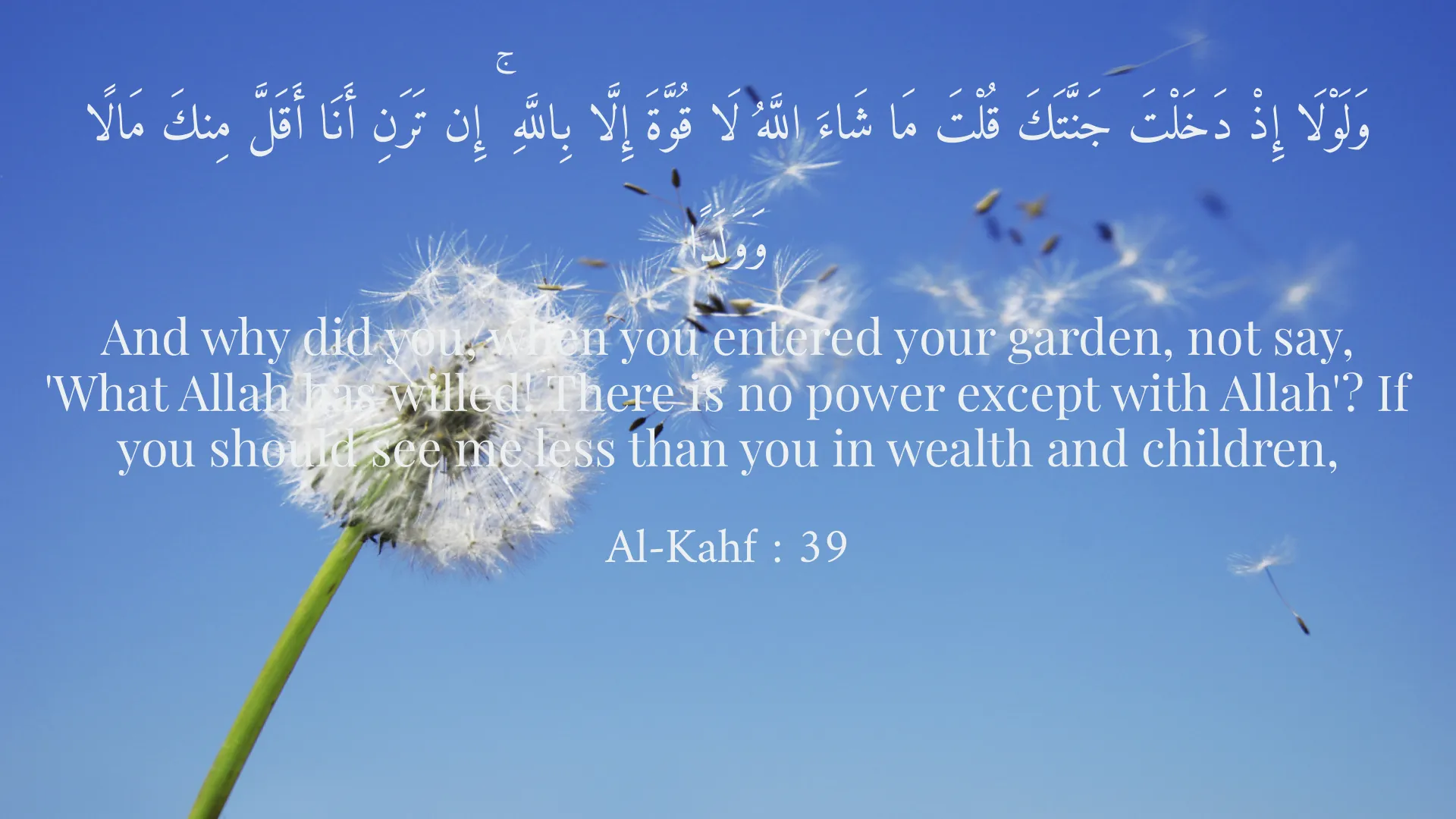
وَلَوْلَا إِذْ دَخَلْتَ جَنَّتَكَ قُلْتَ مَا شَاءَ اللَّهُ لَا قُوَّةَ إِلَّا بِاللَّهِ ۚ إِن تَرَنِ أَنَا أَقَلَّ مِنكَ مَالًا وَوَلَدًا
And why did you, when you entered your garden, not say, 'What Allah has willed! There is no power except with Allah'? If you should see me less than you in wealth and children,
Al-Kahf : 39
وَإِذْ تَأَذَّنَ رَبُّكُمْ لَئِن شَكَرْتُمْ لَأَزِيدَنَّكُمْ ۖ وَلَئِن كَفَرْتُمْ إِنَّ عَذَابِي لَشَدِيدٌ
And [remember] when your Lord proclaimed, 'If you are grateful, I will surely increase you [in favor]; but if you deny, indeed, My punishment is severe.'
Ibrahim : 7
إِنَّ الْإِنسَانَ لِرَبِّهِ لَكَنُودٌ
Indeed, mankind, to his Lord, is ungrateful.
Al-'Adiyat : 6
Short Story
In Saadi's Gulistan, it is said that there once was a wealthy and proud king. He was so immersed in his blessings that he forgot all this came from God's grace. Whenever someone reminded him to be grateful, he would arrogantly say, 'All this is the result of my own planning and power!' One day, a severe famine struck the kingdom, and his wealth gradually began to dwind dwindle. The king, who until yesterday saw himself as self-sufficient, was now helpless and impoverished. It was then that he remembered how, at the height of his blessings, he had forgotten the true Benefactor. This bitter experience taught him that blessings are a trust from God, and ingratitude is the key to their decay. He later became a humble and grateful ruler, realizing that true peace lies in God's pleasure and gratitude for blessings.