Quranic Answer
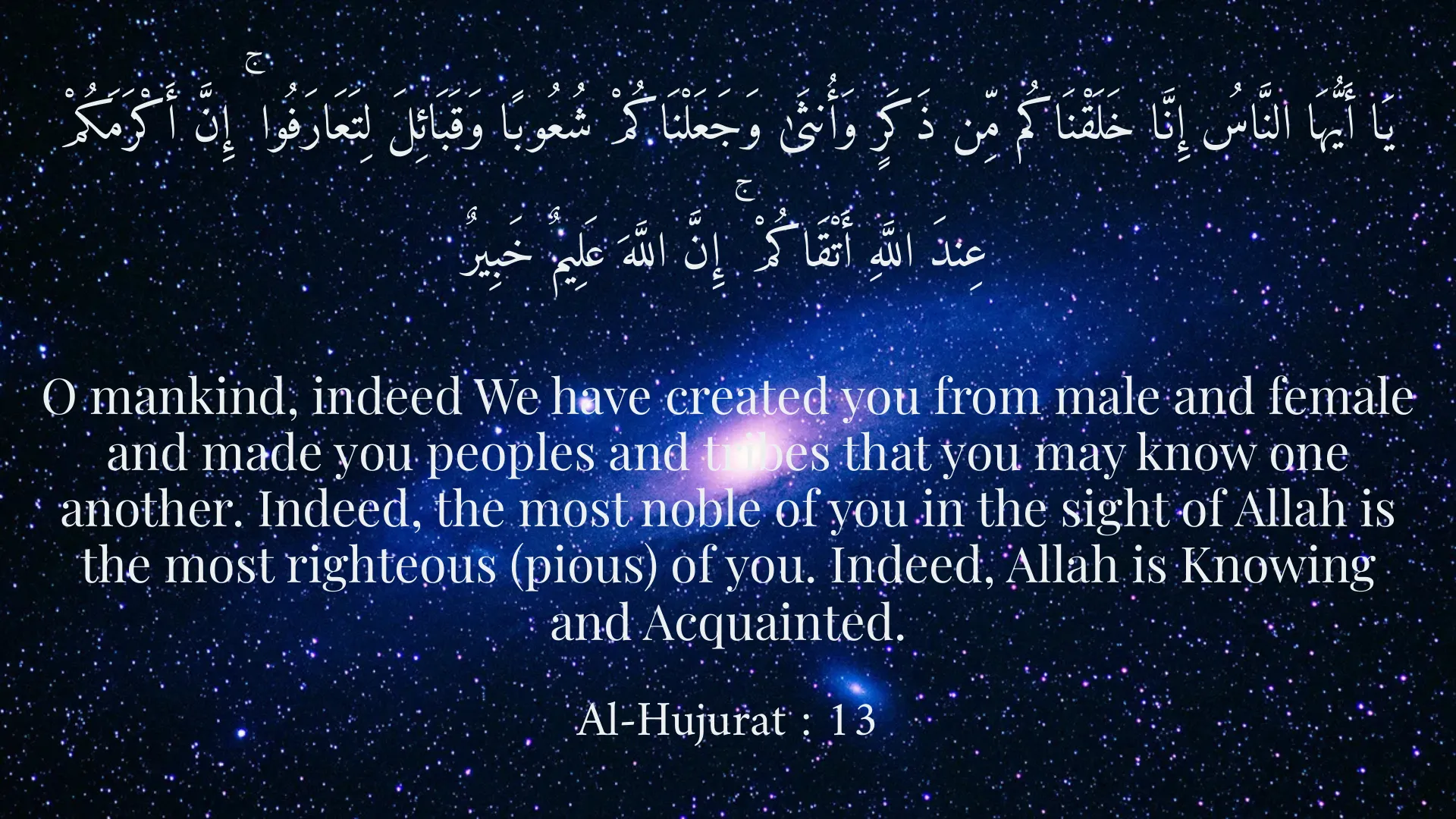
In the sublime teachings of the Holy Quran, the true value of a human being is not determined by superficial and transient worldly criteria such as wealth, social status, race, beauty, or physical power. Rather, it stems from deeper roots that relate to their spiritual, ethical, and existential dimensions. The Quran, with its comprehensive and inclusive perspective, introduces criteria for valuing humanity that are eternally stable and valid, transcending time and place. This divine outlook considers humanity a noble and purposeful creation, possessing the potential to reach the pinnacle of perfection and proximity to God, provided they follow the right path and act according to divine revelations. The most central concept the Quran presents for determining human value is 'Taqwa' (God-consciousness or piety). Surah Al-Hujurat, verse 13, explicitly states: "O mankind, indeed We have created you from male and female and made you peoples and tribes that you may know one another. Indeed, the most noble of you in the sight of Allah is the most righteous (pious) of you. Indeed, Allah is Knowing and Acquainted." This verse clearly indicates that the sole criterion for human superiority and honor in the sight of Allah is the degree of their Taqwa. Taqwa is not merely the observance of religious rituals; it is an inner state of continuous awareness and vigilance of God's presence, which motivates a person to be righteous in all aspects of life—in thought, word, and deed, and in intention. It involves abstaining from what God has forbidden and striving to fulfill His commands. A person with Taqwa always walks the path of divine pleasure, upholds justice, avoids oppression, and is honest and trustworthy in all matters. This quality distinguishes them from other humans and bestows upon them a higher value, irrespective of any material or superficial affiliations. It is the bedrock upon which all other virtues are built, fostering humility, compassion, and a profound sense of responsibility towards oneself, others, and the environment. Beyond Taqwa, 'sincere faith' (Iman) and 'righteous deeds' (Amal Salih) are also fundamental pillars for valuing human beings in the Quran. These two concepts are repeatedly mentioned together in numerous Quranic verses, demonstrating the inseparable link between inner conviction and outward action. Faith is not merely an intellectual assent; it is a profound conviction that moves the heart and limbs, compelling a person to perform good deeds. 'Righteous deeds' encompass every good act performed with sincerity (Ikhlas) and a pure intention for the sake of God's pleasure. This ranges from individual acts of worship like prayer (Salat) and fasting (Sawm) to serving humanity, helping the needy, establishing justice, speaking the truth, safeguarding the rights of others, and even protecting the environment. The Quran emphasizes that believing and righteous individuals not only achieve peace and happiness in this world but also await a great and eternal reward in the Hereafter. In Surah Al-Asr (103:1-3), we read: "By time, Indeed, mankind is in loss, Except for those who have believed and done righteous deeds and advised each other to truth and advised each other to patience." This short but profound Surah clearly articulates that the only way to avoid loss and achieve true value is through faith, righteous actions, mutual exhortation to truth, and mutual exhortation to patience. 'Knowledge' (Ilm) and 'Wisdom' (Hikmah) are also defining factors of human worth from the Quranic perspective. The Quran calls upon humanity to reflect, reason, and acquire knowledge, praising those who are learned. In Surah Al-Mujadilah, verse 11, Allah states: "Allah will raise those who have believed among you and those who were given knowledge, by degrees." This verse indicates that knowledge, particularly that which leads to the recognition of God and His laws and is used for the betterment of humanity, elevates a person's status. Knowledge accompanied by Taqwa and righteous deeds grants a person insight and wisdom, guiding them on the path of guidance and perfection. Human value lies in utilizing one's intellect and critical thinking to comprehend the truths of existence and to apply them for good and well-being. It is through continuous learning and understanding that individuals can better fulfill their purpose and contribute meaningfully to society. Furthermore, the 'purposefulness and accountability' of humanity constitute another dimension of their value. The Quran declares that humans were not created in vain; a noble purpose has been assigned to them: the worship of God and divine vicegerency (Khilafah) on Earth. In Surah Adh-Dhariyat, verse 56, we read: "And I did not create the jinn and mankind except to worship Me." This worship is not merely the performance of rituals but living in accordance with God's will and aligning all activities towards His pleasure. As 'Khalifatullah' or God's vicegerent on Earth, humans are responsible for developing and protecting it, establishing justice and equity, and guiding others towards goodness. The extent of a person's success in fulfilling these responsibilities directly correlates with their value in the sight of God. Finally, 'excellent moral character' (Akhlaq) and virtues such as patience (Sabr), gratitude (Shukr), humility (Tawadu), forgiveness (Afw), justice (Adl), truthfulness (Sidq), trustworthiness (Amanah), and compassion (Rahmah) are all significant criteria for human value in the Quran. The Prophet Muhammad (PBUH) himself stated that the purpose of his mission was to perfect noble character. A human being who interacts with others with excellent morals exemplifies human perfection, and this inherently adds to their worth. In conclusion, the true value of a human being in the Holy Quran is intricately linked to their relationship with God and the degree to which divine attributes are manifested within them, fundamentally rooted in faith, righteous deeds, Taqwa, beneficial knowledge, and noble character. These are the qualities that bestow authenticity and permanence upon a person, guiding them towards eternal success and fulfillment, far beyond any fleeting worldly achievements.
Related Verses
يَا أَيُّهَا النَّاسُ إِنَّا خَلَقْنَاكُم مِّن ذَكَرٍ وَأُنثَىٰ وَجَعَلْنَاكُمْ شُعُوبًا وَقَبَائِلَ لِتَعَارَفُوا ۚ إِنَّ أَكْرَمَكُمْ عِندَ اللَّهِ أَتْقَاكُمْ ۚ إِنَّ اللَّهَ عَلِيمٌ خَبِيرٌ
O mankind, indeed We have created you from male and female and made you peoples and tribes that you may know one another. Indeed, the most noble of you in the sight of Allah is the most righteous (pious) of you. Indeed, Allah is Knowing and Acquainted.
Al-Hujurat : 13
وَالْعَصْرِ
By time,
Al-Asr : 1
إِنَّ الْإِنسَانَ لَفِي خُسْرٍ
Indeed, mankind is in loss,
Al-Asr : 2
إِلَّا الَّذِينَ آمَنُوا وَعَمِلُوا الصَّالِحَاتِ وَتَوَاصَوْا بِالْحَقِّ وَتَوَاصَوْا بِالصَّبْرِ
Except for those who have believed and done righteous deeds and advised each other to truth and advised each other to patience.
Al-Asr : 3
وَلَقَدْ كَرَّمْنَا بَنِي آدَمَ وَحَمَلْنَاهُمْ فِي الْبَرِّ وَالْبَحْرِ وَرَزَقْنَاهُم مِّنَ الطَّيِّبَاتِ وَفَضَّلْنَاهُمْ عَلَىٰ كَثِيرٍ مِّمَّنْ خَلَقْنَا تَفْضِيلًا
And We have certainly honored the children of Adam and carried them on the land and sea and provided for them of the good things and preferred them over much of what We have created, with [definite] preference.
Al-Isra : 70
Short Story
In Saadi's Golestan, it is narrated that a just king once asked his vizier one night, "What is your worth?" The vizier was astonished and replied, "My lord, what kind of question is this?" The king said, "The worth of every person is measured by that in which they are absorbed." The vizier was still perplexed. The king continued, "Whoever attaches their heart to this world and seeks after wealth and status, their value becomes as meager as those things. But whoever attaches their heart to truth and strives in the path of goodness and righteousness, their value becomes priceless and boundless. So, your true worth is not in your fine clothes or your vizier's post, but in your piety and your service to the people." The vizier learned a great lesson from the king's words and realized that true human dignity lies in one's inner being, not in fleeting appearances.