Quranic Answer
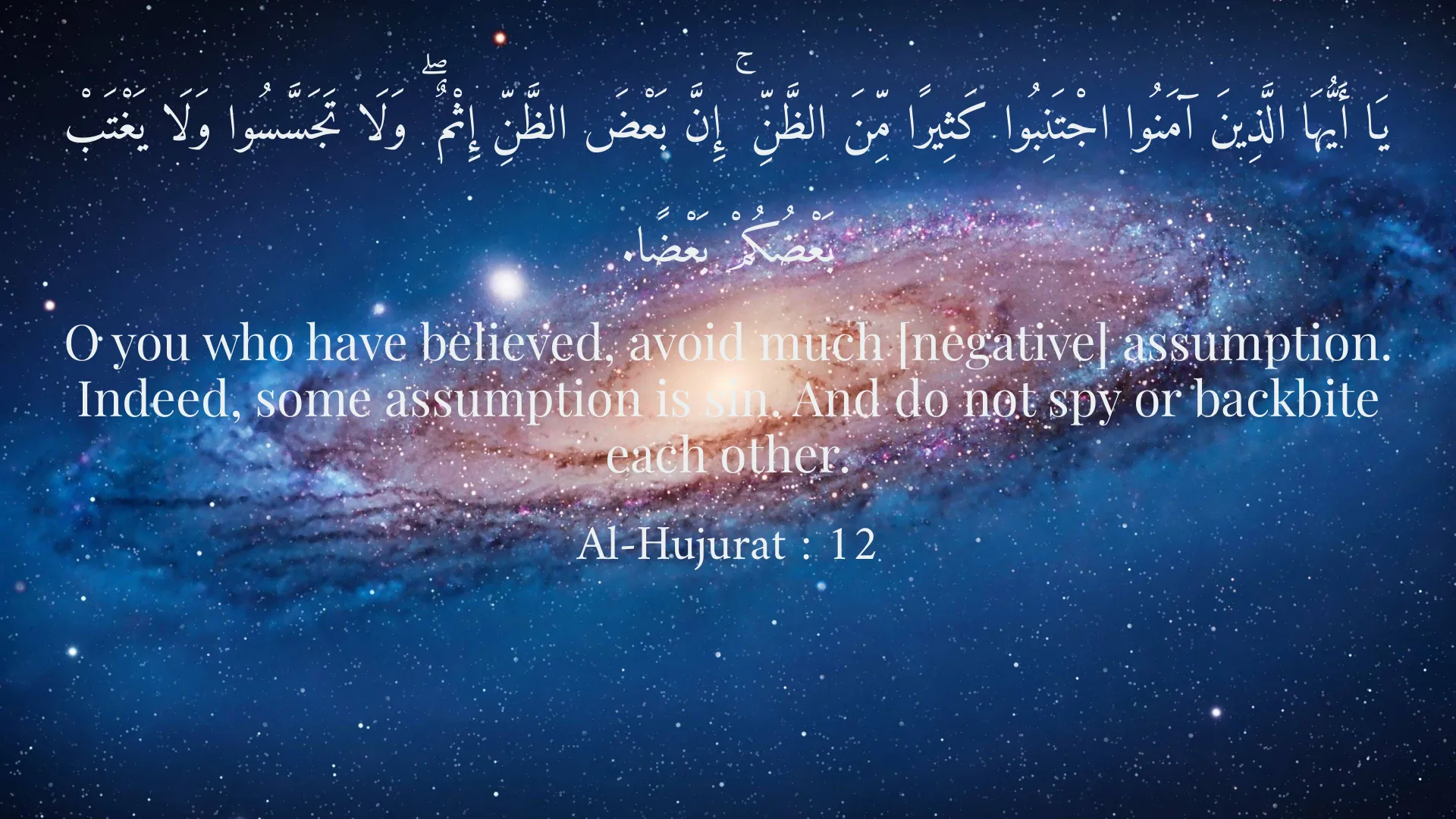
In the Quran, suspicion and negative assumptions are strongly condemned, and believers are guided towards positive thinking and good opinion. The imperative to cultivate a mindset of positivity and kindness is a recurrent theme throughout the holy text. One of the most significant references in this context can be found in Surah Al-Hujurat, verse 12, which states: 'O you who have believed, avoid much [negative] assumption. Indeed, some assumption is sin. And do not spy or backbite each other.' This verse serves as a clear directive, urging individuals to refrain from harboring suspicion towards one another and instead endeavor to uphold a good opinion. The implications of this command are profound, as they reveal the detrimental effects that suspicion can have not just on social relations, but also on the individual's internal state of well-being. Suspicion, characterized by doubt and mistrust, can lead to a breakdown in relationships. It creates an environment ripe for misunderstandings, conflict, and a general atmosphere of negativity. When individuals assume the worst about others, they close off avenues for open communication and understanding, which are essential elements for a harmonious community. Furthermore, the notion of suspicion is corrosive, as it eats away at the fabric of trust that binds society together. Trust is fundamental for any relationship, be it familial, social, or professional. When suspicion creeps in, it threatens to unravel these connections, leading to isolation and fragmentation. Therefore, the Quran's emphasis on maintaining a good opinion serves as a protective measure against the disintegration of social bonds. Moreover, the detrimental nature of suspicion extends beyond interpersonal relationships. It also significantly affects individual morale and psychological health. Constantly suspecting others or engaging in negative assumptions could lead to anxiety, paranoia, and a defeatist attitude. Individuals who allow suspicion to control their thoughts may find themselves in a downward spiral of negativity, impacting their overall quality of life. In contrast, cultivating a positive mindset, as encouraged by the Quran, promotes inner peace and contentment. By consciously striving to focus on the positive qualities of others and assuming good intentions, individuals can foster a more optimistic outlook on life. This reflects the wisdom of the Quran in promoting not just communal harmony, but also individual well-being. In another applicable verse from the Quran, Surah Al-Anfal, verse 59, Allah instructs believers: 'And let not those who disbelieve suppose that the message of Allah is a cause of delay for them.' This verse serves as a reminder to believers about the importance of confronting doubts with faith and positivity. Here, the significance of positive assumptions is further reinforced. Believers are encouraged to view Allah's messages and guidance with trust rather than suspicion. This not only strengthens their own faith but also allows for a more profound comprehension of their spiritual journey. When individuals cultivate a mindset of positivity and trust, they are better equipped to navigate life's challenges, secure in the knowledge that their beliefs are supported by a higher power. Additionally, the Quran's advocacy for a society free from suspicion has profound implications for social justice and community building. When people actively engage in suspicion, they unwittingly contribute to societal divisions. The act of nurturing good opinion not only helps to close gaps between individuals but also promotes a sense of camaraderie and support within the community. It fosters an inclusive environment where each member feels valued and respected. Thus, the principles advocated by the Quran can act as the foundational elements for a utopian society built on trust, respect, and goodwill. In essence, the Quran encourages believers to cultivate a mindset that is inclusive, understanding, and supportive of one another. The admonitions against suspicion and negative assumptions carry significant weight in establishing a community where peace, love, and understanding can flourish. By adhering to these principles, individuals can build stronger relationships, enhance their mental well-being, and contribute to the well-being of others. Ultimately, the pursuit of blessings and peace through a good opinion and positive thinking is not merely a personal endeavor, but a collective one that can elevate entire communities. In conclusion, the teachings found in the Quran serve as a beacon for believers, guiding them towards a life characterized by hope, understanding, and positive relationships. The exhortation to avoid suspicion and negativity is a powerful reminder of the importance of nurturing kindness and goodwill. By fostering a culture rooted in trust and positivity, believers can work towards a society that transcends petty differences and celebrates the shared humanity of all individuals.
Related Verses
يَا أَيُّهَا الَّذِينَ آمَنُوا اجْتَنِبُوا كَثِيرًا مِّنَ الظَّنِّ ۚ إِنَّ بَعْضَ الظَّنِّ إِثْمٌ ۖ وَلَا تَجَسَّسُوا وَلَا يَغْتَبْ بَعْضُكُمْ بَعْضًا.
O you who have believed, avoid much [negative] assumption. Indeed, some assumption is sin. And do not spy or backbite each other.
Al-Hujurat : 12
وَلَا يَحْسَبَنَّ الَّذِينَ كَفَرُوا أَنَّمَا نُمْلِي لَهُمْ خَيْرٌ لِأَنفُسِهِمْ ۚ إِنَّمَا نُمْلِي لَهُمْ لِيَزْدَادُوا إِثْمًا.
And let not those who disbelieve suppose that the message of Allah is a cause of delay for them. Indeed, We give them respite only that they may increase in sin.
Al-Anfal : 59
Short Story
Once upon a time, there was a man named Ahmad who was always suspicious of others. He viewed everyone he met with skepticism. One day, he decided to turn to the Quran to understand the true essence of faith. After reading its verses, he realized the importance of good opinion and staying away from suspicion. From that day on, he endeavored to trust others and build friendly relationships. Ultimately, his life was filled with love and friendship.