Quranic Answer
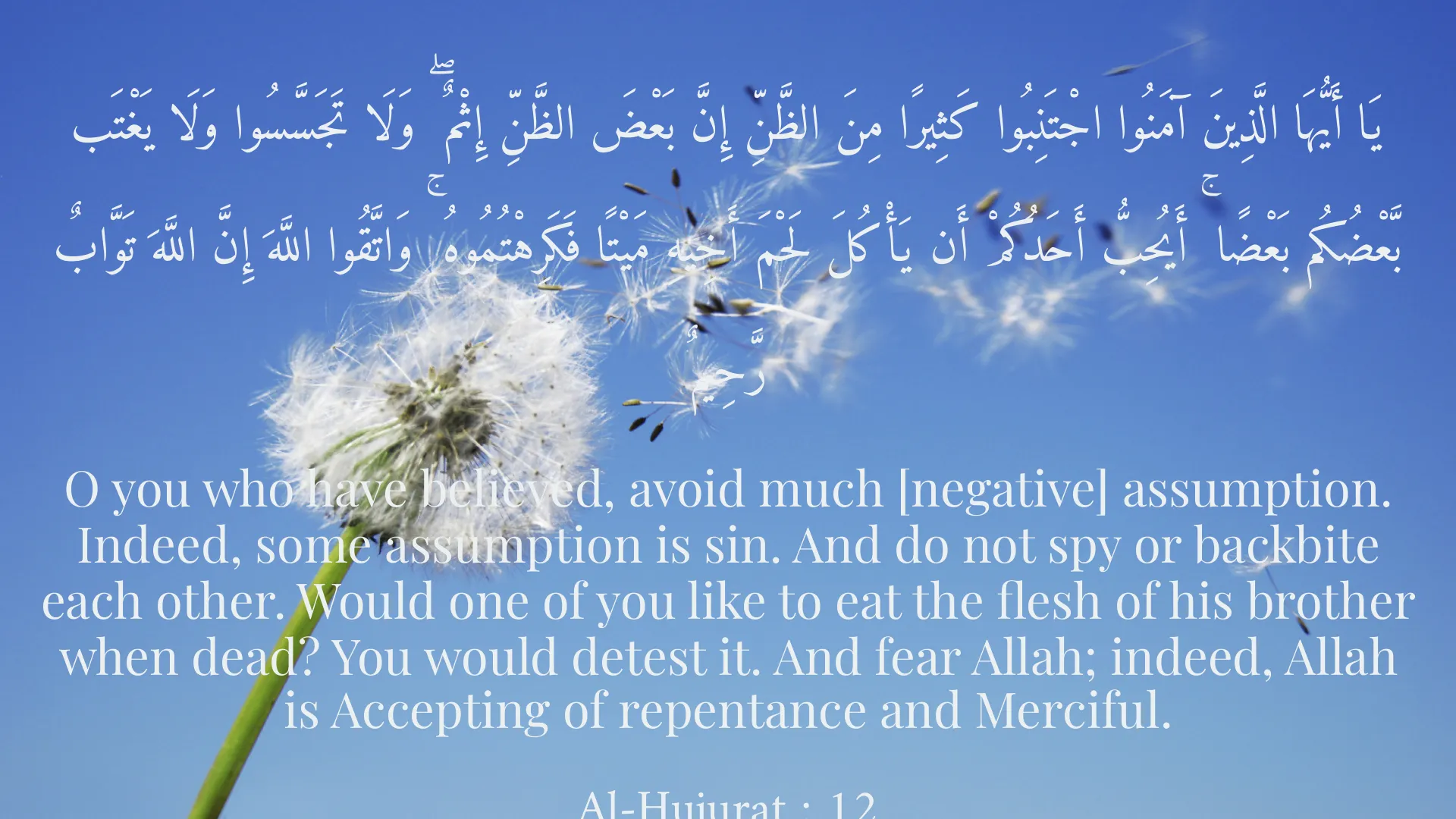
The Holy Quran, an eternal divine scripture, outlines the fundamental principles of human ethics and conduct across all ages and circumstances. Although the concept of a “virtual world” or “digital space” did not exist at the time of the Quran's revelation, its teachings are so comprehensive and universal that they provide clear guidance for navigating this modern environment. Regarding “suspicion” (سوءظن, su'u az-zann) in the virtual world, the Quran explicitly and unequivocally addresses this issue, condemning it through principles that undoubtedly apply to our online interactions. The pivotal and central verse in this discussion is Surah Al-Hujurat (49:12), which states: “O you who have believed, avoid much [negative] assumption. Indeed, some assumption is sin. And do not spy or backbite each other. Would one of you like to eat the flesh of his brother when dead? You would detest it. And fear Allah; indeed, Allah is Accepting of repentance and Merciful.” This noble verse forms the backbone of the Quran's perspective on suspicion. The phrase “avoid much [negative] assumption” (اجْتَنِبُوا کَثِیرًا مِنَ الظَّنِّ) indicates that not only should one avoid bad assumptions, but one should steer clear of “much assumption,” because “indeed, some assumption is sin” (إِنَّ بَعْضَ الظَّنِّ إِثْمٌ). This Quranic warning goes beyond a simple ethical recommendation; it elevates suspicion to the level of a sin, one that can have severe worldly and otherworldly consequences. This principle is deeply and fundamentally applicable in the virtual world. In this space, due to the lack of face-to-face interaction, limitations in understanding tone and intent, and the abundance of incomplete or misleading information, the ground for forming suspicion is much more fertile. A short message, an ambiguous image, or even a status update can easily generate misunderstandings and baseless suspicions. The shocking analogy, “Would one of you like to eat the flesh of his brother when dead? You would detest it!” vividly likens backbiting to cannibalism. Suspicion often serves as the precursor to backbiting and spying. When we develop suspicion towards someone, we tend to pry into their affairs, seek information (even if untrue) to confirm our assumptions, and then disseminate it in various forums. This process occurs in the virtual world with unprecedented speed and scale. A rumor or slander born from suspicion can reach thousands in minutes, destroying the reputation of an individual who may be entirely blameless. Retweeting, sharing, and liking content that contains suspicion or false information is a clear manifestation of spreading sin and encouraging it. Furthermore, Surah Al-Hujurat (49:6) emphasizes the importance of “tabayyun” and “tathabbut” (verification and investigation): “O you who have believed, if there comes to you a disobedient person with information, investigate it, lest you harm a people out of ignorance and become regretful over what you have done.” This verse directly addresses our responsibility concerning the information we receive. In the virtual world, where news and information—both true and false—spread at an incredible pace, acting upon this verse is more crucial than ever. Bad assumptions often stem from receiving incomplete or unreliable information. Without investigation and verification, suspicion quickly grows and can lead to hasty judgments, labeling, and even social ostracization of an individual or a group. These hasty judgments in the virtual space can not only harm the individual but, on a broader scale, lead to division and distrust within the virtual community and subsequently in the real society. By prohibiting suspicion and commanding investigation, the Quran essentially aims to establish a society based on trust, respect, and justice. In the virtual world, where many interactions are indirect and without physical presence, assuming innocence and good intentions from others holds particular importance. Suspicion erects walls of distrust between individuals and destroys constructive communication. This is contrary to the Quran's consistent recommendations for peace, friendship, and empathy. The origins of suspicion in the virtual world are manifold: the anonymity of identities, the possibility of identity theft, the spread of fake news, provocative content, and the absence of ethical filters in content production and dissemination. These factors create a fertile ground for baseless accusations and misunderstandings. The virtual realm, despite its connectivity, often lacks the nuances of face-to-face communication, making it easier for misinterpretations to arise and fester. The consequences of suspicion in the virtual world are severe, affecting both individuals and society at large. On an individual level, it can lead to stress, anxiety, paranoia, depression, and loss of inner peace. The one who harbors suspicion often suffers internally as well. Socially, suspicion erodes social trust, spreads rumors, damages reputations, fosters the formation of cynical and destructive groups, promotes hate speech, invades individuals' privacy, and creates a toxic environment that discourages healthy and constructive engagement in the virtual space. From a religious and ethical standpoint, it involves committing sins, distancing oneself from Quranic values, hindering spiritual growth, and making oneself unworthy of divine mercy. The Quranic solutions to combat suspicion in the virtual world are clear: Firstly, “Husn az-Zann” (Good Assumption); assume good intentions from others unless there is definitive proof to the contrary, which is an act of worship and good ethics in itself. Secondly, “Tathabbut and Tabayyun” (Verification and Investigation); thoroughly research and verify any information before accepting or disseminating it, paying attention to the source, accuracy, and intent behind the information. Thirdly, avoid “Tajassus” (Spying); do not intrude into the private lives of others or seek out their weaknesses. Fourthly, avoid “Ghibah” (Backbiting) and “Tuhmah” (Slander); even if a suspicion forms in your mind, do not voice it or spread it. Fifthly, promote awareness and education; advocate for Quranic ethics in the virtual space, and educate users on media literacy and critical thinking. And sixthly, shift in perspective; view the virtual world as a tool for connection and good, not a place for conflict and cynicism. Every user bears individual responsibility for the content they produce, consume, or disseminate, and this responsibility is also emphasized before Allah. Ultimately, although the Holy Quran does not directly mention the “virtual world,” it has, in an unparalleled and timeless manner, established ethical principles that are applicable not only to offline life but also to our interactions in today's most complex digital spaces. Avoiding suspicion, spying, and backbiting, and conversely, upholding verification, good assumption, and respecting others' privacy, are the cornerstones of a healthy and ethical virtual community based on divine teachings. This approach not only helps preserve our own peace of mind and spiritual well-being but also leads to the creation of a safe and constructive environment for all users—a space where trust prevails, and we are safe from the harms of hasty and baseless judgments. Promoting these Quranic ethics in the virtual world is a cultural and spiritual jihad in the contemporary era, capable of saving society from the corruption and decay caused by suspicion and baseless accusations.
Related Verses
یَا أَیُّهَا الَّذِینَ آمَنُوا اجْتَنِبُوا کَثِیرًا مِنَ الظَّنِّ إِنَّ بَعْضَ الظَّنِّ إِثْمٌ ۖ وَلَا تَجَسَّسُوا وَلَا یَغْتَب بَّعْضُکُم بَعْضًا ۚ أَیُحِبُّ أَحَدُکُمْ أَن یَأْکُلَ لَحْمَ أَخِیهِ مَیْتًا فَکَرِهْتُمُوهُ ۚ وَاتَّقُوا اللَّهَ إِنَّ اللَّهَ تَوَّابٌ رَّحِیمٌ
O you who have believed, avoid much [negative] assumption. Indeed, some assumption is sin. And do not spy or backbite each other. Would one of you like to eat the flesh of his brother when dead? You would detest it. And fear Allah; indeed, Allah is Accepting of repentance and Merciful.
Al-Hujurat : 12
یَا أَیُّهَا الَّذِینَ آمَنُوا إِن جَاءَکُمْ فَاسِقٌ بِنَبَإٍ فَتَبَیَّنُوا أَن تُصِیبُوا قَوْمًا بِجَهَالَةٍ فَتُصْبِحُوا عَلَىٰ مَا فَعَلْتُمْ نَادِمِینَ
O you who have believed, if there comes to you a disobedient person with information, investigate it, lest you harm a people out of ignorance and become regretful over what you have done.
Al-Hujurat : 6
إِنَّ الَّذِينَ يُحِبُّونَ أَن تَشِيعَ الْفَاحِشَةُ فِي الَّذِينَ آمَنُوا لَهُمْ عَذَابٌ أَلِيمٌ فِي الدُّنْيَا وَالْآخِرَةِ ۚ وَاللَّهُ يَعْلَمُ وَأَنتُمْ لَا تَعْلَمُونَ
Indeed, those who like that immorality should be spread [or publicized] among those who have believed will have a painful punishment in this world and the Hereafter. And Allah knows, and you do not know.
An-Nur : 19
Short Story
It is narrated that a wise man was walking in the marketplace. He saw a merchant with a troubled and sorrowful face, muttering to himself. A bystander, witnessing this scene, immediately assumed, "Surely this merchant has cheated in a transaction, and now remorse is consuming him!" And he quickly spread this assumption among his friends. However, the wise man gently approached the merchant and inquired about the cause of his grief. The merchant sighed and said, "My son is gravely ill, and I fear for his life, for all my efforts to find a cure have been in vain." The wise man then turned to the bystander and said, "See how quickly the mind can conjure a thousand falsehoods from a single sigh? Never make a bad assumption based on appearances, for your hasty judgment might be a greater sin than the imagined fault of another."