Quranic Answer
The Holy Quran, a book of guidance and insight, recounts the histories and fates of past nations not merely as historical narratives but as profound lessons and warnings for future generations. Analyzing the causes of their downfall in the Quran provides a comprehensive picture of divine traditions in dealing with human societies. These factors primarily have ethical, spiritual, and social roots that ultimately led to the decline and collapse of civilizations. At the forefront of the causes of downfall are 'disbelief' (Kufr) and 'associating partners with God' (Shirk); that is, the denial of God's oneness and the inclination to worship others besides Him. Many nations, from the people of Noah, 'Ad, and Thamud to Pharaoh, the people of Lot, and Shu'ayb, were subjected to divine punishment due to their turning away from monotheism and falling into polytheism. This disbelief was not merely an intellectual conviction but manifested in their actions and way of life. They denied God's messengers and, despite repeated calls, turned away from the truth. This rebellion against the Creator was the foundation of all subsequent deviations, for when the connection to the primary source of guidance is severed, society quickly descends into corruption and depravity. The Quran emphasizes that this denial and turning away is a form of self-inflicted injustice, as humans, by ignoring the truth, block their own path to prosperity. Another significant factor is 'injustice' (Dhulm) and 'corruption' (Fasad) in their various dimensions. Injustice here encompasses a wide range of meanings, including oppressing subordinates, exploitation, trampling on the rights of others, and social inequity. The Pharaoh's people are a clear example of injustice and arrogance, spreading corruption and depravity on earth by enslaving the Israelites and killing their sons. Likewise, moral and social corruption, especially among the people of Lot who were immersed in heinous sins, is clearly presented as a cause of destruction. The Quran states: "And when We intend to destroy a city, We command its affluent to obey [Our commandments], but they defiantly disobey therein; so the word comes true upon it, and We destroy it with [complete] destruction." (Surah Al-Isra, verse 16). This verse indicates that excessive prosperity and indulgence in blessings, if not accompanied by responsibility and gratitude, can lead to widespread immorality and plunge society towards ruin. 'Arrogance' (Istikbar) and 'stubbornness against the truth' are among other primary causes of downfall. The nations of 'Ad and Thamud, despite their physical strength and advanced civilizations, due to their unfounded pride, self-importance, and arrogance towards their prophets (Hud and Salih), did not submit and considered their power superior to divine power. They defiantly and mockingly ignored divine signs and warnings. This arrogant attitude prevents the acceptance of guidance and reform and pushes society towards destruction, because when a person considers themselves independent of divine guidance, they become lost and wander aimlessly. 'Ingratitude for blessings' (Kufr al-Ni'mah) and 'extravagance' (Israaf) are also key factors leading to downfall. Many nations enjoyed abundant divine blessings but were ungrateful and wasted them, or used them for sin and transgression. This ingratitude, which is a form of denial of blessings, led to the withdrawal of divine mercy and its replacement with punishment. The people of Saba are a clear example of this ingratitude; despite their bountiful gardens and secure, prosperous lives, they turned away from God and were afflicted by a devastating flood. 'Breaching covenants' and 'non-adherence to agreements' have also, in some cases, been a cause of downfall or loss of opportunities, especially concerning the Children of Israel who repeatedly broke their covenant with God and disobeyed His commands. In summary, the Quran clearly states that God does not destroy any nation except for their own deeds: "So each We seized for his sin; and among them were those upon whom We sent a storm of stones, and among them were those who were seized by the blast, and among them were those whom We caused the earth to swallow, and among them were those whom We drowned. And Allah would not have wronged them, but they were wronging themselves." (Surah Al-Ankabut, verse 40). This verse clearly shows that the destruction of past nations was a direct result of their own choices, actions, and sins. These stories serve as warnings and elucidations so that people today and in the future, by avoiding misguided paths, may achieve prosperity and stability and prevent the repetition of bitter past history. This is the wisdom of the Quran, which by recounting the fate of predecessors, invites us to reflect and review our life's path and shows us the way to salvation.
Related Verses
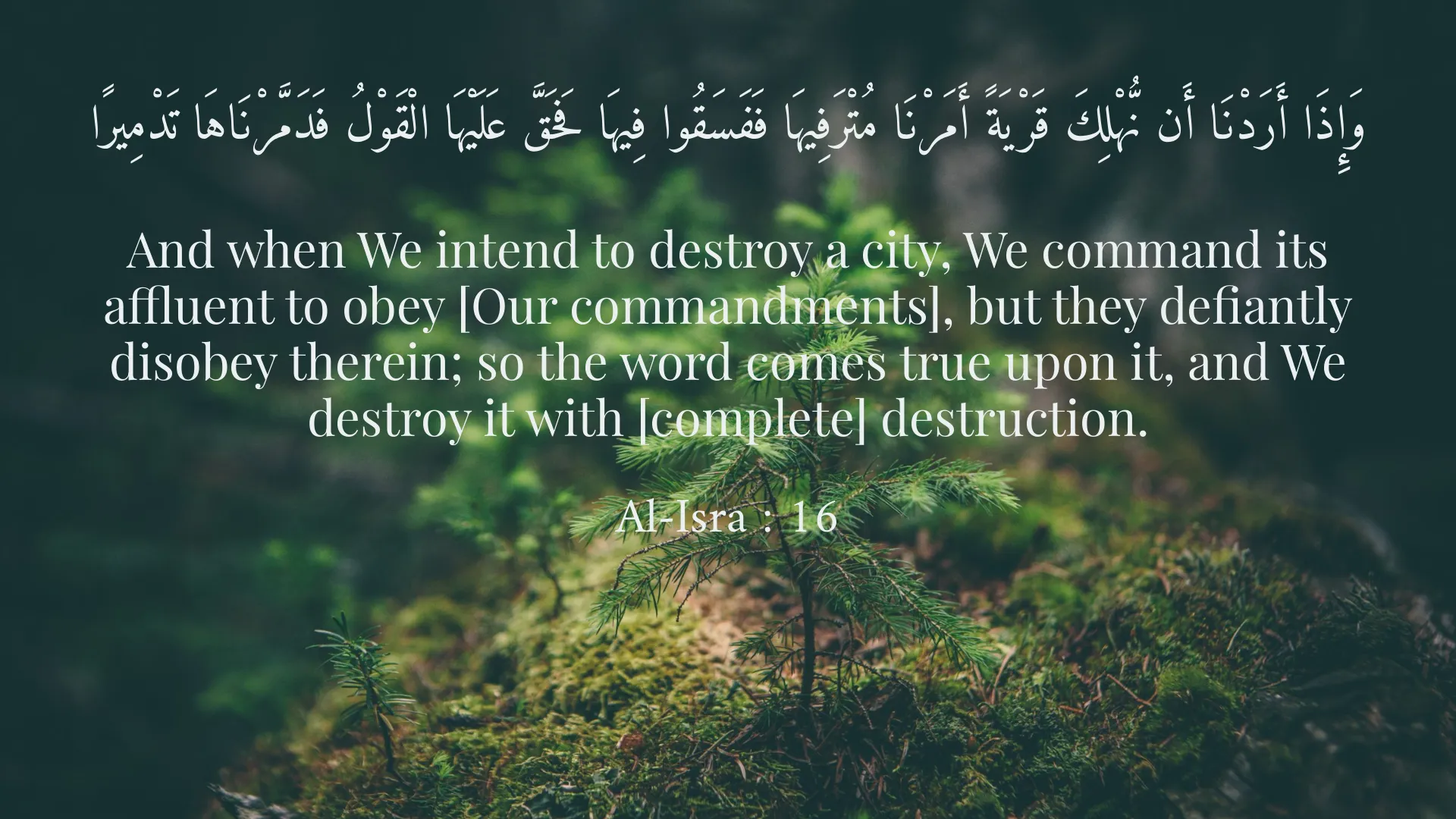
وَإِذَا أَرَدْنَا أَن نُّهْلِكَ قَرْيَةً أَمَرْنَا مُتْرَفِيهَا فَفَسَقُوا فِيهَا فَحَقَّ عَلَيْهَا الْقَوْلُ فَدَمَّرْنَاهَا تَدْمِيرًا
And when We intend to destroy a city, We command its affluent to obey [Our commandments], but they defiantly disobey therein; so the word comes true upon it, and We destroy it with [complete] destruction.
Al-Isra : 16
فَكُلًّا أَخَذْنَا بِذَنبِهِ ۖ فَمِنْهُم مَّنْ أَرْسَلْنَا عَلَيْهِ حَاصِبًا وَمِنْهُم مَّنْ أَخَذَتْهُ الصَّيْحَةُ وَمِنْهُم مَّنْ خَسَفْنَا بِهِ الْأَرْضَ وَمِنْهُم مَّنْ أَغْرَقْنَا ۚ وَمَا كَانَ اللَّهُ لِيَظْلِمَهُمْ وَلَٰكِن كَانُوا أَنفُسَهُمْ يَظْلِمُونَ
So each We seized for his sin; and among them were those upon whom We sent a storm of stones, and among them were those who were seized by the blast, and among them were those whom We caused the earth to swallow, and among them were those whom We drowned. And Allah would not have wronged them, but they were wronging themselves.
Al-Ankabut : 40
فَكَأَيِّن مِّن قَرْيَةٍ أَهْلَكْنَاهَا وَهِيَ ظَالِمَةٌ فَهِيَ خَاوِيَةٌ عَلَىٰ عُرُوشِهَا وَبِئْرٍ مُّعَطَّلَةٍ وَقَصْرٍ مَّشِيدٍ
And how many a city have We destroyed while it was unjust, and it is [now] fallen upon its roofs, and [many] a deserted well and [many] a lofty palace.
Al-Hajj : 45
Short Story
In Sa'di's Gulistan, it is narrated that a tyrannical king was building a magnificent fortress. A wise and benevolent old man passed by. The proud king asked him, 'How is this fortress?' The old man replied, 'It is a beautiful fortress, but alas, these structures are built on the foundation of injustice and harm to people, and no structure built on injustice can endure.' The king scoffed at his words and continued his tyranny. However, not long passed before an internal rebellion erupted, and his tyranny led to the downfall of his kingdom. Just as the Quran warns, the foundations of injustice and corruption are weak and will not last, and the destiny of every society is shaped by its own hands. How beautiful it is that this story reminds us that true power lies not in walls and fortresses, but in justice and benevolence.