Quranic Answer
The Importance of Dhikr in a Believer's Life In Islamic tradition, the concept of Dhikr, which translates to the remembrance of Allah, plays a pivotal role in the spiritual lives of believers. This practice is profoundly emphasized in the Quran, where Allah invites believers to constantly remember Him. Through various verses in the sacred text, Muslims are reminded of the importance of establishing a continuous connection with their Creator. This article delves deeper into the meaning, significance, and benefits of Dhikr in a believer's life, exploring its multifaceted nature and how it can enhance personal well-being and community bonds. ### The Definition of Dhikr Dhikr derives from the Arabic root word 'dhakara,' which means 'to remember.' In a religious context, it involves mentioning the name of Allah and reflecting on His qualities and assistance. This act of remembrance can be both verbal and non-verbal; while reciting specific phrases or prayers is one aspect of Dhikr, the entire act of leading a life that honors Allah and acknowledges His blessings constitutes a broader understanding of this concept. ### Quranic Emphasis on Dhikr The Quran places immense emphasis on remembrance of Allah. In Surah Al-Baqarah, verse 152, Allah states, "So remember Me; I will remember you." This verse encapsulates the reciprocal relationship between Allah and His believers. The invitation to remember Allah is not merely an exhortation but serves as an assurance of His remembrance of us in return. This emphasizes that maintaining a relationship with Allah must occupy a central position in our daily lives. Such a connection is invaluable, providing believers with strength during challenging times and tranquility in moments of distress. The act of Dhikr is an integral part of Islamic worship; it offers a direct means for believers to maintain awareness of Allah’s presence in their lives. Each mention of His name is an acknowledgment of His existence, necessitating mindfulness and introspection. Beyond the spoken word, Dhikr extends to the manifestation of faith through actions that align with Islamic teachings. ### Dhikr and Gratitude In conjunction with the repetitive oral recitation of Allah’s name, gratitude is a vital aspect of Dhikr. Allah states in Surah Ar-Rahman, verses 13 and 14, "So which of the favors of your Lord would you deny?" This verse highlights the importance of recognizing and being thankful for the countless blessings bestowed upon us by Allah. Gratitude in this sense becomes a form of remembrance, reinforcing the bond between the Creator and the creation. When believers express gratitude through Dhikr, they not only acknowledge the material blessings in their lives, such as health, sustenance, and family, but they also reflect on spiritual favors, including guidance, mercy, and the gift of faith. This aspect of Dhikr helps cultivate a positive mindset, allowing believers to focus on the goodness in their lives rather than constant complaints and dissatisfaction. Maintaining a grateful heart encourages an optimistic outlook and fosters resilience in the face of life’s adversities. ### Dhikr as a Source of Contemplation Another important dimension of Dhikr is its potential to encourage deep contemplation about the universe and Allah’s creations. In Surah Al-Imran, verse 191, Allah invites believers to ponder the wonders of creation, which is significantly enhanced through the practice of Dhikr. The recollection of Allah leads to moments of reflection on nature, existence, and the interconnectedness of all living beings. When believers engage in Dhikr, they open themselves to a deeper understanding of their world. This contemplation fosters a sense of purpose and meaning in life, connecting individuals to a higher reality. It allows believers to see themselves as part of a grand design, moving away from feelings of isolation and insignificance to a sense of belonging and responsibility to the community and environment. Such reflections often spark a desire for self-improvement and a commitment to making positive contributions to society. ### Dhikr as a Path to Inner Peace In today’s fast-paced and often chaotic world, many individuals seek peace amidst turmoil. Dhikr can serve as a powerful tool for achieving this inner peace. Engaging in the remembrance of Allah calms the mind and heart, providing comfort during stressful times. By focusing on Allah’s divine presence, believers can find solace in their faith, mitigating anxiety and fear. The repetition of Dhikr phrases acts as a form of meditation, helps center thoughts, and calibrates emotions. Many believers engage in Dhikr through practices such as prayer, meditation, or quiet reflection, which can significantly reduce stress levels and improve mental well-being. Furthermore, the collective aspects of Dhikr, practiced in congregation or community settings, elevate feelings of fellowship and support. Engaging in Dhikr with others creates a powerful sense of unity among believers, strengthening community ties and fostering an environment of shared spirituality and mutual encouragement. ### Dhikr: Enhancing Social Bonds The practice of Dhikr is crucial not only for personal growth but also for bolstering social consciousness and bonds within a community. When individuals remember Allah and express gratitude together, they create an atmosphere of love and empathy that transcends individual grievances and fosters communal resilience. Believers who practice Dhikr cultivate an inherent sense of responsibility towards one another, as the spirit of remembrance often generates compassion and understanding. This act encourages Muslims to reach out to those in need, promote kindness, and engage in charitable behaviors. Such communal practices reflect the essence of Islam, which emphasizes caring for others and working harmoniously within communities. ### Conclusion In conclusion, Dhikr plays a fundamental role in the spiritual landscape of a Muslim’s life, offering pathways to personal tranquility, gratitude, contemplation, and community solidarity. Through various Quranic verses, believers are consistently reminded of the importance of maintaining a relationship with Allah, recognizing blessings, and supporting others in society. The practice of Dhikr transcends mere recitation; it embodies a comprehensive approach to living a life that is connected, meaningful, and reflective of divine attributes. Ultimately, integrating Dhikr into daily practice can significantly improve an individual’s psychological well-being and foster a robust spiritual community. In a world fraught with challenges, Dhikr serves as an anchor, guiding believers towards a serene existence infused with purpose and love.
Related Verses
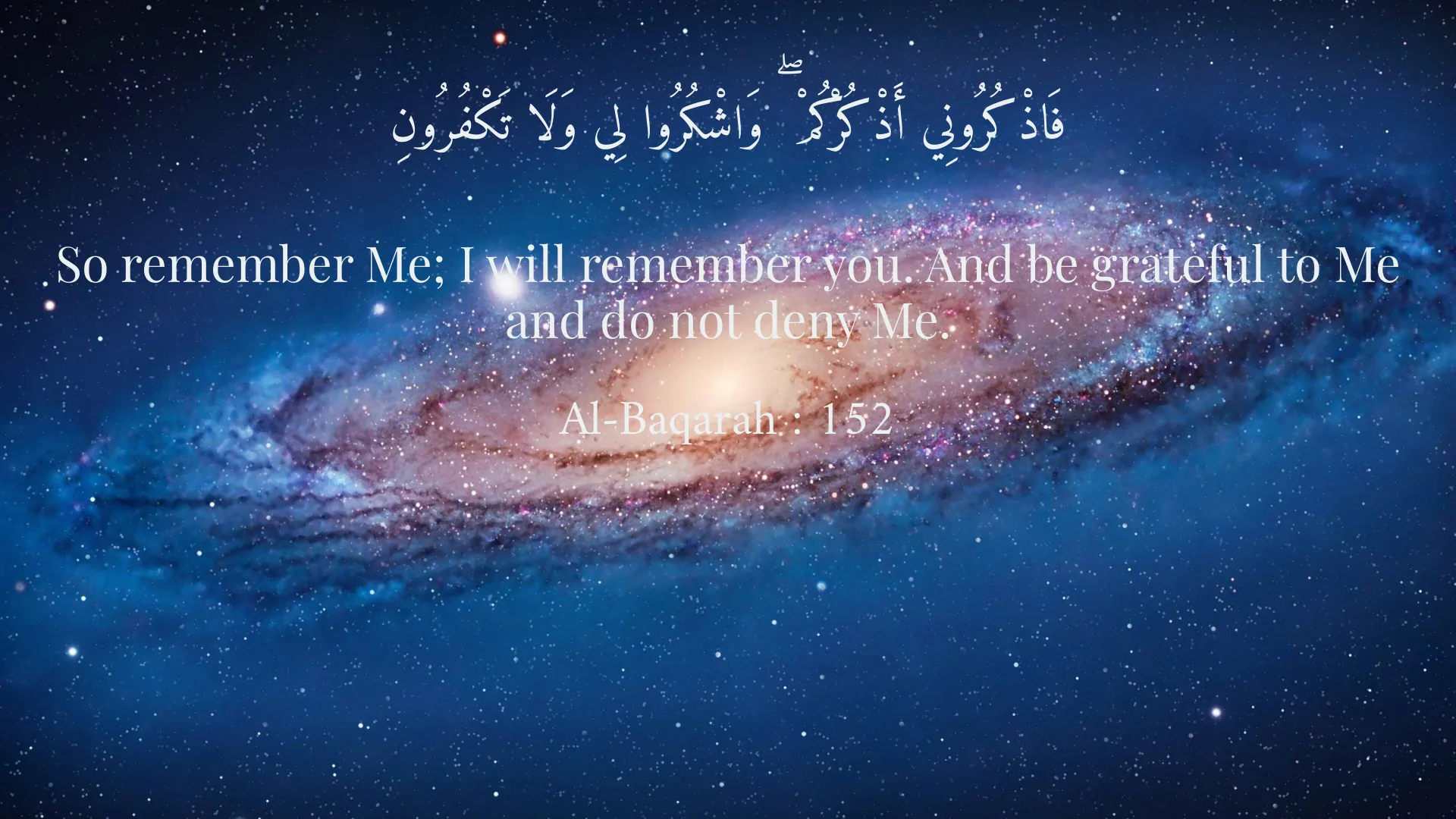
فَاذْكُرُونِي أَذْكُرْكُمْ ۖ وَاشْكُرُوا لِي وَلَا تَكْفُرُونِ
So remember Me; I will remember you. And be grateful to Me and do not deny Me.
Al-Baqarah : 152
الَّذِينَ يَذْكُرُونَ اللَّهَ قِيَامًا وَقُعُودًا وَعَلَى جُنُوبِهِمْ وَيَتَفَكَّرُونَ فِي خَلْقِ السَّمَاوَاتِ وَالْأَرْضِ رَبَّنَا مَا خَلَقْتَ هَذا بَاطِلًا سُبْحَانَكَ فَقِنَا عَذَابَ النَّارِ
Those who remember Allah while standing or sitting or [lying] on their sides and give thought to the creation of the heavens and the earth. Our Lord, You did not create this imperatively; exalted are You; then protect us from the punishment of the Fire.
Al-Imran : 191
فَبِأَيِّ آلَاءِ رَبِّكُمَا تُكَذِّبَانِ
So which of the favors of your Lord would you deny?
Ar-Rahman : 13
Short Story
One day in a village, a man named Nader was engaged in remembering Allah during his travels. Wherever he went, he proclaimed Allah's name, bringing him peace. One day, he encountered a person lamenting about his life's troubles. Nader gently said, 'Have you forgotten the remembrance of Allah?' This statement brought the person back to himself and helped him find greater peace through the remembrance of God.