Quranic Answer
Hope and delusion, though they may appear similar at first glance, are, from the perspective of the Holy Quran and profound Islamic teachings, two fundamentally different and even opposing psychological and spiritual states. Understanding this fundamental distinction is crucial for anyone treading the path of spiritual growth and seeking prosperity; for one is constructive and guiding, while the other is destructive and misleading. Hope (Rajā') from the Quranic Perspective: Hope, within the Quranic context, is not a naive or passive wish, but an active, dynamic, and constructive state rooted in deep faith in Allah, His absolute power, His boundless mercy, and His infinite wisdom. This hope is a motivator that propels a person towards righteous deeds, continuous effort, patience in the face of adversities, and absolute reliance (Tawakkul) on the Creator of the universe. Quranic hope is always accompanied by responsibility and exertion. A believer hopes for divine grace, but this hope does not deter them from effort; rather, it motivates them to strive with greater diligence on the path of obedience and servitude. Numerous verses in the Quran emphasize the importance of hoping in Allah's mercy and avoiding despair. For instance, in Surah Az-Zumar, verse 53, Allah says with profound tenderness: "Say, 'O My servants who have transgressed against themselves [by sinning], do not despair of the mercy of Allah. Indeed, Allah forgives all sins. Indeed, it is He who is the Forgiving, the Merciful.'" This verse opens a door of hope even for those steeped in sin, provided they revive this hope within their hearts through repentance and by changing the course of their lives. Furthermore, hope in the Quran is always intertwined with righteous deeds. One who truly hopes for the meeting with their Lord and His rewards in the Hereafter does not cease from action; rather, they strive to perform the best deeds. In Surah Al-Kahf, verse 110, this truth is clearly articulated: "So whoever would hope for the meeting with his Lord - let him do righteous work and not associate anyone with the worship of his Lord." This verse indicates that hope without action has no place in Islam and can be considered a form of delusion or a baseless wish. True hope makes a person patient and resilient in the face of hardships and calamities, and it motivates them to spare no effort in achieving their divine and worldly goals. This hope creates a balance between khawf (fear) and rajā' (hope), which prevents the believer from excess or negligence, placing them on the path of moderation and progress. Delusion (Ghurūr/Amāniyy) from the Quranic Perspective: In contrast to constructive hope, there is delusion, often referred to as ghurūr (being deceived) or amāniyy (baseless wishes). This state is a false and baseless optimism where an individual perceives themselves to be in a secure and desirable situation based on vain fantasies, unrealistic desires, or the deceptive promises of Satan and the fleeting allurements of worldly life, while the reality is entirely different. Delusion is often accompanied by inaction, negligence, heedlessness, and disregard for the consequences of one's actions. The Holy Quran has repeatedly warned humanity against being deceived (ghurūr) by worldly life or Satan. The Quran explicitly exposes the deceptive nature of worldly life. In Surah Al-Hadid, verse 20, Allah says: "Know that the worldly life is only amusement and diversion and adornment and boasting among yourselves and competition in increase of wealth and children - like the example of a rain whose [resulting] plant growth pleases the disbelievers; then it dries and you see it [become] yellow, then it becomes [scattered] debris. And in the Hereafter is severe punishment and forgiveness from Allah and approval. And what is the worldly life except the enjoyment of delusion (matā' al-ghurūr)." This verse calls worldly life matā' al-ghurūr (the enjoyment of delusion), meaning that which deludes a person into false optimism and distracts them from their true purpose and the consequences of their actions. Satan is also one of the most significant factors in creating delusion in humans. He encourages people to sin, disobedience, and negligence with false promises and baseless desires, giving them the delusion that there is no punishment, or that Allah is exceedingly forgiving, and their deeds will be accepted without the need for effort, repentance, or rectification. In Surah An-Nisa, verse 120, concerning Satan, we read: "He promises them and entices them; and Satan does not promise them except delusion (ghurūr)." These verses clearly express the deceptive nature of Satanic promises, all of which lead to delusion, inaction, and ultimately, deviation from reality and spiritual downfall. Key Differences Between Hope and Delusion from the Quranic Perspective: 1. Origin and Basis: True hope originates from faith in Allah, revelation, and divine traditions, built upon firm truths. Delusion, however, stems from the commanding self (nafs al-ammarah), Satanic whispers, and the deceptive allurements of worldly life, lacking any firm or real foundation. 2. Relationship with Action: Hope propels a person towards righteous deeds, effort, steadfastness, responsibility, and continuous striving. It is a motivating force. Delusion, conversely, leads to inaction, negligence, heedlessness, and disregard for the consequences of one's actions. Delusion is a form of numbness and narcotic that prevents a person from fulfilling their duties. 3. Realism: True hope is always accompanied by realism and a correct understanding of circumstances. A hopeful believer trusts in Allah's mercy but also fears His punishment and deems themselves obligated to observe divine limits. They strive and entrust the outcome to Allah. Delusion, however, is a form of escape from reality; the deluded individual ignores dangers and confines themselves within baseless aspirations and vain fantasies. 4. Consequences and Outcomes: Hope leads to spiritual growth, inner peace, progress in this world, and attainment of eternal prosperity. A hopeful believer remains steadfast even in difficulties. Delusion, however, brings nothing but regret, remorse, and loss in this world and the Hereafter. The deluded individual realizes their mistake only when there is no longer an opportunity for rectification. 5. Status in Religion: Hope is one of the highest moral virtues in Islam and a pillar of faith, which believers are encouraged to cultivate. In contrast, delusion and ghurūr are considered moral vices and traps of Satan, from which the Quran strongly warns. In summary, hope in Islam is a light that illuminates the right path and guides a person towards perfection and eternal bliss, while delusion is a deceptive mirage that distances a person from the truth and leaves them lost in the desert of heedlessness and misguidance. For a spiritual, purposeful, and fruitful life, distinguishing between these two and walking the path of constructive hope and reliance on Allah is a vital and destiny-determining matter.
Related Verses
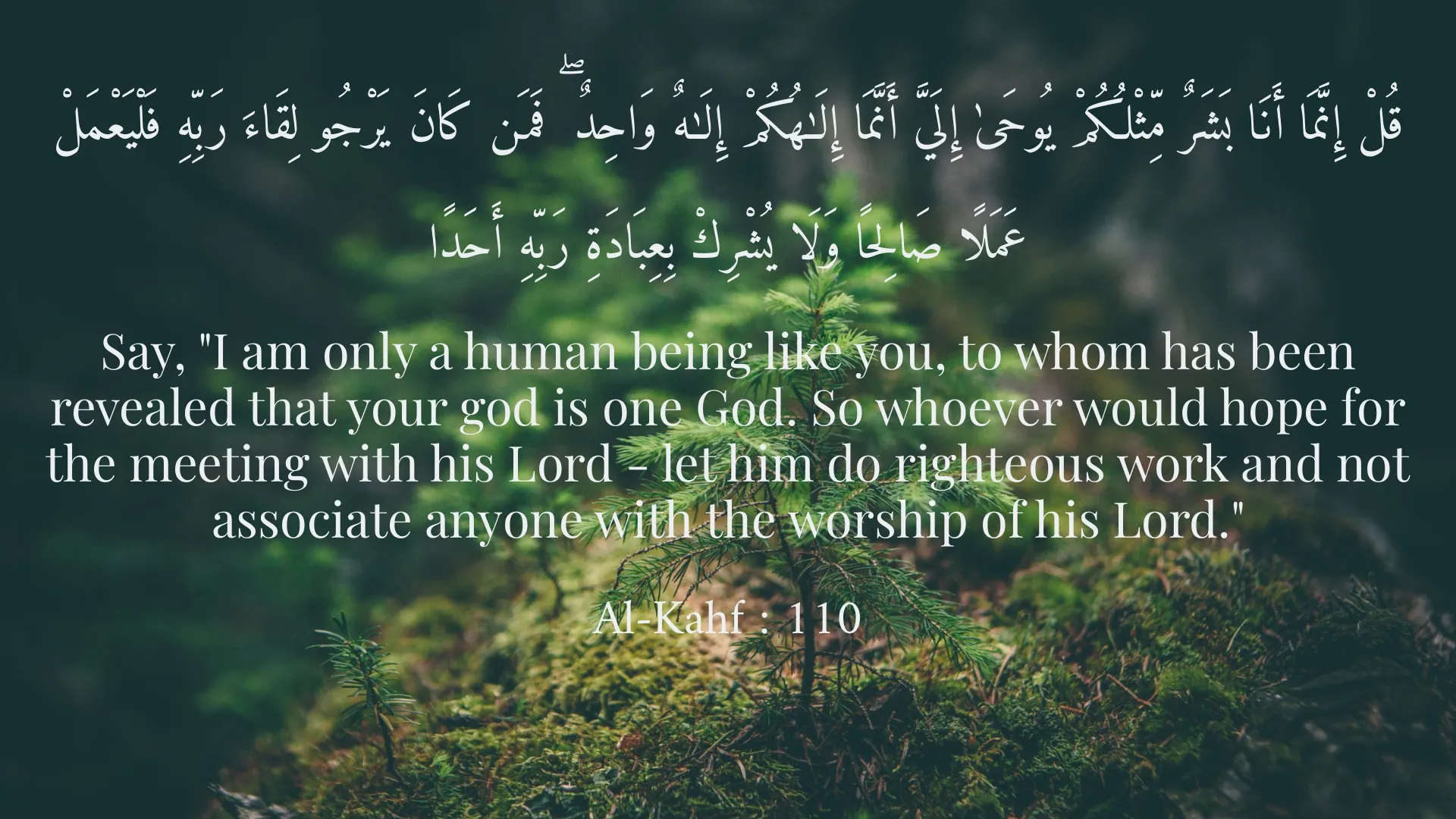
قُلْ إِنَّمَا أَنَا بَشَرٌ مِّثْلُكُمْ يُوحَىٰ إِلَيَّ أَنَّمَا إِلَٰهُكُمْ إِلَٰهٌ وَاحِدٌ ۖ فَمَن كَانَ يَرْجُو لِقَاءَ رَبِّهِ فَلْيَعْمَلْ عَمَلًا صَالِحًا وَلَا يُشْرِكْ بِعِبَادَةِ رَبِّهِ أَحَدًا
Say, "I am only a human being like you, to whom has been revealed that your god is one God. So whoever would hope for the meeting with his Lord - let him do righteous work and not associate anyone with the worship of his Lord."
Al-Kahf : 110
قُلْ يَا عِبَادِيَ الَّذِينَ أَسْرَفُوا عَلَىٰ أَنفُسِهِمْ لَا تَقْنَطُوا مِن رَّحْمَةِ اللَّهِ ۚ إِنَّ اللَّهَ يَغْفِرُ الذُّنُوبَ جَمِيعًا ۚ إِنَّهُ هُوَ الْغَفُورُ الرَّحِيمُ
Say, "O My servants who have transgressed against themselves [by sinning], do not despair of the mercy of Allah. Indeed, Allah forgives all sins. Indeed, it is He who is the Forgiving, the Merciful."
Az-Zumar : 53
اعْلَمُوا أَنَّمَا الْحَيَاةُ الدُّنْيَا لَعِبٌ وَلَهْوٌ وَزِينَةٌ وَتَفَاخُرٌ بَيْنَكُمْ وَتَكَاثُرٌ فِي الْأَمْوَالِ وَالْأَوْلَادِ ۖ كَمَثَلِ غَيْثٍ أَعْجَبَ الْكُفَّارَ نَبَاتُهُ ثُمَّ يَهِيجُ فَتَرَاهُ مُصْفَرًّا ثُمَّ يَكُونُ حُطَامًا ۖ وَفِي الْآخِرَةِ عَذَابٌ شَدِيدٌ وَمَغْفِرَةٌ مِّنَ اللَّهِ وَرِضْوَانٌ ۚ وَمَا الْحَيَاةُ الدُّنْيَا إِلَّا مَتَاعُ الْغُرُورِ
Know that the worldly life is only amusement and diversion and adornment and boasting among yourselves and competition in increase of wealth and children - like the example of a rain whose [resulting] plant growth pleases the disbelievers; then it dries and you see it [become] yellow, then it becomes [scattered] debris. And in the Hereafter is severe punishment and forgiveness from Allah and approval. And what is the worldly life except the enjoyment of delusion.
Al-Hadid : 20
Short Story
In the land of Persia, there lived two neighbors. One sat in his house, wishing for a treasure to fall from the sky, spending his days in the delusion that he would become rich without any effort. He merely sat hoping for a baseless wish and indulged in his fantasies. The other neighbor, however, was a diligent and hardworking farmer. Every morning, with hope in Allah's mercy, he would plough his land, sow seeds, and meticulously water and care for his crops. Years passed, and the man who stayed home continued to wait for a treasure that never came, growing poorer and more disheartened day by day. But the farmer, though he toiled and tired himself daily, reaped abundant harvests every year, and his life was filled with blessings and peace. One day, the farmer finally said to his neighbor, "My friend, the true treasure is hidden in the earth, but not a treasure that falls effortlessly from the sky. Rather, it is a treasure brought forth from the heart of the soil by hardworking hands and hope in the grace of the Lord. True hope compels us to work, but delusion blinds our eyes to reality and makes us wait for a mirage." Thus, the farmer, through his deeds and hope, harvested prosperity, while his neighbor, with his delusions and idle wishes, gained nothing but regret.