Quranic Answer
The trials of life are an important principle in the Quran that guide us on the path of human growth and development. In Surah Al-Baqarah, verse 155, Allah states, 'And We will surely test you with something of fear and hunger and a loss of wealth and lives and fruits, and give good tidings to the patient.' This verse clearly indicates that tests and trials are an inherent part of human existence, and their purpose is not merely to challenge us but to cultivate virtues such as patience, resilience, and faith. Trials serve as a means through which we can assess our character, allowing us to develop a deeper understanding of ourselves and our relationship with the divine. Life is filled with uncertainties and challenges, which can often lead to feelings of despair and hopelessness. However, the Quranic perspective on trials offers a profound insight that transforms how we view hardships. The experiences of fear, hunger, the loss of wealth, and even the loss of loved ones are not just random occurrences; they are, according to Islamic teachings, orchestrated opportunities for growth. Allah’s promise of good tidings for the patient emphasizes that resilience in the face of adversity brings spiritual rewards and strengthens our relationship with Him. In Surah Al-Imran, verse 186, it is also mentioned, 'You will surely be tested, and you will hear from those who were before you, and if you are patient and fear Allah, this is the best of hearts.' Here, the Quran reaffirms that the process of being tested is universal, experienced by those who have come before us. This connection across time emphasizes the shared human experience of trials, reminding us that we are not alone in our struggles. The notion of patience ('sabr') is crucial here; it is through patience that we navigate our difficulties with grace and strength. The verse highlights that cultivating a consciousness of God ('taqwa') further enhances our ability to endure these challenges, transforming potentially crippling experiences into profound opportunities for growth. The trials of life play a pivotal role in human development. They compel us to confront our weaknesses and shortcomings, often acting as a mirror reflecting the aspects of ourselves that need transformation. In facing fears and losses, we are prompted to recognize the impermanence of life and our reliance on external sources of comfort and stability. This realization fosters a sense of humility, encouraging us to express gratitude for the blessings we often take for granted. For instance, when someone experiences a significant loss, whether it be financial, emotional, or existential, it tends to recalibrate their understanding of what is truly valuable in life. This recalibration often leads to a renewed appreciation for relationships, health, and spiritual well-being. Moreover, trials and tribulations facilitate a self-awareness that is essential for personal growth. They challenge us to dig deep into our inner resources and discover strengths we may not have been conscious of. As we navigate through life's difficulties, we often find ourselves evolving, learning new coping mechanisms, and developing a resilient mindset that serves us well in future challenges. This journey toward self-discovery can be likened to an artist mastering their craft; the more they experiment and endure failures, the more refined and profound their art becomes. In this regard, our trials serve as the raw materials that shape our identities. Additionally, the collective human experience shared through trials can foster empathy and compassion among individuals. When one shares their story of overcoming adversity, it resonates with others who have experienced something similar, creating bonds that bridge gaps and heal wounds. The Quranic teachings urge us to support one another, as our struggles can unite us in understanding and shared goals, further illustrating that we are all interconnected in our human experience. In times of hardship, it is imperative to reflect on faith and spirituality. People often turn towards prayer and supplication in moments of distress, seeking comfort and guidance. Through prayer, individuals nurtured a sense of hope and the belief that they can shape their destinies despite the challenges they face. This practice not only brings inner peace but also reinforces the understanding that they are part of a larger cosmic plan orchestrated by a benevolent Creator. The act of turning towards God during trials strengthens one's faith and deepens their trust in the divine wisdom behind every test. Furthermore, the Quranic perspective on trials encourages us to turn towards acts of service and kindness, especially during difficult times. Helping those who are also going through challenges can be an incredibly cathartic experience. Acts of charity and support remind us that, while our trials may appear overwhelming in isolation, we have the power to uplift others and share their burdens. This sense of community and reliance on one another is a hallmark of a compassionate society. In conclusion, the Quranic principles surrounding the trials of life present invaluable lessons that promote personal growth and human connection. These tests are not without purpose; they serve to cultivate virtues such as patience, resilience, and gratitude. The challenges we face become opportunities for self-awareness and deeper understanding. As we navigate the complexities of life, we can find solace in the wisdom of the Quran, acknowledging that every trial is a stepping stone towards a more profound connection with ourselves, each other, and the divine. Ultimately, it is within these periods of hardship that we often find our most significant opportunities for growth and enlightenment.
Related Verses
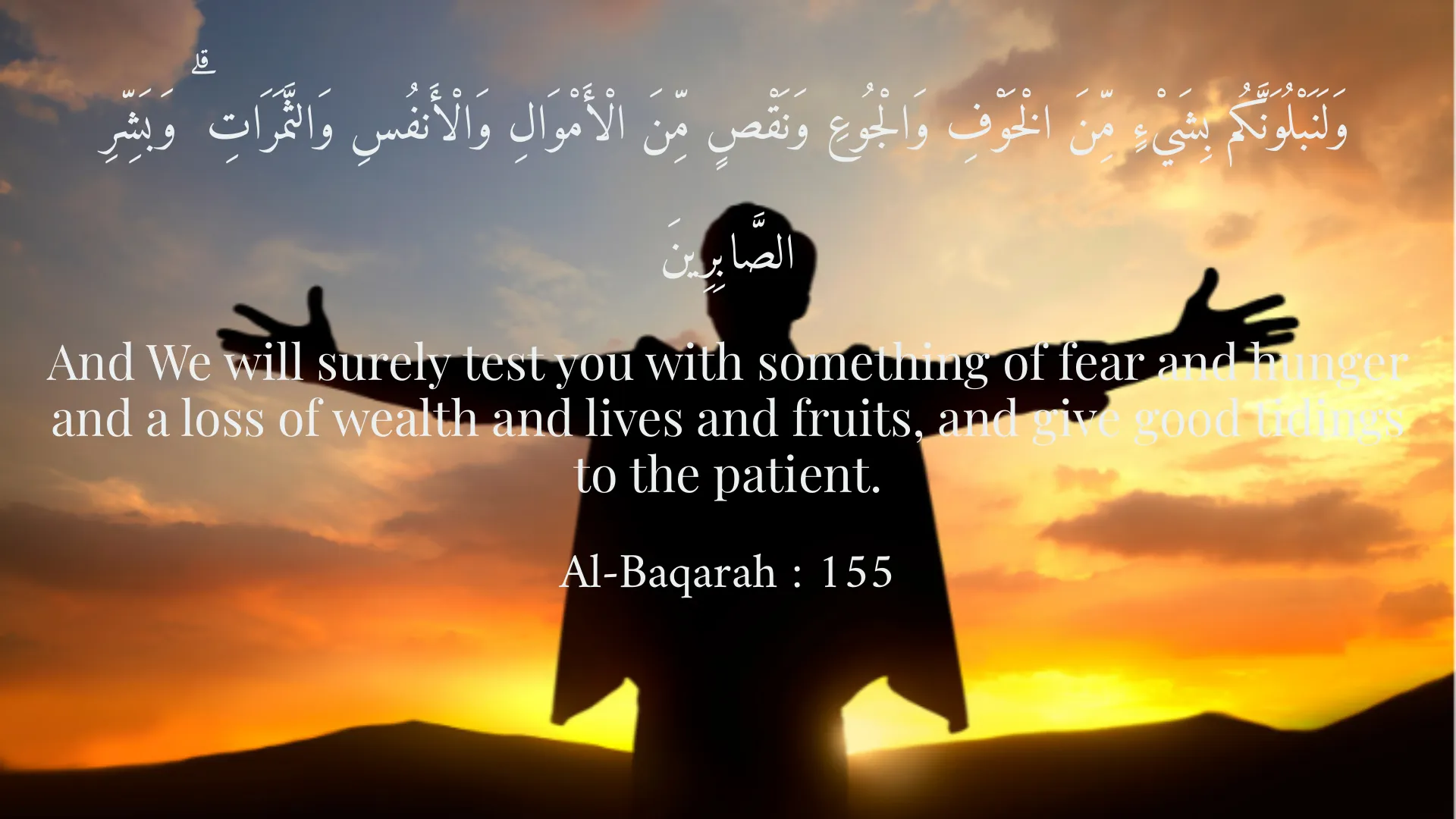
وَلَنَبْلُوَنَّكُم بِشَيْءٍ مِّنَ الْخَوْفِ وَالْجُوعِ وَنَقْصٍ مِّنَ الْأَمْوَالِ وَالْأَنفُسِ وَالثَّمَرَاتِ ۗ وَبَشِّرِ الصَّابِرِينَ
And We will surely test you with something of fear and hunger and a loss of wealth and lives and fruits, and give good tidings to the patient.
Al-Baqarah : 155
لَتُبْلَوُنَّ فِي أَمْوَالِكُمْ وَأَنفُسِكُمْ ۖ وَلَتَسْمَعُنَّ مِنَ الَّذِينَ أُوتُوا الْكِتَابَ مِن قَبْلِكُمْ وَمِنَ الَّذِينَ أَشْرَكَوا أَذًى كَثِيرًۭا ۚ وَإن تَصْبِرُوا وَتَتَّقُوا فَإِنَّ ذَٰلِكَ مِنْ عَزْمِ الْأُمُورِ
You will surely be tested in your properties and yourselves, and you will surely hear from those who were before you, and if you are patient and fear Allah, this is among the greatest of matters.
Al-Imran : 186
Short Story
One day, a friend named Ali was pondering the purpose of life's trials. He was engrossed in reflecting on the verses of the Quran and realized that every trial that comes his way is an opportunity for growth and elevation. Whenever Ali faced daily challenges, he tried to remember God and respond to his problems with patience and resilience. He understood that these trials not only strengthen him but also make him more aware of the beauties of life.