Quranic Answer
Contentment, as portrayed in the Holy Quran, is emphasized as an essential human and moral value that transcends merely being satisfied with one's circumstances. In an era where consumerism and the relentless pursuit of material wealth dominate many people's lives, the teachings of the Quran provide a refreshing perspective. At its core, contentment signifies being free from insatiable greed and finding true satisfaction in what one currently possesses. It is not merely about material possessions; rather, it encompasses emotional, mental, and spiritual well-being. The Quran beautifully elucidates this concept in various verses that guide believers toward developing a more profound sense of contentment and satisfaction in their lives. One notable illustration of this is found in Surah Al-Hashr, verse 9, where Allah commands believers to embody good traits and assist one another. This verse not only stresses individual virtues but also highlights the communal aspect of contentment. By encouraging believers to help one another, the Quran suggests that true contentment is deeply intertwined with the relationships we nurture in our communities. When individuals support each other, they cultivate an environment of harmony and mutual respect, which fosters a sense of contentment that is far greater than any temporary material gain. Additionally, in Surah Al-Imran, verse 173, the Quran explicitly discusses loyalty and contentment as defining characteristics of true believers. This verse underscores the importance of being loyal not just to God but also to one another. The dynamics of loyalty and support found in a faithful community elevate the soul and provide a safety net that allows individuals to focus on their spiritual growth rather than being constantly preoccupied with accumulating wealth. The loyalty mentioned in this context acts as a buffer against the malaise that often accompanies material pursuit. Importantly, the Quran teaches that genuine contentment does not stem from the abundance of worldly possessions but rather from a sincere and devoted relationship with God. Surah An-Nahl, verse 97, further reiterates this notion by stating that whoever performs righteous deeds, whether male or female, and possesses faith will lead a joyful life, even if they find themselves lacking traditional material wealth. This powerful message encourages individuals to redefine their understanding of success and happiness. Contentment becomes a spiritual journey rather than a mere acquisition of goods, inviting individuals to experience joy in the simplest of moments. This divine wisdom serves as a crucial counterpoint to the relentless drive for wealth that often leads to anxiety, stress, and a sense of inadequacy. The Quran instructs us on the importance of focusing on satisfaction rather than being ensnared in an endless pursuit of material success. In today's world, many individuals find themselves caught in a race to acquire personal wealth, often at the cost of their mental, emotional, and spiritual health. The importance of recalling Quranic teachings regarding contentment has never been more vital, especially when societal pressures drive people to chase after unattainable standards of success. The communal aspect of contentment, as mentioned in the Quran, is particularly salient in our contemporary society. For instance, when individuals engage in acts of kindness, volunteerism, or support for one another, they create a positive feedback loop that not only enhances their own lives but also elevates others'. This interconnected way of living nurtures a sense of belonging and satisfaction that transcends the fleeting pleasures brought by material goods. Moreover, it cultivates an environment in which individuals can express gratitude for what they have, directing their energies toward lives rich in purpose and meaning rather than empty pursuits. In light of this, the essential teachings of the Quran encourage believers to shift their focus from acquisition to appreciation. Embracing a simpler, more frugal life doesn't mean sacrificing happiness. On the contrary, a life grounded in gratitude and contentment can lead to greater spiritual fulfillment and inner peace. By recognizing the transient nature of material possessions, individuals can free themselves from the worry and anxiety that often accompany the constant chase for wealth. Moreover, numerous issues faced by modern society, such as mental health challenges, can be alleviated by embracing the Quranic message of contentment. The relentless pursuit of material success can create feelings of inadequacy and despair, while the practice of contentment can shield individuals from these harmful emotions. By fostering a mindset that values internal well-being over external validation, it becomes possible for individuals to reduce their stress levels and experience greater tranquility in their lives. In conclusion, the teachings of the Holy Quran on contentment serve as a compass guiding believers in navigating the complexities of life. It instills a sense of purpose and fulfillment that goes beyond material possessions and societal expectations. As we reflect on our lives and the choices we make, embracing contentment in accordance with these divine teachings can help us find peace amid the chaos of modern life. Ultimately, this journey toward contentment invites us to explore deeper emotional and spiritual realms, reminding us that true happiness lies not in what we possess, but in how we relate to ourselves, to others, and to God.
Related Verses
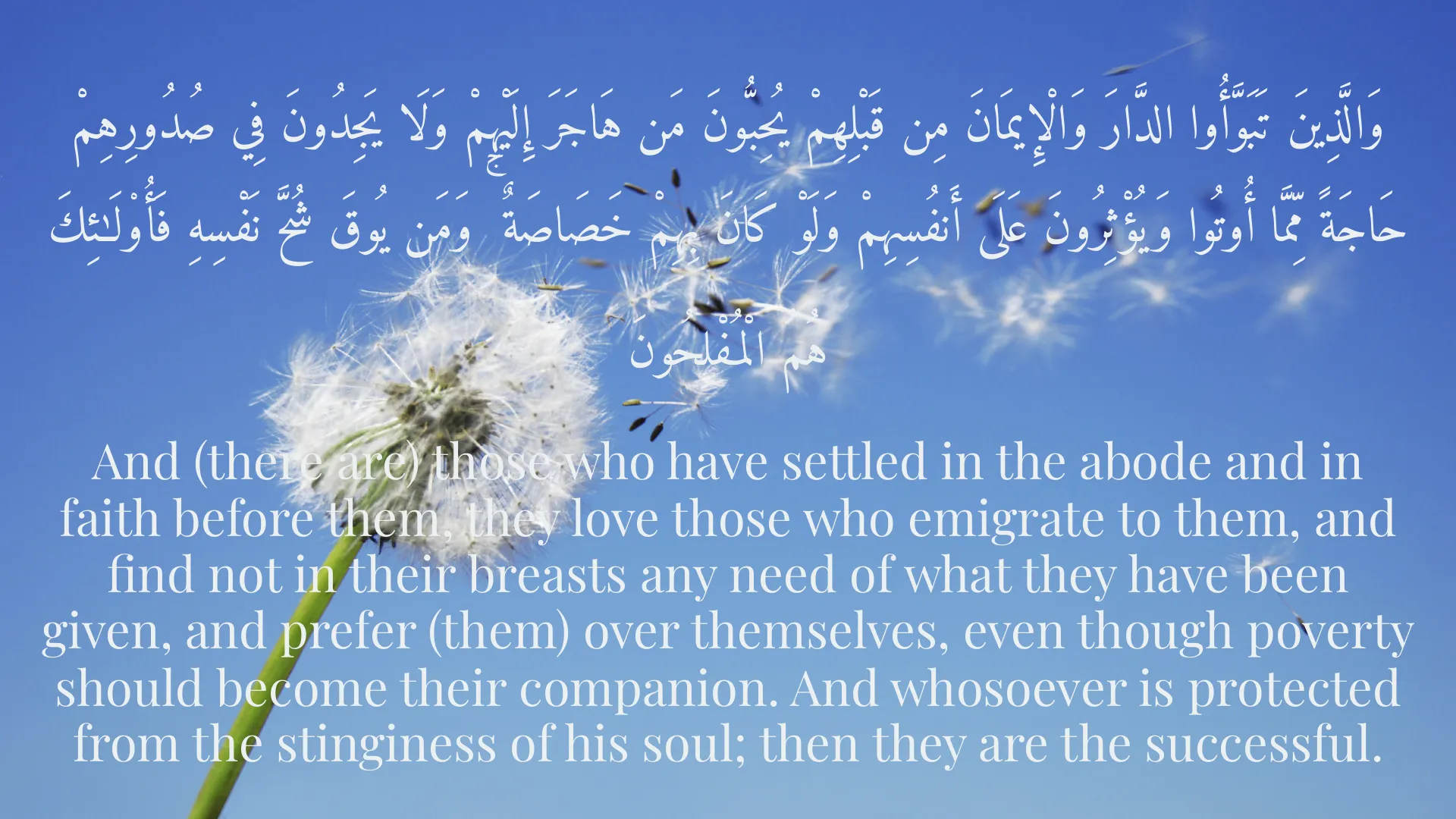
وَالَّذِينَ تَبَوَّأُوا الدَّارَ وَالْإِيمَانَ مِن قَبْلِهِمْ يُحِبُّونَ مَن هَاجَرَ إِلَيْهِمْ وَلَا يَجِدُونَ فِي صُدُورِهِمْ حَاجَةً مِّمَّا أُوتُوا وَيُؤْثِرُونَ عَلَى أَنفُسِهِمْ وَلَوْ كَانَ بِهِمْ خَصَاصَةٌ ۚ وَمَن يُوقَ شُحَّ نَفْسِهِ فَأُو۟لَـٰئِكَ هُمُ الْمُفْلِحُونَ
And (there are) those who have settled in the abode and in faith before them, they love those who emigrate to them, and find not in their breasts any need of what they have been given, and prefer (them) over themselves, even though poverty should become their companion. And whosoever is protected from the stinginess of his soul; then they are the successful.
Al-Hashr : 9
الَّذِينَ قَالَ لَهُمُ النَّاسُ إِنَّ النَّاسَ قَدْ جَمَعُوا لَكُمْ فَاخْشَوهُمْ فَزادَهُم إِيمانًا وَقَالُوا حَسْبُنَا اللَّهُ وَنِعْمَ الْوَكِيلُ
Those to whom the people said: 'Indeed, the people have gathered against you, so fear them.' But it increased them in faith, and they said, 'Sufficient for us is Allah, and He is the best Disposer of affairs.'
Al-Imran : 173
مَن عَمِلَ صَالِحًا مِّن ذَكَرٍ أَوْ أُنثَى وَهُوَ مُؤْمِنٌ فَلَنُحْيِيَنَّهُ حَيَاةً طَيِّبَةً ۖ وَلَنَجْزِيَنَّهُمْ أَجْرَهُم بِأَحْسَنِ مَا كَانُوا يَعْمَلُونَ
Whoever does righteousness, whether male or female, while he is a believer, We will surely grant him a good life, and We will surely give them their reward according to the best of what they used to do.
An-Nahl : 97
Short Story
Once upon a time, there was a devout worshiper named Solomon who was known for his contentment in life. He was always grateful to God for His blessings. People often urged him to seek wealth in a flashy world, but he was content with his modest possessions. He was like a tree thriving in a mountain, nourished by rain and soil. One day, someone asked him, 'Why don’t you seek wealth?' Solomon smiled and replied, 'True wealth lies in a tranquil and content heart.'