Quranic Answer
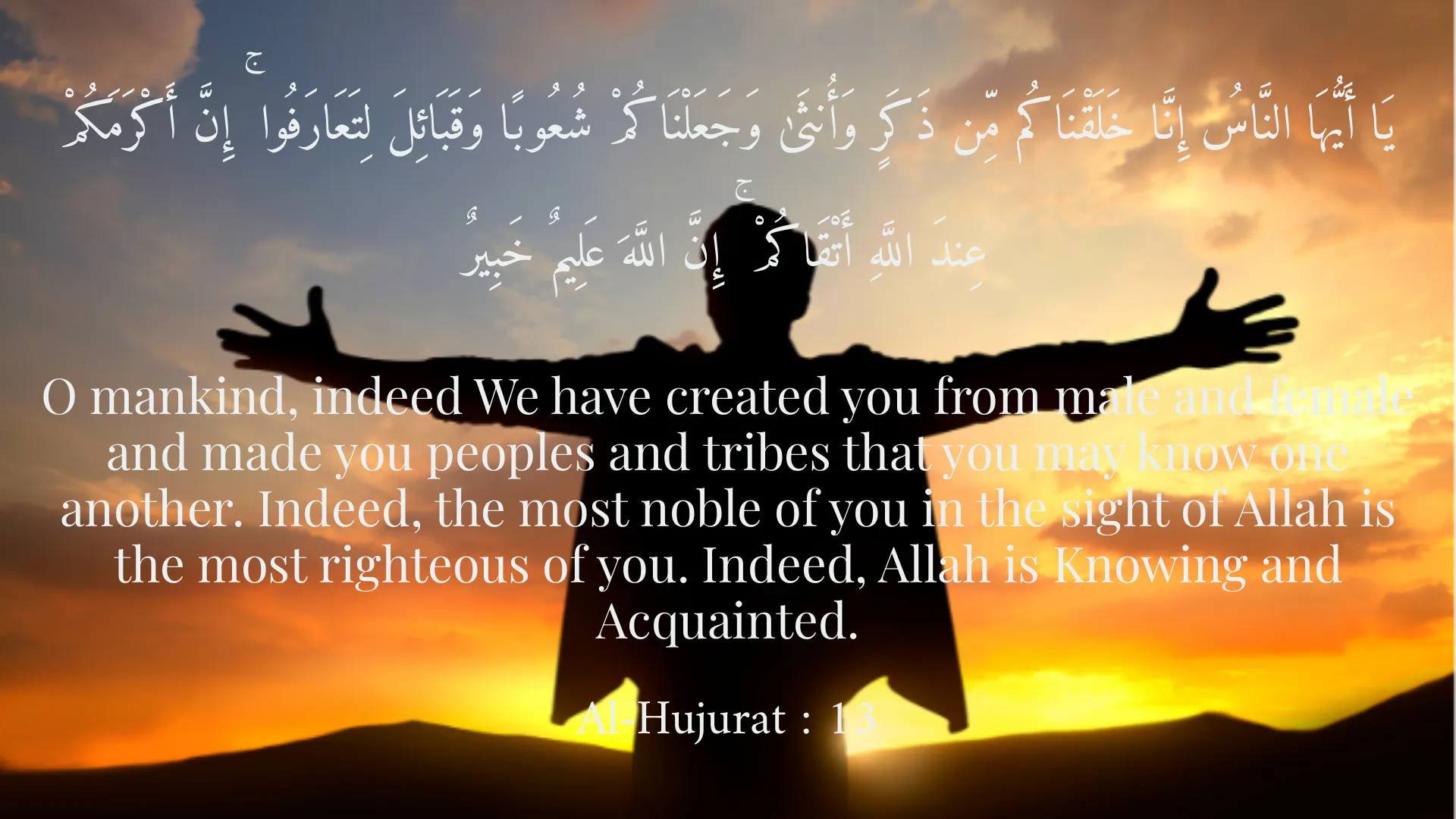
The Holy Quran, as a divine revelation and a guide for humanity, presents a remarkably clear, comprehensive, and progressive perspective on cultural and racial diversity. This sacred book not only acknowledges diversity as an undeniable reality but also considers it among the signs of God's boundless power and wisdom, attributing to it a lofty purpose. In the Quranic view, superficial differences in appearance, language, race, and culture are neither a source of superiority or pride for any group, nor a reason for discrimination, animosity, or conflict. Rather, these differences collectively provide a foundation for mutual understanding, empathy, and peaceful coexistence among human beings. The Quran explicitly rejects racism and any form of discrimination based on skin color, language, or tribe, declaring that the only criterion for superiority is piety (taqwa). This teaching forms the backbone of the Quranic perspective on diversity and is emphasized repeatedly in various verses. One of the most pivotal verses in this regard is Surah Al-Hujurat (49:13), which states: "O mankind, indeed We have created you from male and female and made you peoples and tribes that you may know one another. Indeed, the most noble of you in the sight of Allah is the most righteous of you. Indeed, Allah is Knowing and Acquainted." This verse clearly articulates several fundamental points: Firstly, it affirms the common origin of all humanity from a single pair (Adam and Eve), emphasizing the inherent unity of humankind and eradicating the roots of any racism. Secondly, it specifies the purpose of creating "peoples and tribes" (shu'uban wa qabail) as "li-ta'arafu"—"that you may know one another." This 'knowing' transcends mere acquaintance; it signifies mutual understanding, cultural exchange, intellectual collaboration, and cooperation. Such recognition can lead to the development of human civilization, the resolution of misunderstandings, and the creation of a world founded on peace and mutual respect. Thirdly, it establishes piety as the sole true criterion for superiority. This means that no race, color, language, or social status can prove one person's superiority over another; rather, the true worth of an individual lies in their level of righteousness, pursuit of justice, good character, and closeness to God. Furthermore, in Surah Ar-Rum (30:22), the Quran enumerates the diversity of languages and colors as among the great signs of God: "And of His signs is the creation of the heavens and the earth and the diversity of your languages and your colors. Indeed in that are signs for those of knowledge." This verse takes a completely positive and divine view of diversity. In this perspective, diversity is not a flaw or weakness but a manifestation of God's unparalleled beauty, grandeur, and creativity. Just as a garden is more beautiful with a variety of flowers, human society becomes richer and more vibrant with different cultures, races, and languages. This verse invites contemplation on these phenomena and an understanding of the divine wisdom behind them. The Quran also emphasizes the unity of divine purpose for humanity, despite the diversity of religions and laws across different periods. In Surah Al-Ma'idah (5:48), it states: "To each of you We prescribed a law and a clear way. If Allah had willed, He would have made you one nation; but [He intended] to test you in what He has given you. So compete in [all] good deeds." This verse indicates that even diversity in religious approaches is accompanied by divine wisdom, and its purpose is to 'test' and encourage 'competition in good deeds.' This concept implicitly underscores respect for others' beliefs and the pursuit of common ground for the advancement of humanity. In conclusion, the Holy Quran not only recognizes cultural and racial diversity but considers it an integral part of creation and a divine blessing. This diversity provides a foundation for human enrichment, the exchange of knowledge and experience, and mutual understanding. The Quran's message regarding diversity is one of peaceful coexistence, mutual respect, and an emphasis on shared human values beyond any superficial differences. These teachings instruct us to embrace differences with open arms and utilize them to build a more just and compassionate world, where solidarity based on piety and shared humanity replaces racial and cultural prejudices.
Related Verses
يَا أَيُّهَا النَّاسُ إِنَّا خَلَقْنَاكُم مِّن ذَكَرٍ وَأُنثَىٰ وَجَعَلْنَاكُمْ شُعُوبًا وَقَبَائِلَ لِتَعَارَفُوا ۚ إِنَّ أَكْرَمَكُمْ عِندَ اللَّهِ أَتْقَاكُمْ ۚ إِنَّ اللَّهَ عَلِيمٌ خَبِيرٌ
O mankind, indeed We have created you from male and female and made you peoples and tribes that you may know one another. Indeed, the most noble of you in the sight of Allah is the most righteous of you. Indeed, Allah is Knowing and Acquainted.
Al-Hujurat : 13
وَمِنْ آيَاتِهِ خَلْقُ السَّمَاوَاتِ وَالْأَرْضِ وَاخْتِلَافُ أَلْسِنَتِكُمْ وَأَلْوَانِكُمْ ۚ إِنَّ فِي ذَٰلِكَ لَآيَاتٍ لِّلْعَالِمِينَ
And of His signs is the creation of the heavens and the earth and the diversity of your languages and your colors. Indeed in that are signs for those of knowledge.
Ar-Rum : 22
لِكُلٍّ جَعَلْنَا مِنكُمْ شِرْعَةً وَمِنْهَاجًا ۚ وَلَوْ شَاءَ اللَّهُ لَجَعَلَكُمْ أُمَّةً وَاحِدَةً وَلَٰكِن لِّيَبْلُوَكُمْ فِي مَا آتَاكُمْ ۖ فَاسْتَبِقُوا الْخَيْرَاتِ ۚ إِلَى اللَّهِ مَرْجِعُكُمْ جَمِيعًا فَيُنَبِّئُكُم بِمَا كُنتُمْ فِيهِ تَخْتَلِفُونَ
To each of you We prescribed a law and a clear way. If Allah had willed, He would have made you one nation; but [He intended] to test you in what He has given you. So compete in [all] good deeds. To Allah is your return all together, and He will inform you concerning that in which you used to differ.
Al-Ma'idah : 48
Short Story
In Saadi's Gulistan, it is narrated that a just king favored one of his companions, a commoner not of noble birth, more than the rest of his courtiers. Others grew jealous and asked, "O King, how is it that you prefer this ordinary man over us, who are from noble and reputable families?" The king smiled and said: "You do not know that true greatness lies in virtue and wisdom, not in lineage or race. People should be judged by the essence of their being, not by their outward appearance or color. For perhaps a shard of pottery may shine brightly next to the sun, and perhaps a gem may remain hidden beneath the earth." He then added, "You are all created from one dust, and if you look closely, differences exist only so that you may know one another better and surpass each other in goodness and piety. True greatness and honor in the sight of God are due to pure hearts and good deeds, not to lineage, origin, or facial color."