Quranic Answer
The Holy Quran, a book of guidance and light, explicitly and firmly addresses the issue of consumerism and excessive indulgence in divine blessings. The Quran's perspective on this matter is comprehensive and balanced, calling humanity to moderation, gratitude, and avoidance of extravagance (Israf) and squandering (Tabdhir). From a Quranic viewpoint, the world and everything in it are trusts from God, given to humanity for proper and responsible use. This perspective lays the groundwork for a deeper understanding of consumption and the avoidance of excess in it. In numerous verses, God explicitly criticizes those who are extravagant and wasteful, stating that He does not love them. Extravagance is not limited to excessive eating and drinking; it encompasses any kind of excessive consumption, wasting resources, exceeding moderation in any matter, and carelessness in using available means. Modern consumerism, built on continuous production and consumption, is condemned by the Quran because it empties the human spirit of spiritual values and steers individuals towards worldly and material attachments. One of the most important teachings of the Quran in this regard is the principle of 'moderation' and 'balance'. In Surah Al-Furqan, verse 67, God says: "And those who, when they spend, are neither extravagant nor niggardly, but hold a just balance between those extremes." This verse clearly indicates that even in charity, which is a good deed, moderation must be observed, let alone in personal consumption. Extravagance and wastefulness stem from a lack of gratitude and forgetting one's origin and ultimate return. When a person considers divine blessings as their inherent right and uses them indiscriminately, they are essentially neglecting to thank the Giver and moving towards ingratitude. The Holy Quran warns people to enjoy the lawful adornments and good things provided by God but never to transgress limits, for God does not love the extravagant: "Eat and drink, but be not excessive. Indeed, He likes not those who commit excess." (Surah Al-A'raf, verse 31). This verse establishes a general and fundamental rule regarding consumption that extends beyond eating and drinking to include all types of consumption and utilization. The negative consequences of extravagance and consumerism, from the Quran's perspective, are both individual and societal. On an individual level, extravagance leads to hardness of heart, attachment to the world, forgetfulness of the Hereafter, and distance from God. The extravagant person is always seeking to satisfy their desires, preferring material pleasures over spiritual perfections. This state removes them from the path of servitude and leads them towards pride and self-admiration. On a societal level, excessive consumerism leads to economic inequalities, deprivation of the rights of the needy, environmental pollution, and unhealthy competition for acquiring more wealth. When a segment of society consumes more than its needs, resources are not distributed fairly, and a large portion of society struggles with poverty and deprivation. The Quran repeatedly advises Muslims to pay the rights of the poor and needy from their wealth and to spend in the way of God. These recommendations are, in fact, a way to counter the concentration of wealth and prevent excessive consumption. Furthermore, the Quran strongly prohibits Tabdhir, which is the unnecessary squandering of wealth and resources, calling those who squander 'brothers of devils': "Indeed, the squanderers are brothers of the devils, and ever has Satan been to his Lord ungrateful." (Surah Al-Isra, verse 27). This is a very strong condemnation, indicating the ugliness and reprehensibility of squandering in the Quran's view. Squandering is not just about throwing away food or wasting water; it includes spending wealth on unnecessary and useless things, buying luxury and non-essential goods, and any kind of extravagance that benefits neither the individual nor society. On the other hand, the Quran advises people to enjoy life and utilize divine blessings, but this use must be accompanied by wisdom, purposefulness, and gratitude. The purpose of life in this world is not to accumulate wealth and material pleasures, but to worship God and earn His pleasure. Consumerism distracts humans from this main goal and traps them in an endless cycle of material desires. Therefore, by emphasizing contentment, gratitude, charity, and avoiding extravagance and squandering, the Quran provides a model of balanced living that both meets human material needs and guides them towards spiritual perfection. This perspective is vital not only for the individual but also for the sustainability of society and the environment, offering a model for a responsible and virtuous lifestyle. Ultimately, by emphasizing these principles, the Quran shows that true happiness is found not in attachment to the world and excessive consumption, but in the reasonable and purposeful use of blessings to attain closeness to God.
Related Verses
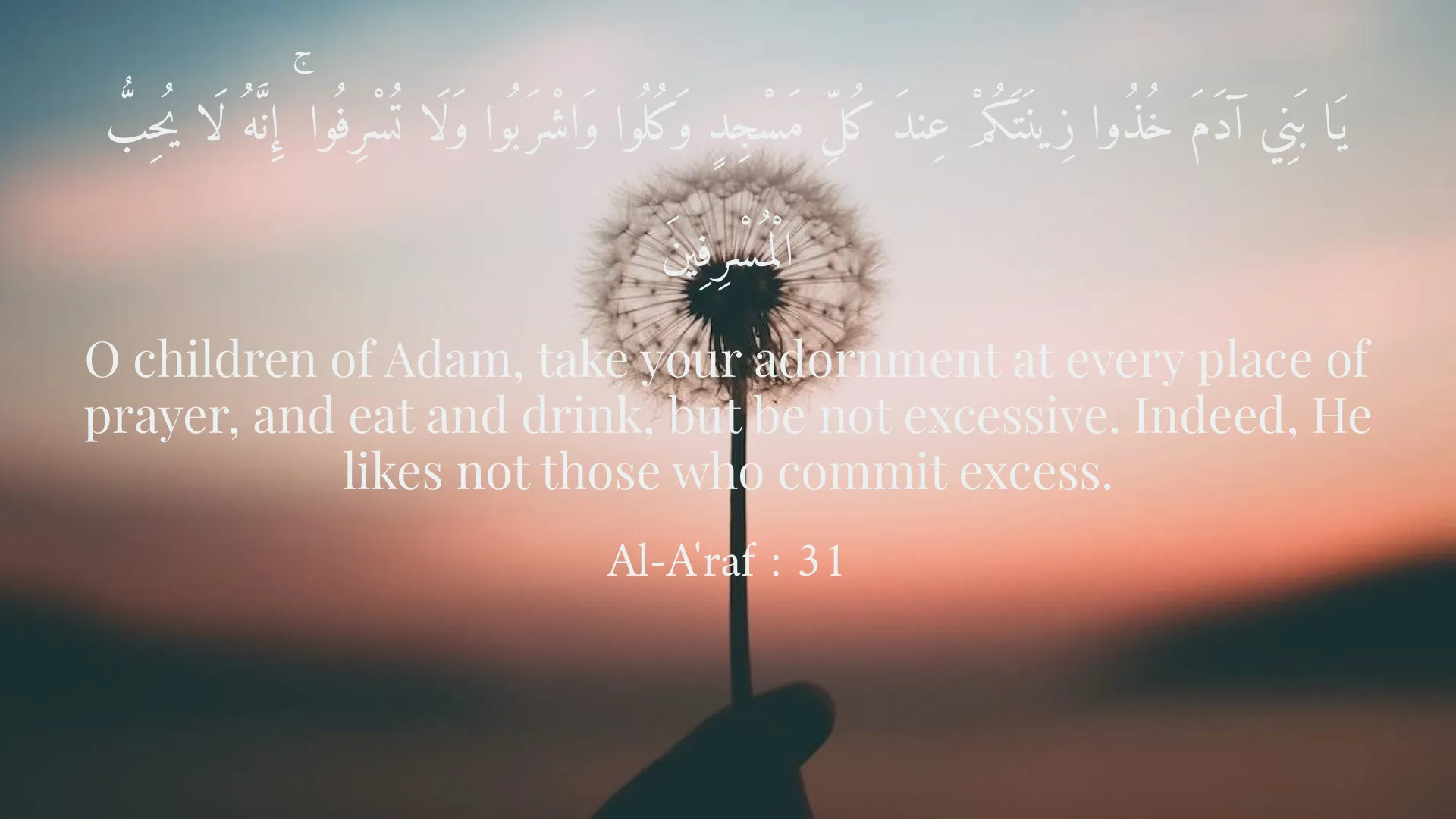
يَا بَنِي آدَمَ خُذُوا زِينَتَكُمْ عِندَ كُلِّ مَسْجِدٍ وَكُلُوا وَاشْرَبُوا وَلَا تُسْرِفُوا ۚ إِنَّهُ لَا يُحِبُّ الْمُسْرِفِينَ
O children of Adam, take your adornment at every place of prayer, and eat and drink, but be not excessive. Indeed, He likes not those who commit excess.
Al-A'raf : 31
وَآتِ ذَا الْقُرْبَىٰ حَقَّهُ وَالْمِسْكِينَ وَابْنَ السَّبِيلِ وَلَا تُبَذِّرْ تَبْذِيرًا
And give the relative his right, and [also] the poor and the traveler, and do not spend wastefully.
Al-Isra : 26
إِنَّ الْمُبَذِّرِينَ كَانُوا إِخْوَانَ الشَّيَاطِينِ ۖ وَكَانَ الشَّيْطَانُ لِرَبِّهِ كَفُورًا
Indeed, the squanderers are brothers of the devils, and ever has Satan been to his Lord ungrateful.
Al-Isra : 27
وَالَّذِينَ إِذَا أَنفَقُوا لَمْ يُسْرِفُوا وَلَمْ يَقْتُرُوا وَكَانَ بَيْنَ ذَٰلِكَ قَوَامًا
And [they are] those who, when they spend, do not spend extravagantly nor [do they] stingily but are ever, between that, [justly] moderate.
Al-Furqan : 67
Short Story
It is narrated that a wealthy and prosperous man would spread a lavish table full of various blessings every day, and he would discard more than he ate. One day, Saadi passed by his house and witnessed this extravagance. He said to him: "O noble sir, I have never seen even a single crumb of bread fall from a poor man's table, while you so carelessly cast away these divine blessings." The man replied: "I have wealth, and I do as I please." Saadi, with a kind smile, said: "The wealth is yours, but the blessing is from God. Be careful not to repay gratitude for blessings with ingratitude, for if a poor person were to be satisfied with these crumbs of bread, its value in the eyes of the Lord would be far greater than all this vain ostentation." The man was awakened by these words, and from then on, instead of extravagance, he turned to generosity and moderation, and blessings increased in his life.