Quranic Answer
In the Holy Quran, the human journey of existence, from the moment of creation to the ultimate return to God, is presented as a continuous and purposeful path built upon three fundamental pillars: "Creation," "Guidance," and "Return." These three concepts are not only inseparable but are profoundly interconnected within a divinely meaningful system that defines human existence and destiny. Indeed, understanding the deep relationship among these three principles is key to grasping the philosophy of life and the purpose of creation from an Islamic perspective. Creation (The Start of the Journey): The Quran does not view creation as an absurd or futile act; rather, it presents it as based on wisdom and purpose. Allah, the Exalted, has created the universe and everything within it, including humankind, with unparalleled precision and order. Humans, with their unique potentials and capabilities, hold a special status as the noblest of creations and Allah’s vicegerents on Earth. The purpose of creation is not merely physical existence but a test of servitude and recognition of the Lord. As stated in numerous Quranic verses, Allah created humans to test them, equipping them with the ability to discern and choose. This capacity for choice is the cornerstone of human accountability before their Creator. Creation is the first step in this journey; it is the point where our existence emerges from non-existence, placing us in a vast arena called the world to actualize our potential, and in this process, to distinguish right from wrong and make our choices. Quranic verses constantly refer to the grandeur of creation and its divine signs to guide humanity towards recognizing the Creator. The universe, in all its complexity, is an open book of divine power, knowledge, and wisdom, every particle of which bears witness to Allah’s existence and oneness. Without creation, the journey of guidance and return would have no meaning, as there would be no need for direction or a destination. Therefore, creation forms the foundational bedrock for the realization of other stages in this divine plan. Guidance (The Map of the Journey): After creation, Allah did not abandon humanity in darkness. With His boundless mercy and wisdom, He provided "Guidance" as a guide for humans on this intricate worldly journey. Guidance is presented in the Quran in two main forms: inherent (takwini) guidance and legislative (tashri'i) guidance. Inherent guidance refers to the pure instinct and natural disposition (fitra) embedded within humans, which inclines them towards good and righteousness. This is the inner voice that every human, regardless of religion or race, feels a yearning for truth, justice, and beauty. However, legislative guidance, which comes to complete and correct the path of inherent guidance, is manifested through divine prophets and heavenly scriptures. The Holy Quran, as the last and most complete book of guidance, is a comprehensive and flawless roadmap for human life. This guidance not only provides ethical principles and practical rulings for a felicitous life but also leads humans towards a deeper understanding of Allah, comprehending the purpose of creation, and preparing for the ultimate return. Without divine guidance, humanity would be lost amidst countless misguided paths and unable to discern the correct one. Guidance is the light that illuminates the way, the compass that shows direction, and the guide that prevents humanity from falling into error. The relationship between creation and guidance is that creation without guidance is like building an advanced machine without an instruction manual; though the tools are ready, the correct way to use them and their destination remain unclear. Divine guidance imbues humans with awareness and insight, enabling them to properly utilize the blessings of creation and continue their journey in accordance with the Creator's pleasure. Return (The Destination and Outcome of the Journey): The final stage of this existential journey is the "Return" to Allah. This return, referred to in the Quran as "Ma'ad" or "Ruju'", not only signifies death and the afterlife but also implies the return of the human soul to its origin and ultimate destination, which is the presence of the Lord. This stage is the culmination and outcome of all choices, deeds, and adherence to divine guidance throughout worldly life. The Quran repeatedly emphasizes that all humans, without exception, will one day stand before Allah to be held accountable and witness the consequences of their actions. This is the Day of Just Reckoning, where even the smallest good or evil deeds are not overlooked. The promise of Paradise for the righteous and Hell for the transgressors serves as both motivation and warning for humans to live their worldly lives with greater seriousness and awareness. The concept of return gives meaning and purpose to human life because it signifies that actions in this world are not confined to this life alone but will have eternal consequences. Without belief in the return, creation and guidance might seem meaningless; for if there is no end or reckoning, what purpose would there be for purposeful creation and divine guidance? The return completes the puzzle of existence, giving ultimate value and significance to all human endeavors in this world. This awareness that we will one day return to our Lord is a powerful motivator for awakening conscience, fostering responsibility, and moving along the path of guidance. Interconnected Relationship and the Cycle of Existence: These three principles form a complete and logical cycle. Creation is the starting point, guidance is the path and guide for humans on this journey, and the return is the end and outcome of this journey. Allah, with His infinite wisdom, created humans (Creation), then clarified the way of life for them (Guidance) so that they might properly use their free will on this path, and finally, they return to Him (Return) to witness the results of their deeds and receive reward or punishment. This unbreakable bond shows that human existence is not a random event but a divine and meaningful plan, the goal of which is for humans to reach perfection and proximity to Allah. Each of these components complements the others, and without one, the entire system would be dysfunctional. Creation provides the capacity, guidance actualizes that capacity, and the return rewards the perfection of this actualization or prevents its deviation. Consequently, by linking these three concepts, the Quran presents a comprehensive and astonishing picture of human existence, its responsibilities, and its ultimate destiny, all under the wise providence and will of Almighty Allah.
Related Verses
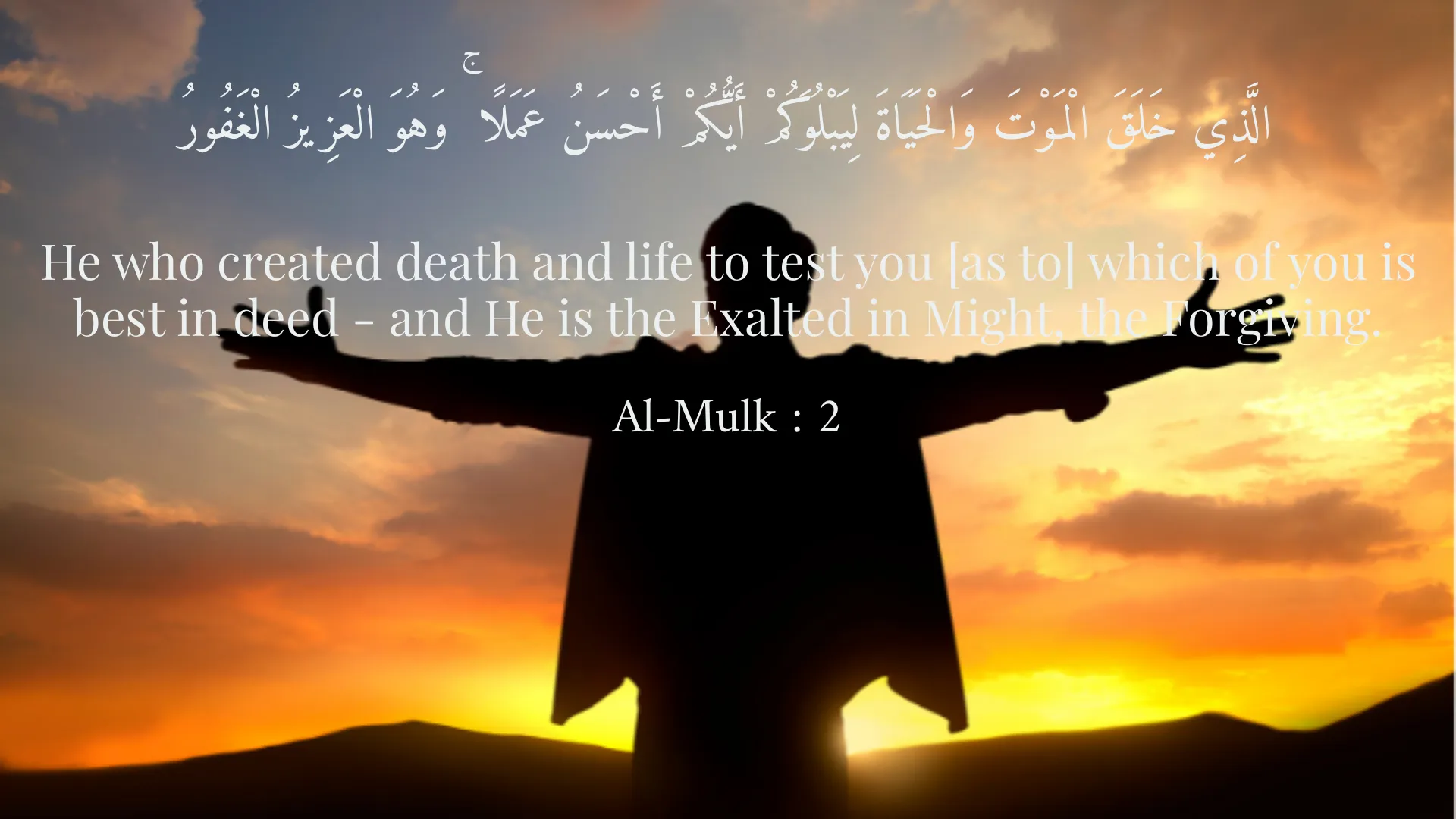
الَّذِي خَلَقَ الْمَوْتَ وَالْحَيَاةَ لِيَبْلُوَكُمْ أَيُّكُمْ أَحْسَنُ عَمَلًا ۚ وَهُوَ الْعَزِيزُ الْغَفُورُ
He who created death and life to test you [as to] which of you is best in deed - and He is the Exalted in Might, the Forgiving.
Al-Mulk : 2
ذَٰلِكَ الْكِتَابُ لَا رَيْبَ ۛ فِيهِ ۛ هُدًى لِّلْمُتَّقِينَ
This is the Book about which there is no doubt, a guidance for those conscious of Allah -
Al-Baqarah : 2
يَا أَيَّتُهَا النَّفْسُ الْمُطْمَئِنَّةُ
O reassured soul,
Al-Fajr : 27
ارْجِعِي إِلَىٰ رَبِّكِ رَاضِيَةً مَّرْضِيَّةً
Return to your Lord, well-pleased and pleasing [to Him],
Al-Fajr : 28
Short Story
In ancient times, a wise sage walked in a beautiful garden. A troubled youth approached him and said, "O Master, I am lost in this world and do not know whence I came or whither I go." The sage smiled and said, "The story of us humans is like a seed that God plants in the earth. This seed is your creation, an existence crafted with unparalleled wisdom. Then, God shines the light of the sun and the rain of guidance upon it, showing it the path to growth and flourishing. This is divine guidance, which reaches us through prophets and holy books, so that we may know how to bear fruit and attain perfection. And finally, every seed that bears fruit, then returns to its origin, the earth, to find life anew or reach another perfection. This return to God gives eternal consequence to every action." Upon hearing these words, the youth's eyes were enlightened with insight, and he understood that his life was not aimless, but a journey that began with creation, is traversed with guidance, and returns to the Lord.