Quranic Answer
In the profound and comprehensive teachings of the Holy Quran, the creation of humanity is neither a random event nor without purpose; rather, it is imbued with divine wisdom, deep meaning, and lofty objectives that immediately place a weighty burden of responsibility upon each individual. The Quran clearly demonstrates an inseparable and fundamental connection between the manner of human creation, their inherent capacities and abilities, and the duties and obligations they bear towards their Creator, themselves, society, and the environment. This relationship forms the core framework for understanding humanity's place in existence and the very meaning of human life. First and foremost, the Quran declares the primary purpose of the creation of jinn and humankind to be 'worship' and 'servitude' to Allah (God) Almighty: "And I did not create the jinn and mankind except to worship Me" (Adh-Dhariyat, 51:56). However, the concept of 'worship' (Ibadah) in Islam is far more expansive than merely performing ritualistic acts such as prayer and fasting. Ibadah encompasses an entire way of life where every thought, every action, and every intention is directed towards pleasing Allah and is based on divine teachings. This servitude includes obeying divine commands, refraining from prohibitions, and striving to establish justice and benevolence in all aspects of individual and communal life. This comprehensive understanding of worship extends human responsibility to all dimensions of their existence and actions; for every deed performed with sincere intention and in the path of truth is considered an act of worship. Alongside worship, the Quran introduces humanity as 'Khalifa' or vicegerent of God on Earth: "And [mention, O Muhammad], when your Lord said to the angels, 'Indeed, I will place upon the earth a successive authority (khalifah)'" (Al-Baqarah, 2:30). This role of vicegerency is a highly esteemed position that grants humans immense powers and capabilities, but in return, it imposes a profound responsibility upon them. As vicegerents, humans are obligated to cultivate the Earth, maintain ecological balance, establish justice and fairness, and guide themselves and others towards goodness and prosperity. This responsibility includes proper management of natural resources, respecting the rights of all beings (humans, animals, and plants), combating corruption and oppression, and striving to create an exemplary society based on divine values. This role transforms humanity into an active and responsible manager and overseer in the world, whose actions have far-reaching consequences beyond their individual existence. The unique characteristics of human creation form the foundation of this accountability. One of the most significant of these features is the 'infusion of the Divine Spirit' into the human form: "So when I have proportioned him and breathed into him of My [created] soul, then fall down to him in prostration" (Al-Hijr, 15:29; Sad, 38:72). This attribute distinguishes humans from other creations, endowing them with unparalleled spiritual capacities such as knowledge, love, will, intellect, and the ability to connect with the unseen realm. This divine dimension makes humanity capable of receiving the 'Divine Trust' (Amanah); a trust that the heavens, the earth, and the mountains refused to bear, but which humanity accepted: "Indeed, We offered the Trust to the heavens and the earth and the mountains, but they declined to bear it and feared it; but man [undertook to] bear it. Indeed, he was unjust and ignorant [of its full responsibility]" (Al-Ahzab, 33:72). This Trust encompasses responsibilities such as monotheistic knowledge, divine injunctions, intellect, free will, and the divine mandate entrusted to humanity. Accepting this Trust testifies to humanity's greatness and unique potential, while simultaneously placing a heavy burden of responsibility upon them. Furthermore, humanity is endowed with 'intellect' and 'free will' (Ikhtiyar). Unlike angels who are purely obedient and animals that act instinctively, humans possess the ability to choose between good and evil, right and wrong, and obedience and disobedience. This capacity for choice is the very foundation of human accountability. If humans lacked free will, there would be no meaning to obligation, responsibility, or reckoning. The Holy Quran explicitly emphasizes the existence of this free will, granting humans the freedom to choose the path of guidance or misguidance: "Indeed, We guided him to the way, whether grateful or ungrateful" (Al-Insan, 76:3). This freedom of choice redoubles their responsibility for their decisions; for the outcome of their actions, whether good or bad, depends entirely on their choice. The concept of responsibility in the Quran is inextricably linked with the concept of 'reckoning' and 'reward and punishment' in the afterlife. Allah Almighty repeatedly emphasizes in the Quran that every human being will be questioned about their deeds, even the smallest ones: "So whoever does an atom's weight of good will see it, And whoever does an atom's weight of evil will see it" (Az-Zalzalah, 99:7-8). This principle strengthens human accountability at every moment of life, motivating them towards good deeds and deterring them from evil; for they know that no action remains hidden from Allah's sight, and everything they do will have consequences. This accountability is not only manifested in the afterlife but also has social and worldly dimensions, as human actions will directly impact their lives and society. In conclusion, the relationship between human creation and their responsibility in the Quran is an interdependent and defining one. Humanity is a being created with the purpose of worship and vicegerency, and by being granted gifts such as intellect, free will, and the divine spirit, they have accepted the heavy burden of the Divine Trust. This purposeful creation places immense responsibilities upon them in individual, social, and environmental dimensions, which will ultimately be weighed on the Day of Reckoning. Understanding this relationship gives true meaning to human life and guides them towards perfection, happiness, and the fulfillment of their divine duty. Every step a person takes on the path of truth and every responsibility they fulfill correctly is a manifestation of this divine wisdom in their creation.
Related Verses
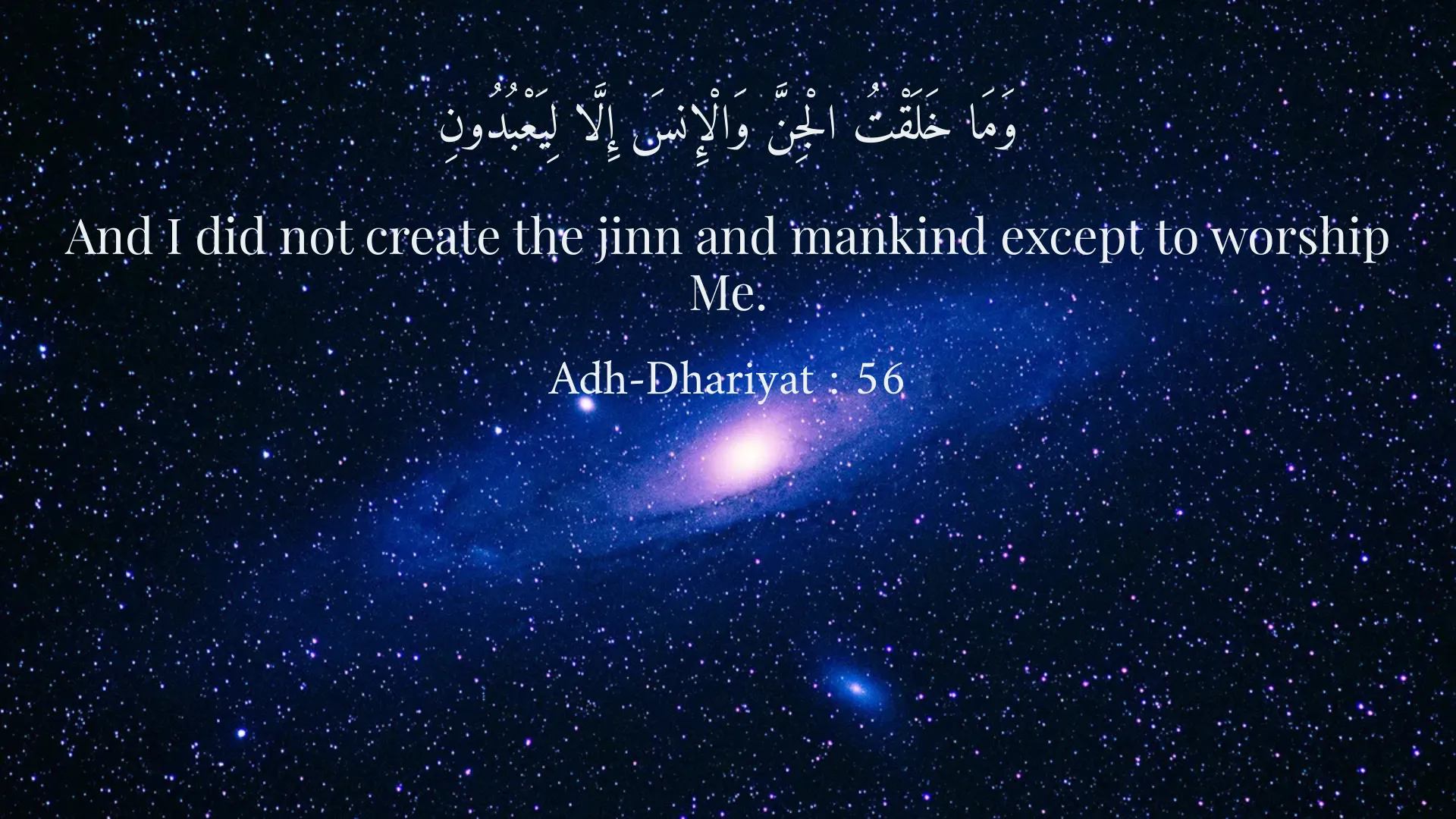
وَمَا خَلَقْتُ الْجِنَّ وَالْإِنسَ إِلَّا لِيَعْبُدُونِ
And I did not create the jinn and mankind except to worship Me.
Adh-Dhariyat : 56
وَإِذْ قَالَ رَبُّكَ لِلْمَلَائِكَةِ إِنِّي جَاعِلٌ فِي الْأَرْضِ خَلِيفَةً ۖ قَالُوا أَتَجْعَلُ فِيهَا مَن يُفْسِدُ فِيهَا وَيَسْفِكُ الدِّمَاءَ وَنَحْنُ نُسَبِّحُ بِحَمْدِكَ وَنُقَدِّسُ لَكَ ۖ قَالَ إِنِّي أَعْلَمُ مَا لَا تَعْلَمُونَ
And [mention, O Muhammad], when your Lord said to the angels, 'Indeed, I will place upon the earth a successive authority.' They said, 'Will You place upon it one who causes corruption therein and sheds blood, while we declare Your praise and sanctify You?' Allah said, 'Indeed, I know that which you do not know.'
Al-Baqarah : 30
إِنَّا عَرَضْنَا الْأَمَانَةَ عَلَى السَّمَاوَاتِ وَالْأَرْضِ وَالْجِبَالِ فَأَبَيْنَ أَن يَحْمِلْنَهَا وَأَشْفَقْنَ مِنْهَا وَحَمَلَهَا الْإِنسَانُ ۖ إِنَّهُ كَانَ ظَلُومًا جَهُولًا
Indeed, We offered the Trust to the heavens and the earth and the mountains, but they declined to bear it and feared it; but man [undertook to] bear it. Indeed, he was unjust and ignorant [of its full responsibility].
Al-Ahzab : 72
Short Story
It is narrated that one day, Sheikh Muslih al-Din Saadi was picking a rose in the garden (Bustan) and contemplating it. One of his students asked, 'O Master, what virtue does man possess that elevates him above other creatures?' Saadi smiled and replied, 'The virtue of man is not merely in his tall stature or fair countenance, but in his understanding, wisdom, and power of choice. God has bestowed upon him intellect and will to distinguish between the straight and crooked path, and to bear the responsibility of cultivating the Earth and spreading justice. Whosoever fulfills this trust well and plants the saplings of love and goodness, not only leaves a good name for himself in this world but will also reap the fruits of his good deeds in the Hereafter. So, my son, diligently nurture this garden of existence entrusted to you with your own hands, for whatever you sow in it, you shall see its harvest.'