Quranic Answer
In the realm of Islamic teachings, the concept of intention, known as niyyah, holds a pivotal position that defines the quality and significance of one’s actions. This principle is intricately woven into the fabric of Islamic theology and serves as a guiding light for Muslims in their daily lives. The significance of intentions in Islam is illuminated through various verses of the Holy Quran and the teachings of the Prophet Muhammad (PBUH). In order to fully comprehend the weight that intention carries in the performance of deeds, we must explore the biblical references, the applications of this concept in daily life, and the moral implications it brings. At the forefront, one of the verses from Surah Al-Baqarah (Chapter 2, Verse 225) states, "Allah does not impose upon a soul a duty, except to the extent of its ability." This verse issues a profound reminder that Allah’s expectations are aligned with a person’s capacity. The essence of this statement is the recognition that Allah not only observes our actions but meticulously examines the motivations that fuel those actions. Intention, therefore, acts as a filter through which our deeds are assessed by Allah. It signifies that while performing a good deed might be commendable, the underlying intention must equally reflect a desire to seek the pleasure and satisfaction of Allah. Moreover, the Holy Quran emphasizes in Surah Al-An'am (Chapter 6, Verse 160) that individuals will be held accountable solely for what they intended. This verse further underscores an important tenet of accountability within Islam, illustrating that sincere and pure intentions can redeem someone in the sight of Allah. Therefore, Muslims are urged to ensure that their intentions are rooted in the desire to serve Allah, rather than striving for the admiration or recognition from fellow human beings. This scriptural foundation invites introspection regarding our motivations. Are we performing our duties with the right mindset, or are we merely seeking accolades from society? The teachings of the Prophet Muhammad (PBUH) also reinforce the significance of intention. A famous narration states, "Actions are judged by intentions, and for every person is what he intended." This statement is a powerful acknowledgment of the role that intention plays in the reality of our existence. It presents an invitation for believers to conduct self-evaluation and introspection before embarking on any action. The implication is clear: if our intentions are sincere and directed towards doing good for the sake of Allah, then even if we fail in our endeavors, Allah will reward us in accordance with our intentions. Conversely, if the intentions are tainted with insincerity, the deeds become devoid of value. Reflecting on this significant teaching from Islamic theology, it becomes apparent that maintaining sincerity and goodwill in our daily affairs is essential. Every action, whether grand or mundane, requires us to uphold a good intention. For instance, consider the simple act of giving charity. If an individual donates money or resources but does so solely for the purpose of being recognized as generous or to gain social status, the act becomes questionable. On the other hand, if one gives generously with the intention of helping those in need and seeking Allah’s pleasure, that action is deemed virtuous and honorable. Allah values actions based not solely on their external manifestations, but on the intention held within the heart of the doer. Furthermore, the concept of niyyah extends beyond specific actions; it permeates various aspects of life. From daily chores such as cleaning one’s home to professional endeavors like pursuing a career, every task can be transformed into an act of worship if performed with the right intention. For Islamic practitioners, this means entering into every endeavor with a dedication to fulfilling duties for Allah’s sake. The profound understanding of the importance of niyyah encourages Muslims to cultivate a disposition of mindfulness, ensuring that even the most routine activities are imbued with purpose and intention. This teaching also calls for a broader discussion regarding the moral implications of intention. It encourages ethical conduct, integrity, and the prioritization of morality over mere results. The reminder that our intentions will ultimately determine the quality and merit of our actions fosters an environment where individuals become aware of their motivations and ethical considerations when engaging with others. Instead of focusing narrowly on outcomes, there is a greater emphasis on the values and principles that guide our choices. This shift in perspective fosters accountability, positive relationships, and a commitment to justice, creating an ethical framework within society. In conclusion, the significance of intention in Islam cannot be overstated. It is a fundamental pillar that shapes our actions, interactions, and moral framework. The verses of the Holy Quran, combined with the teachings of the Prophet Muhammad (PBUH), create a cohesive understanding of the necessity to nurture sincere intentions. Each person bears the responsibility to uphold the purity of their intentions in their deeds, creating a community that is built on mutual respect, sincerity, and the eagerness to pursue goodness. Striving for intentions that echo the dedication to serve Allah fosters an enriched spiritual life and a thoughtful approach to every aspect of existence. Thus, in the quest for righteousness, remembering the importance of niyyah shapes our journey toward achieving true spiritual fulfillment and alignment with divine purpose.
Related Verses
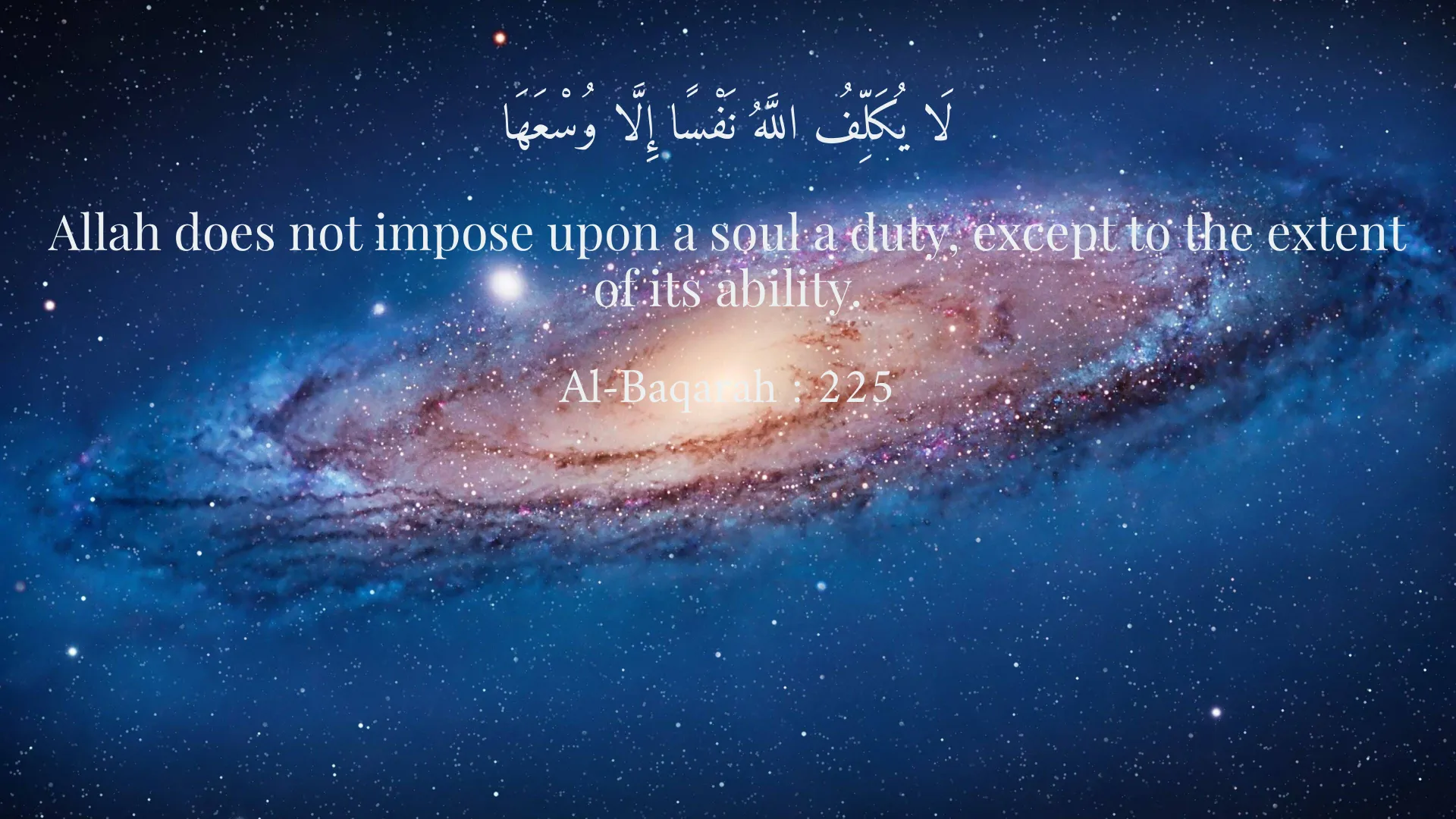
لَا يُكَلِّفُ اللَّهُ نَفْسًا إِلَّا وُسْعَهَا
Allah does not impose upon a soul a duty, except to the extent of its ability.
Al-Baqarah : 225
وَمَن يَكُ مِمَّن يُشَارِكُ اللَّهَ فَيُقَوِّمَهُ
And whoever does harm to himself is not held accountable by Allah.
Al-An'am : 160
Short Story
Once upon a time, there was a man named Ali who was searching for the true meaning of the value of his deeds. Every day he would visit his teacher and ask how he could enhance the value of what he did. The teacher replied, "Dear Ali, the value of your deeds depends not only on the action itself but also on your intention behind it. Any action you perform, if done with pure intention and for God's pleasure, will be valued by Him." Ali reflected on this profound insight and decided to carry out every action with a sincere intention. From that day forward, his life took on a new hue, and a sense of fulfillment and peace enveloped his heart.