Quranic Answer
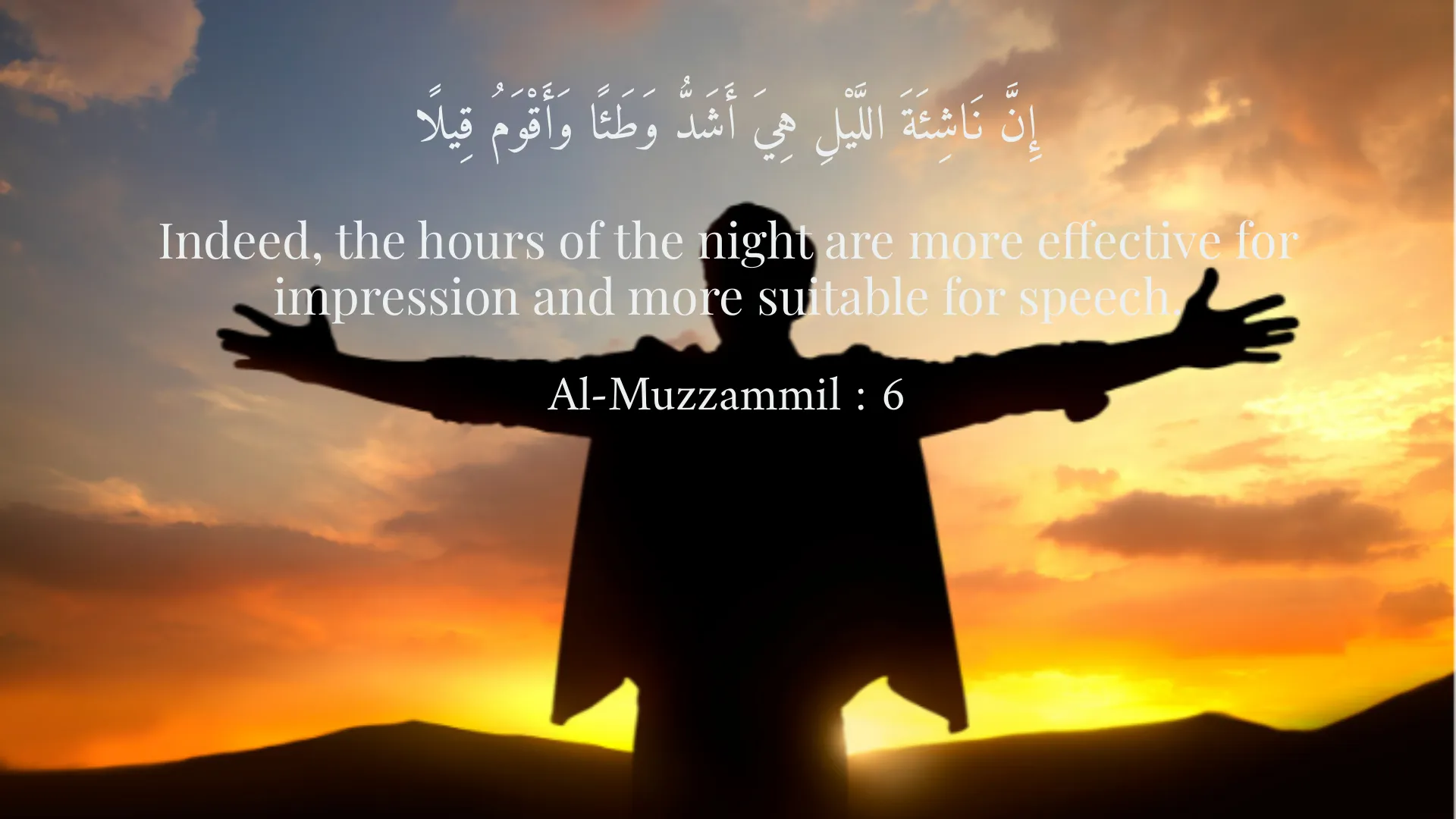
The nature of time and its relevance across cultures and religions has been a topic of great significance throughout history. Among these time frames, night stands out particularly in spiritual and religious contexts. In Islam, the Holy Quran paints a distinct picture of night that goes beyond mere darkness; it transforms into a sacred space for reflection, worship, and profound connection with Almighty God. This article delves into the spiritual significance of night as portrayed in the Quran, highlighting verses, the concept of night prayers, and the intrinsic peace associated with this time, ultimately encouraging an understanding of the depth and richness found within the Islamic faith as it relates to nightly contemplation. Night, often seen as a time of rest and rejuvenation in earthly terms, becomes an oasis of spiritual nourishment in Islamic teachings. One of the key verses that reflects this aspect is found in Surah Al-Muzzammil, verse 6, where it is stated, 'Indeed, the hours of the night are more effective for impression and more suitable for speech.' This assertion underscores the notion that the quietness and stillness of the night enable individuals to turn their attention inward, free from distractions that typically abound during the day. In a world perpetually buzzing with noise and the demands of modern life, the night provides a unique opportunity to engage deeply in worship and reflection. During the night, the veil of darkness facilitates a unique atmosphere that fosters contemplation. The stillness encourages believers to analyze their lives, assess their actions, and engage in sincere communication with God. The Quranic assertion regarding the effectiveness of nighttime prayer is particularly compelling. The night prayer, or Tahajjud, is not merely a form of devotion; it represents a soulful encounter with the Creator. The Prophet Muhammad (peace be upon him) emphasized the importance of this prayer, illustrating its profound impact on spiritual growth. This particular moment allows individuals to shed their earthly concerns and immerse themselves in divine remembrance, thereby enhancing their relationship with Allah. In deeper reflection, the practice of night prayers serves as a reminder of humility and dependence on God's mercy. Surah Al-Ahqaf, verse 26 articulates this sentiment powerfully: 'And do not think that Allah is unaware of what the wrongdoers do.' This verse prompts believers to remember that under the cover of night, they are still accountable for their actions, encouraging an earnest appeal for forgiveness and a desire to rectify their paths. This act of seeking forgiveness is paramount in Islamic teachings, as it acknowledges human imperfections and the inherent need for divine guidance. Moreover, the themes of seeking forgiveness and remembrance further elevate the importance of night in the Quran. Throughout various verses, it is reiterated that nighttime serves as a special time for supplication and beseeching the Almighty. The quiet ambience allows for heartfelt prayers that resonate more deeply than in the daytime busyness, fostering a sense of spiritual solace. Muslims may find time during these hours to recite the Quran, engage in Dua (supplication), and reflect on their lives and the broader universe, igniting a fervent desire for self-improvement and spiritual enlightenment. The Quran also draws a parallel between night and serenity. Night, with its inherent darkness, compels individuals to retreat from their daily hardships and dilemmas, enabling them to embrace tranquility and peace. This serene environment allows Muslims to engage in devotion with an undistracted mind, thereby establishing a more profound sense of connection with their faith and God. In today's fast-paced world, where spiritual distractions are abundant, prioritizing time for nighttime worship can serve as an anchor, grounding believers in their faith and providing peace during turbulent times. Furthermore, the nightly hours also symbolize hope and restoration in many Islamic teachings. The end of the day serves not only as a closure but opens a pathway for renewal through prayer and reflection. This perspective encourages believers to view night as a sacred time to restore their spirits, cleanse their minds, and prepare for the challenges of the coming day. One can argue that the blend of seeking forgiveness, reflecting on one's actions, and embracing the tranquility of night lays the foundation for a spiritually fulfilling life. Ultimately, the spiritual significance of night as portrayed in the Holy Quran highlights its importance as a time for peace, reflection, and connection with the Almighty. The Quran’s emphasis on night reflects a profound understanding of human nature—that amidst the chaos of daily living, moments of stillness are not only beneficial but necessary for deep self-examination and divine communion. As individuals navigate through the complexities of life, they are gently reminded to draw closer to Allah during these sacred hours, enriching their spiritual journeys. In conclusion, the Holy Quran beautifully illustrates the night as a time set apart for reflection, worship, and spiritual awakening. By understanding the profound implications of night, believers are encouraged to embrace this time not merely as a transition to rest but as an essential component of their spiritual practice. Through sincere devotions, reflections, and the pursuit of forgiveness, they can cultivate a deeper relationship with their Creator, ensuring that the night continues to resonate as a sanctified period in the lives of Muslims as it has throughout history.
Related Verses
إِنَّ نَاشِئَةَ اللَّيْلِ هِيَ أَشَدُّ وَطَئًا وَأَقْوَمُ قِيلًا
Indeed, the hours of the night are more effective for impression and more suitable for speech.
Al-Muzzammil : 6
وَلَا تَحْسَبَنَّ اللَّهَ غَافِلًا عَمَّا يَعْمَلُ الظَّالِمُونَ
And do not think that Allah is unaware of what the wrongdoers do.
Al-Ahqaf : 26
Short Story
One day, a pious man decided to dedicate his nights to worship and prayer. He would sit in the darkness of night, contemplating his life with a serene heart. After a while, he felt a sense of peace enveloping him, and his heart seemed full of light. Ever since that night, he continued his prayers and was always mindful of God.