Quranic Answer
Patience, known as "Sabr" in Arabic, is one of the most emphasized virtues in the Holy Quran and the Prophetic tradition. It is not merely a passive acceptance of hardship but an active, dynamic force that propels human beings towards growth and excellence. The role of patience in human development is multifaceted, encompassing various dimensions of one's existence. Patience implies restraining the self from disobeying Allah, persevering in obedience to Him, and showing steadfastness in the face of calamities and difficulties. This concept is repeatedly highlighted in the Quran with diverse expressions, promising immense rewards for those who are patient. Patience, like a strong pillar, solidifies the foundation of a person's character, preparing them to face life's challenges and achieve spiritual and moral perfections. One of the most important aspects of patience's role in human growth is its ability to help individuals cope with hardships, trials, and calamities. Worldly life is inherently intertwined with challenges, adversities, and misfortunes, sometimes involving the loss of loved ones, financial constraints, or physical and mental illnesses. The Holy Quran explicitly states that these trials are an integral part of the human journey, with their purpose being the growth and purification of the human soul. In Surah Al-Baqarah, verse 155, Allah Almighty says: "And We will surely test you with something of fear and hunger and a loss of wealth and lives and fruits, but give good tidings to the patient." This verse clearly illustrates that divine tests involve fear, hunger, and deficiencies in wealth, lives, and harvests, and amidst these, glad tidings are reserved for the patient. Patience during such times grants individuals the power to endure, prevents them from falling into despair and hopelessness, and creates an environment for reflection, learning, and inner growth. A person who is patient in the face of hardship not only refrains from complaint but, by relying on Allah, seeks solutions and learns lessons from these experiences. This process gradually strengthens and toughens one's character, preparing them to face greater challenges. This active endurance leads to self-refinement and purification of the soul, granting deeper insight into divine wisdom and the purpose of creation, thereby solidifying their faith. Another dimension of patience's vital role in human growth is its contribution to performing acts of worship and obedience. Human growth is not solely about enduring difficulties; it also encompasses perseverance in fulfilling religious obligations and abstaining from forbidden acts. Patience in this aspect means steadfastness and persistence in performing good deeds, even when the self is inclined towards lethargy or avoidance. Daily prayers, which might be performed in hot or cold weather or when one is tired, fasting during long summer days, giving charity from beloved wealth, and other acts of worship that require sacrifice and effort, all demand patience and perseverance. In Surah Al-Baqarah, verse 153, the Quran states: "O you who have believed, seek help through patience and prayer. Indeed, Allah is with the patient." This verse demonstrates that patience and prayer are two crucial tools for seeking Allah's aid and are closely intertwined. Continuous adherence to these acts refines the soul, strengthens one's connection with the Creator, and brings inner peace. This perseverance gradually instills virtuous habits in an individual, guiding them towards human perfection. Patience in obedience means overlooking temptations and external and internal pressures to abandon the path of truth. This type of patience strengthens the foundation of piety and keeps one on the right track, elevating them to a higher level of faith and righteous deeds. Furthermore, a critical aspect of patience is resistance against sin and carnal desires. Throughout life, humans are constantly exposed to satanic whispers and the inclinations of the commanding self (nafs al-ammarah), which call them towards fleeting pleasures and sins. Patience in this regard means self-control, abstaining from unlawful acts, and standing firm against the ephemeral attractions of this world. This type of patience plays a crucial role in purifying the soul and cleansing the spirit. A person who is patient in the face of sin remains safe from spiritual impurities, and their heart remains pure. This purity paves the way for spiritual advancement and closeness to Allah, making the individual worthy of divine blessings and special favors. Patience against sin grants an individual strong willpower and an independent character that is not swayed by external or internal pressures and does not easily deviate from the path of truth. This is the same determination and resolve referred to in Surah Luqman, verse 17: "O my son, establish prayer, enjoin what is right, forbid what is wrong, and be patient over what has befallen you. Indeed, that is of the matters [requiring] determination." This verse places patience in the face of calamities alongside enjoining good and forbidding evil as matters requiring strong resolve and determination, which significantly contribute to character growth and spiritual fortitude. Finally, the Quran in many verses gives glad tidings of salvation and success to the patient. Patience not only leads to inner peace, deeper insight, and triumph over problems in this world but also brings immense, indescribable rewards in the Hereafter. In Surah Al-Imran, verse 200, Allah says: "O you who have believed, persevere and be more patient and adhere to your religion and fear Allah that you may succeed." This verse calls upon believers to be steadfast, patient in the face of difficulties, and God-fearing so that they may attain salvation. Patience enhances one's ability to focus on long-term goals and prevents despair on the path to achieving them. Indeed, many great successes throughout human history, both individually and collectively, have been attributed to patience and perseverance. Being patient in seeking knowledge, undertaking great endeavors, and raising children all lead to sweet and lasting fruits that would be unattainable without patience. Patience helps individuals learn from failures and try again, rather than giving up and falling into despair. In conclusion, patience plays a vital and central role in the comprehensive growth of human beings. This characteristic helps individuals remain steadfast in the face of calamities, persevere in acts of worship and obedience, abstain from sins, and ultimately attain spiritual and moral perfections. Patience, as an internal force, makes an individual's character more mature, stronger, and more resilient, preparing them for both worldly and otherworldly successes. From the Quranic perspective, true human growth is impossible without patience and steadfastness. Patience is a path to inner peace, deeper insight into divine wisdom, and reaching higher stages of closeness to Allah. This virtue is the cornerstone of building a balanced, committed, and successful personality that will be a source of good and blessing not only for oneself but also for society. For this reason, the Holy Quran repeatedly invites believers to acquire and strengthen this valuable attribute, for the reward of patience is immeasurable, and the promised paradise of Allah is the abode of the patient.
Related Verses
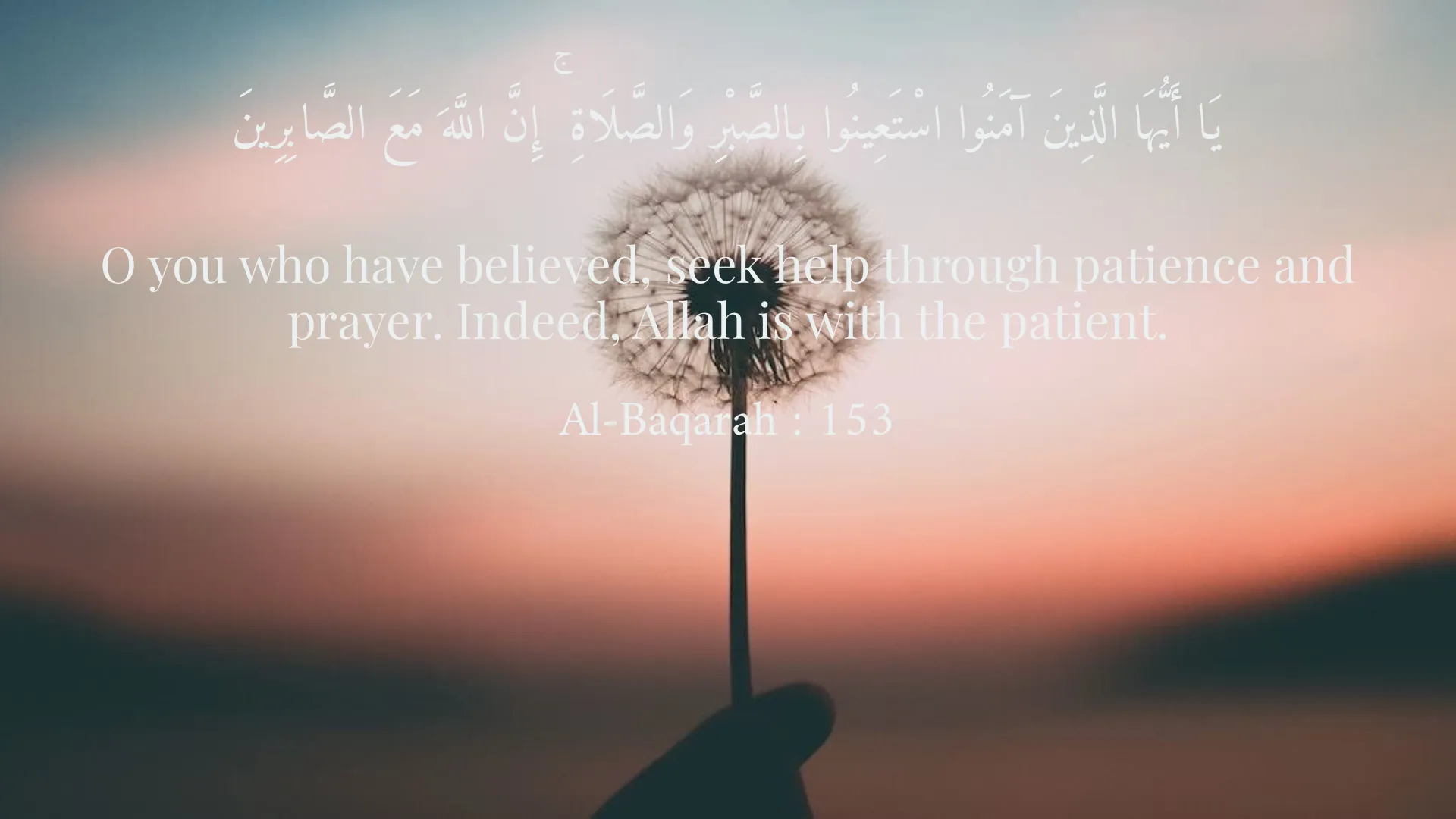
يَا أَيُّهَا الَّذِينَ آمَنُوا اسْتَعِينُوا بِالصَّبْرِ وَالصَّلَاةِ ۚ إِنَّ اللَّهَ مَعَ الصَّابِرِينَ
O you who have believed, seek help through patience and prayer. Indeed, Allah is with the patient.
Al-Baqarah : 153
وَلَنَبْلُوَنَّكُم بِشَيْءٍ مِّنَ الْخَوْفِ وَالْجُوعِ وَنَقْصٍ مِّنَ الْأَمْوَالِ وَالْأَنفُسِ وَالثَّمَرَاتِ ۗ وَبَشِّرِ الصَّابِرِينَ
And We will surely test you with something of fear and hunger and a loss of wealth and lives and fruits, but give good tidings to the patient.
Al-Baqarah : 155
يَا أَيُّهَا الَّذِينَ آمَنُوا اصْبِرُوا وَصَابِرُوا وَرَابِطُوا وَاتَّقُوا اللَّهَ لَعَلَّكُمْ تُفْلِحُونَ
O you who have believed, persevere and be more patient and adhere to your religion and fear Allah that you may succeed.
Al-Imran : 200
يَا بُنَيَّ أَقِمِ الصَّلَاةَ وَأْمُرْ بِالْمَعْرُوفِ وَانْهَ عَنِ الْمُنكَرِ وَاصْبِرْ عَلَى مَا أَصَابَكَ ۖ إِنَّ ذَلِكَ مِنْ عَزْمِ الْأُمُورِ
O my son, establish prayer, enjoin what is right, forbid what is wrong, and be patient over what has befallen you. Indeed, that is of the matters [requiring] determination.
Luqman : 17
Short Story
It is said that a poor dervish patiently endured poverty for years, never uttering a complaint about his fate. Whenever he was asked about his condition, he would offer thanks to God. One of his friends saw him and asked, 'O Dervish, I see you enduring this overwhelming poverty, yet time shows no mercy to you. Why are you so thankful and joyful despite all these hardships?' The dervish smiled and said, 'My friend, poverty is a divine test, and patience upon it opens a door to knowledge and relief. I see that Allah never closes the door of His mercy to the patient, and whoever endures hardship on the path of servitude will eventually attain the hidden treasures of the soul. Perhaps this destitution has kept me from worldly arrogance and heedlessness, and driven me towards sincerity and closeness to God.' This tale by Saadi illustrates how patience can transform difficulties into opportunities for inner growth and divine knowledge, revealing the true treasures of human existence.