Quranic Answer
Repentance, or 'Tawbah' in Islam, is more than just a routine act; it is a profound principle that encapsulates the essence of returning to the omnipotent Creator and seeking His boundless forgiveness. In the Islamic faith, Tawbah holds significant weight, as it is not just a ritualistic recitation of words, but a sincere endeavor and heartfelt admission of one's misdeeds coupled with the earnest intention to reform oneself. The importance of this vital tenet is highlighted extensively throughout the Holy Quran, the sacred text of Islam, which serves as a guidance manual for Muslims around the globe. In the Holy Quran, several verses shed light on the importance and the conditions of genuine repentance. For instance, in Surah At-Tahrim, verse 8, Allah calls upon the believers, saying: "O you who have believed, repent to Allah with sincere repentance." This divine exhortation serves as a reminder that repentance is an essential component of being a true believer. It emphasizes the necessity of returning to Allah from the wayward paths one may have tread, no matter how far one might have strayed. The act of repenting is not merely an external performance, but it requires an individual to fully acknowledge their sins and wrongdoings. It is the internal transformation that matters—the sincere recognition of one’s faults combined with an earnest commitment to rectify and steer clear from those sins in the future. Furthermore, the Quran indicates that repentance should be made while one is cognizant of their wrong actions, which further enhances the essence of Tawbah. It ensures that individuals do not remain entangled among sinners. This requirement encourages self-awareness and accountability, fostering growth and enlightenment in one's spiritual journey. Moreover, in Surah Al-Ma'idah, verse 39, Allah reassures those who genuinely repent and conduct righteous deeds by stating: "Those who after sincere repentance perform righteous deeds will be granted doors of mercy and forgiveness." This verse beautifully interlinks repentance with subsequent actions, reiterating the notion that true repentance involves a transformation of behavior and character. It serves as a beacon of hope, illustrating that through the act of repenting and committing to good deeds, individuals can unlock the boundless mercy of Allah. The implication here is profound: repentance is not a one-off act but the beginning of a lifelong journey toward righteousness and spiritual fulfillment. Tawbah acts as a rejuvenating force for the soul, liberating individuals from the heavy shackles of sin. Through repentance, a person is not only freed from the weight of their past mistakes but is also granted a renewed opportunity for spiritual elevation. It strengthens one's relationship with Allah, creating a bond that fosters love, trust, and obedience toward the Almighty. This enriching relationship is essential, as it guides individuals back to the right path when they veer off course. It imbues life with positive energy, prompting individuals to engage more deeply with their faith and the array of goodness it encapsulates. The Quran also reassures believers of Allah's infinite mercy, encouraging them never to lose hope in His compassion. Surah Az-Zumar, verse 53 reminds us of this, stating: "O My servants who have believed, fear your Lord. For those who do good in this world is good, and the earth of Allah is spacious. Indeed, the patient will be given their reward without account." Such verses act as a comforting reminder that no matter the extent of one's transgressions, they are never beyond the reach of Allah's forgiveness if they sincerely seek it. Practicing repentance cultivates a sense of peace and tranquility within the individual. The spiritual cleansing associated with Tawbah provides clarity and perspective, as it serves as a reminder that life is a continuous journey of learning and evolving. It prepares individuals to face life’s challenges with a positive mindset, instilling resilience and inner strength. In addition to personal growth, the impact of repentance resonates throughout communities. When individuals embrace Tawbah, they tend to influence those around them positively, creating a ripple effect of goodness and virtue. As people repent and reform, they foster a supportive environment that encourages growth and righteousness within their families and communities. This transformative power of Tawbah contributes significantly to the establishment of a harmonious society, which is vital in today’s tumultuous world. In conclusion, repentance (Tawbah) is indispensable in human life. It reinforces the continuous need for self-improvement and spiritual nourishment. The significance of Tawbah in Islam cannot be overstated, as it provides believers with the opportunity to cleanse their soul, seek forgiveness, and strengthen their connection with Allah. The emphasis on sincere acknowledgment of one's wrongdoings and the determination to avoid them serves to ensure that individuals remain on the path of righteousness. Furthermore, the promise of mercy and forgiveness instills hope and motivates believers to pursue a life filled with goodness and piety. Ultimately, Tawbah leads to peace, purity, and profound satisfaction, enriching not only the individual’s life but also the lives of those surrounding them, fostering a positive cycle of repentance and spiritual growth. As Muslims, recognizing the importance of Tawbah and integrating it into daily life can profoundly impact spiritual well-being and foster a community of righteousness and virtue.
Related Verses
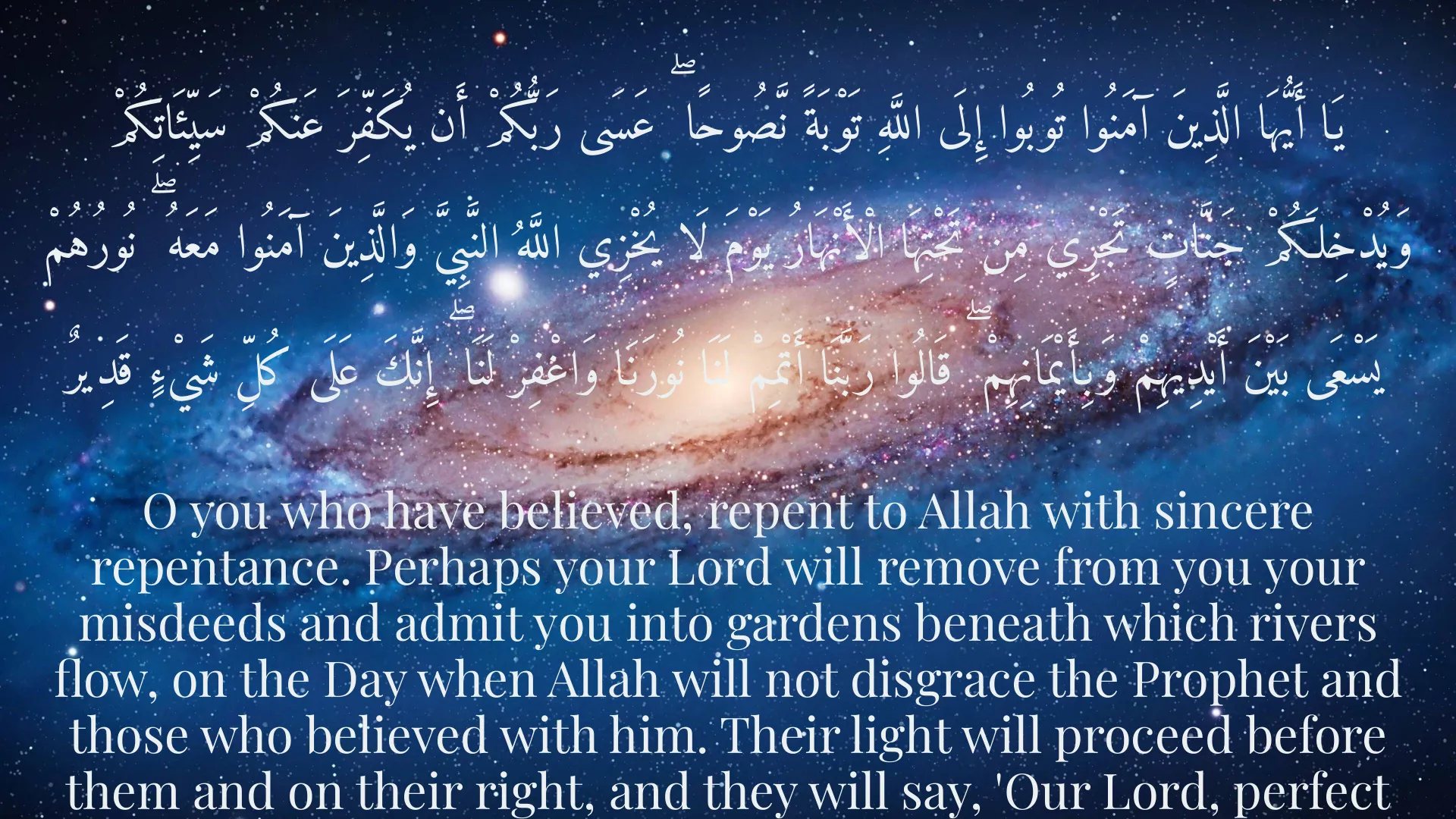
يَا أَيُّهَا الَّذِينَ آمَنُوا تُوبُوا إِلَى اللَّهِ تَوْبَةً نَّصُوحًا ۖ عَسَى رَبُّكُمْ أَن يُكَفِّرَ عَنكُمْ سَیِّئَاتِكُمْ وَيُدْخِلَكُمْ جَنَّاتٍ تَجْرِي مِن تَحْتِهَا الْأَنْهَارُ يَوْمَ لَا يُخْزِي اللَّهُ النَّبِيَّ وَالَّذِينَ آمَنُوا مَعَهُ ۖ نُورُهُمْ يَسْعَى بَيْنَ أَيْدِيهِمْ وَبِأَيْمَانِهِمْ ۖ قَالُوا رَبَّنَا أَتْمِمْ لَنَا نُورَنَا وَاغْفِرْ لَنَا ۖ إِنَّكَ عَلَى كُلِّ شَيْءٍ قَدِيرٌ
O you who have believed, repent to Allah with sincere repentance. Perhaps your Lord will remove from you your misdeeds and admit you into gardens beneath which rivers flow, on the Day when Allah will not disgrace the Prophet and those who believed with him. Their light will proceed before them and on their right, and they will say, 'Our Lord, perfect for us our light and forgive us. Indeed, You are over all things competent.'
At-Tahrim : 8
وَالَّذِينَ تَابُوا وَعَمِلُوا الصَّالِحَاتِ فَلَهُمْ جَنَّاتُ الْفِرْدَوْسِ نُزُلًا
And those who repent and do righteous deeds - for them is Paradise, the Garden of Eternity.
Al-Ma'idah : 39
Short Story
Once upon a time, there was a man named Hasan who deeply regretted his wrongdoings. He decided to turn back to God and seek repentance. Courageously, he went to the mosque and earnestly asked for forgiveness. He felt as if a heavy burden was lifted from his shoulders, and with a renewed spirit, he continued his life. From that day forward, Hasan lived with honesty and kindness, becoming a role model for others.