Quranic Answer
Inner peace is one of the most significant goals of human life, transcending cultural, religious, and philosophical boundaries. In the spiritual traditions around the world, including Islam, the concept of inner peace plays a central role in understanding the purpose of existence. In the Holy Quran, the pursuit of inner peace is expressed in various ways, emphasizing the importance of one's connection with the Divine and the practices that nurture that bond. The journey to inner peace is portrayed as a holistic process, requiring not only personal devotion but also a commitment to ethical and compassionate living in relation to others. One of the primary themes regarding the attainment of peace within the Quran is the profound connection with God. A potent declaration is found in Surah Ar-Ra'd, verse 28: 'Verily, in the remembrance of Allah do hearts find rest.' This verse serves as a clarion call, indicating that true peace comes from a deep closeness to God. It emphasizes that human beings, in their quest for tranquility, should look inward, recognizing that solace is intertwined with spiritual devotion. The act of remembering Allah – through prayer, reflection, and conscious awareness – is portrayed as the key to unlocking the state of inner tranquility. It suggests that continuous worship can significantly alleviate the worries and stresses that plague the human soul, guiding individuals toward a path of serenity and assurance. To appreciate the full scope of inner peace in the Quran, it is essential to acknowledge that spiritual peace does not exist in isolation; it is complemented by our duties and relationships with others. The Quran places strong emphasis on fostering kindness and compassion in human relationships. In Surah An-Nisa, verse 36, Allah commands the faithful to be good to their parents, relatives, orphans, the needy, the near neighbors, and the others. This verse underscores the necessity of nurturing social ties and engaging in acts of benevolence, which, in turn, cultivate a sense of community and belonging. By attending to the needs of those around us—by showing love, empathy, and kindness—we can create an environment that is conducive to inner peace, both for ourselves and for others. Helping others can lead to a profound sense of fulfillment and satisfaction, enhancing our own emotional and spiritual well-being. Moreover, the teachings of the Prophet Muhammad (peace be upon him) resonate deeply with the Quranic emphasis on compassion and ethical behavior. His life exemplified the importance of kind words and good behavior towards others as integral pathways to achieving inner peace. The Prophet's interactions were marked by wisdom, patience, and humility, serving as a model for his followers. He taught that by fostering harmonious relationships, resolving conflicts peacefully, and approaching life with a spirit of charity, one can move towards a state of tranquility and satisfaction in life. The practice of maintaining good relations with family, friends, and even strangers is portrayed as part of the collective journey towards inner serenity. Ultimately, inner peace is a state of being that transcends external circumstances. It is about acceptance and trust—accepting life in its myriad forms, including its challenges, and trusting in God's greater wisdom. Believers are encouraged to recognize that everything that happens is part of a divine plan, and that even the most difficult experiences can contribute to their growth and spiritual development. This perspective fosters resilience in the face of adversity, allowing individuals to maintain inner calmness even amidst turmoil. Understanding that these experiences are ultimately for our benefit grants us the strength to endure and allows us to approach life with a clear and peaceful mind. Furthermore, the journey to achieving inner peace is not necessarily linear. It involves self-exploration, understanding, and sometimes struggle. Individuals may find themselves facing moments of doubt, anxiety, and distress. However, the Quran provides guidance on how to navigate such times. The importance of prayer and remembrance of Allah becomes even more pronounced in these moments. It’s a reminder that one can always return to the source of peace through spiritual practices, grounding oneself in the divine when the world feels overwhelming. By continually engaging with one's faith and nurturing one’s spirit, individuals can cultivate a reservoir of peace that sustains throughout life’s ups and downs. The process of achieving inner peace is also deeply interconnected with the concept of gratitude. Recognizing and appreciating the blessings in one’s life, no matter how small, can shift one’s perspective from focusing on the negative to celebrating the positive. This practice aligns with the teachings found in the Quran, which encourage believers to be grateful for all Allah's bounties. Gratitude fosters contentment and helps to dispel feelings of lack and dissatisfaction, which can be substantial barriers to experiencing peace. In conclusion, the quest for inner peace is a multidimensional journey, intricately tied to one’s relationship with God, ethical conduct towards others, personal reflection, acceptance of life’s challenges, and a grateful heart. The Holy Quran provides timeless guidance on achieving this state of tranquility, demonstrating that through remembrance of Allah, engagement in good deeds, and nurturing one’s relationships, individuals can unlock the inner calm they seek. True inner peace is not merely a transient feeling but a lasting state of spirit that reflects the harmony found in being attuned to both the divine and community life. By embodying these principles in daily life, individuals can embark on a path toward lasting peace and fulfillment.
Related Verses
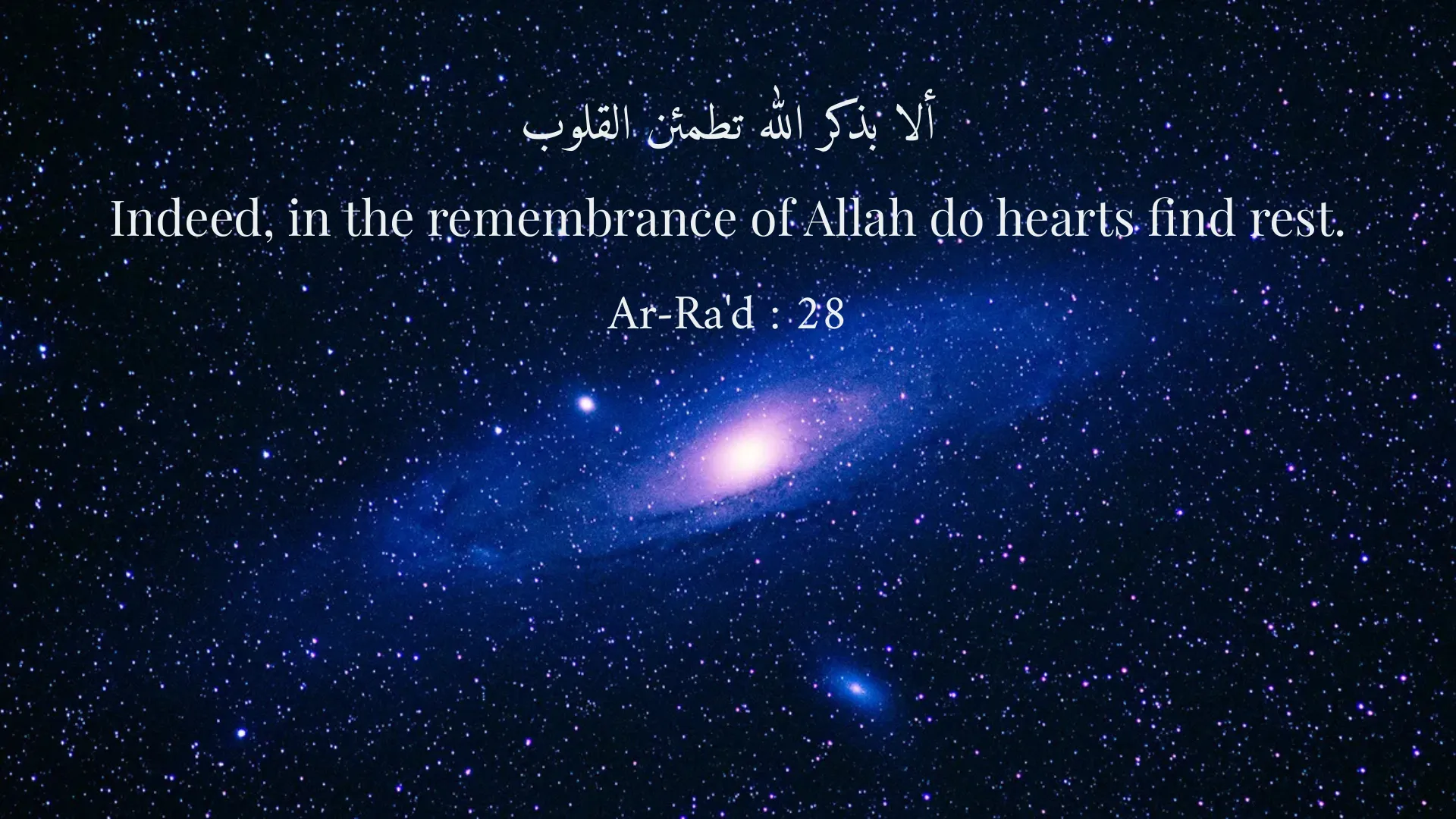
ألا بذكر الله تطمئن القلوب
Indeed, in the remembrance of Allah do hearts find rest.
Ar-Ra'd : 28
وَاعْبُدُوا اللَّهَ وَلَا تُشْرِكُوا بِهِ شَيْئًا وَبِالْوَالِدَيْنِ إِحْسَانًا
And worship Allah and associate nothing with Him, and to parents, do good.
An-Nisa : 36
Short Story
Once a man named Hasan was searching for peace. Following a friend's advice, he turned to the Quran and tried to study the verses related to tranquility. Hasan realized that by remembering God and helping others, he could find his inner peace. He decided to invoke God daily and treat others with love and kindness. Gradually, he felt good and his life was filled with peace.