Quranic Answer
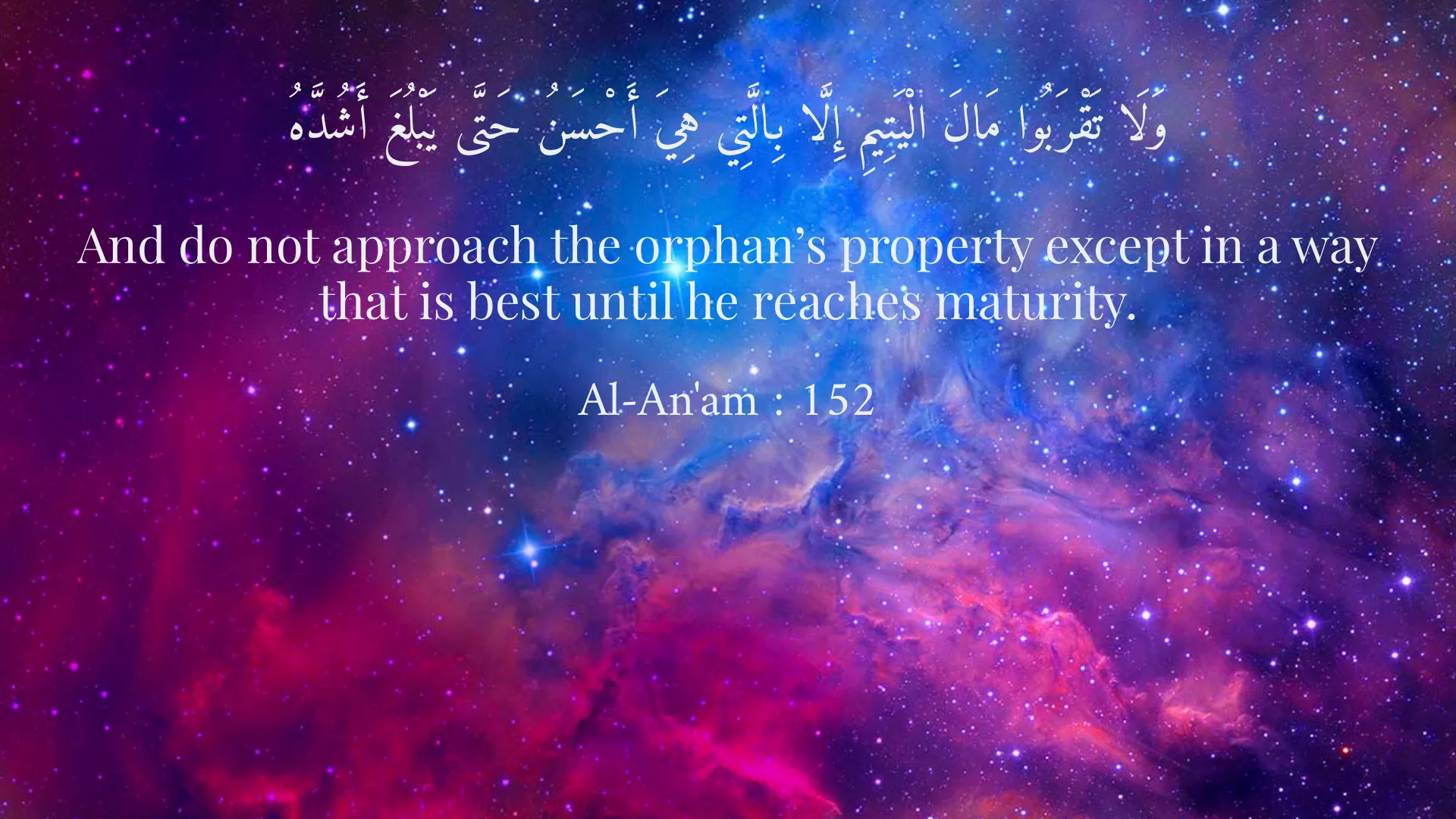
In the Holy Quran, great importance is placed on the good treatment of orphans. Orphans are among the most vulnerable groups in society, and Allah has made it obligatory for us to show them love, attention, and compassion. The plight of orphans is a recurring theme in the Holy Quran, reflecting the divine concern for those who find themselves without the support of their parents. The verses revealed in the Quran that pertain specifically to orphans highlight not only their need for protection but also the responsibilities that society has towards them. In Surah Al-An'am, verse 152, Allah states, 'And do not approach the orphan’s property except in a way that is best until he reaches maturity.' This verse emphasizes that it is not only our duty to care for them but also to safeguard their wealth and rights. The moral lesson here is clear: the rights of orphans must be protected, and their property must be managed wisely, ensuring that they do not suffer from neglect. The Quran reminds us that orphans often lack a voice in society, and it is our responsibility to ensure that their interests are represented and advocated for. By safeguarding the property of orphans, we are not only adhering to a religious tenet but are also fostering an ethical attitude that values integrity and justice. Additionally, in Surah Al-Baqarah, verse 220, it is mentioned: 'And do good to orphans.' This directive goes beyond mere financial assistance; it encompasses a range of compassionate interactions, from providing emotional support to offering opportunities for education and personal development. The Quran highlights that those who extend their hands to help orphans and treat them kindly will be beloved by Allah. This part of the verse indicates that our actions towards orphans resonate with God, who takes note of the deeds and intentions of individuals. This divine endorsement provides believers with a profound incentive to engage positively with orphans, affirming that doing good for vulnerable groups can lead to spiritual rewards. Moreover, the verse emphasizes the collective responsibility of the community to care for orphans. Islam encourages not only the individual but also the community as a whole to play an active role in the upbringing and welfare of orphans. It is an acknowledgment that while an orphan may have lost biological parental figures, the broader community is expected to step in and fill that void. Furthermore, in Surah Al-Ma'idah, verse 5, it says, 'And do not harm the orphans or inflict hardship upon them.' This verse serves as a stern reminder against any form of abuse or neglect that orphans may encounter. It creates a foundation for a social justice approach towards orphans that insists on treating them with respect and dignity. Harm towards orphans is unequivocally condemned, which reinforces the idea that their well-being is paramount. The lack of a parental figure does not diminish their right to happiness and security; instead, it accentuates the need for social compassion and empathy towards them. Addressing the needs of orphans is not merely a religious duty but goes hand in hand with social necessity. Orphans have the right to feel secure, loved, and valued in society. Our collective actions in supporting orphaned children can help bridge the gaps that arise from their loss. By reaching out to orphans, we nurture familial and societal bonds, creating an environment rich in love and understanding. A society that cares for its vulnerable members, inclusive of orphans, often experiences enhanced social cohesion and harmony. When orphans receive the care they deserve, they are more likely to grow up to become productive and honorable members of society. The significance of compassion toward orphans takes on even greater importance when considered in the context of our current world. Economic, social, and political upheaval has left many children orphaned and in desperate need of care. The global humanitarian crises underscore an urgent call to action for all of us, reminding us that we must extend ourselves towards those who are less fortunate. Society cannot turn a blind eye to the struggles faced by orphans; instead, we must utilize our resources, our time, and our efforts to support them wholeheartedly. In conclusion, the Quranic verses that talk about orphans are timeless and encourage us to act with empathy and kindness. We must remember that beyond fulfilling a religious obligation, helping orphans is a moral imperative. Each child deserves a chance to succeed, irrespective of circumstances beyond their control. By showing them compassion and kindness, allowing them to feel secure and at peace, we not only fulfill the commands of Allah but also contribute to the betterment of society as a whole. The legacy of our interactions with orphans today will shape the foundations of our communities tomorrow, affirming the humane aspect of our existence and our shared responsibilities towards the most vulnerable among us.
Related Verses
وَلَا تَقْرَبُوا مَالَ الْيَتِيمِ إِلَّا بِالَّتِي هِيَ أَحْسَنُ حَتَّى يَبْلُغَ أَشُدَّهُ
And do not approach the orphan’s property except in a way that is best until he reaches maturity.
Al-An'am : 152
وَأَحْسِنُوا إِلَى الْيَتَامَى
And do good to orphans.
Al-Baqarah : 220
وَلا تُؤْذُوا الأَيْتَامَ وَلَا تَضْرَبُوا بِهِم
And do not harm the orphans.
Al-Ma'idah : 5
Short Story
Once upon a time, there was an orphan boy named Ehsan living in a village. He always wished to have a good friend to play with. One day, another boy came to the village and noticed that Ehsan was an orphan. He approached Ehsan and said, 'I want to be friends with you and help you in your tasks.' This friendship made Ehsan very happy, and he felt safe and loved alongside his new friend. They played together, laughed together, and Ehsan no longer felt lonely.