Quranic Answer
In the Quranic perspective, the standard of good (khayr) and evil (sharr) is primarily rooted in the divine will and commands of Allah (God), as revealed through His prophets, especially in the Holy Quran. This signifies that absolute good is whatever Allah has deemed good and commanded, and absolute evil is whatever Allah has forbidden and deemed displeasing. This viewpoint transcends mere rational, societal, or subjective criteria, as human intellect and societal norms can often err in fully discerning good and evil, or become influenced by personal desires and fleeting interests. Only the Creator of the universe, with His absolute knowledge and infinite wisdom, truly knows what is in the genuine best interest and well-being of humanity in both this world and the Hereafter. One of the most pivotal Quranic concepts in this regard is the principle of "Tawhid" (the Oneness of God). The greatest good is recognizing, worshipping, and submitting solely to the One God, Allah. Conversely, the greatest evil is "Shirk" (associating partners with Allah) and worshipping other than Him. Tawhid forms the foundation of all moral principles and sublime values in Islam. Any action that draws a person closer to God and aligns with His servitude is considered good, while any action that distances one from God and leads towards shirk or rebellion is deemed evil. The Holy Quran elaborately details the manifestations of good and evil across various dimensions of individual and social life. "Justice" (Adl and Qist) stands out as one of the most emphasized forms of good in the Quran. Allah strictly commands the establishment of justice in all aspects of life, including judgment, transactions, family relations, and social interactions. "Oppression" (Dhulm) is unequivocally condemned as one of the greatest evils and divine prohibitions. This encompasses oppression against oneself, against others, and against the environment. The Quran enjoins Muslims to uphold the rights of others, maintain trustworthiness, abstain from usury (riba), avoid cheating in trade, and refrain from any form of unjust exploitation. Surah An-Nahl (16:90) clearly states: "Indeed, Allah enjoins justice, benevolence, and giving to relatives and forbids indecency, evil, and oppression. He admonishes you that you may take heed." This verse serves as a comprehensive ethical charter, covering both the positive aspects (justice, benevolence, kinship) and negative aspects (forbidding indecency, evil, oppression) of good and evil. Another key concept is "Ihsan," which means performing actions with excellence and beyond what is merely required. This includes kindness to parents, relatives, orphans, the needy, and neighbors. Ihsan is the practical manifestation of good in society and helps strengthen human relationships and social cohesion. Conversely, anything that leads to the destruction of relationships, fosters hatred and resentment, and weakens social solidarity is considered evil. "Taqwa," or God-consciousness and piety, is not merely an ethical trait but a criterion for distinguishing between good and evil in daily life. A person with taqwa consistently aligns their actions with divine commands and abstains from what Allah has forbidden. This inner state grants individuals insight to discern between truth and falsehood, and good and evil. The Quran repeatedly instructs prophets and believers to "enjoin what is right" (Ma'ruf) and "forbid what is wrong" (Munkar). This principle of "Amr bil Ma'ruf wa Nahy anil Munkar" (enjoining good and forbidding evil) is also a cornerstone of Islamic ethical system and the basis for combating evil and promoting good in society. The Quran also emphasizes human accountability for their actions and explicitly outlines the consequences of good and evil deeds in both this world and the Hereafter. Good deeds lead to divine reward, psychological tranquility, and inner satisfaction, while evil deeds result in divine punishment, distress, and regret. This perspective encourages individuals to perform good deeds and abstain from evil ones, as no action goes without recompense. Even what humans perceive as good or evil may, in reality, be different, and Allah is more knowledgeable of the truth of matters. "But perhaps you hate a thing and it is good for you; and perhaps you love a thing and it is bad for you. And Allah Knows, while you know not." (Al-Baqarah 2:216). This verse illustrates that the ultimate standard of good and evil is always intertwined with divine knowledge and will. Furthermore, the human "Fitra" (innate disposition) plays a significant role in the Quranic view. Allah created humanity with a pure disposition and an inclination towards truth and goodness. This fitra grants humans an initial ability to distinguish between good and evil, but it can be corrupted by environmental influences, upbringing, and satanic whispers. Therefore, divine revelation and guidance are essential to complete and rectify this innate discernment. Surah Ash-Shams (91:7-10) beautifully expresses this concept: "And [by] the soul and [by] He who proportioned it And inspired it [with discernment of] its wickedness and its righteousness, He has succeeded who purifies it, * And he has failed who corrupts it." These verses indicate that Allah has placed the faculty of discerning good and and evil within human nature, but success is contingent upon purifying the soul and following the path of taqwa. In conclusion, the Quranic standard of good and evil provides a comprehensive and encompassing framework that covers all aspects of human existence and one's relationships with God, oneself, others, and nature. These standards are absolute, objective, and divine, aiming to guide humanity toward eternal bliss and a life full of peace and justice. In this journey, the Holy Quran not only provides general principles but also offers practical rulings and recommendations, illuminating the path for humanity to always distinguish between the way of good and the way of evil and to build their lives upon what brings divine pleasure.
Related Verses
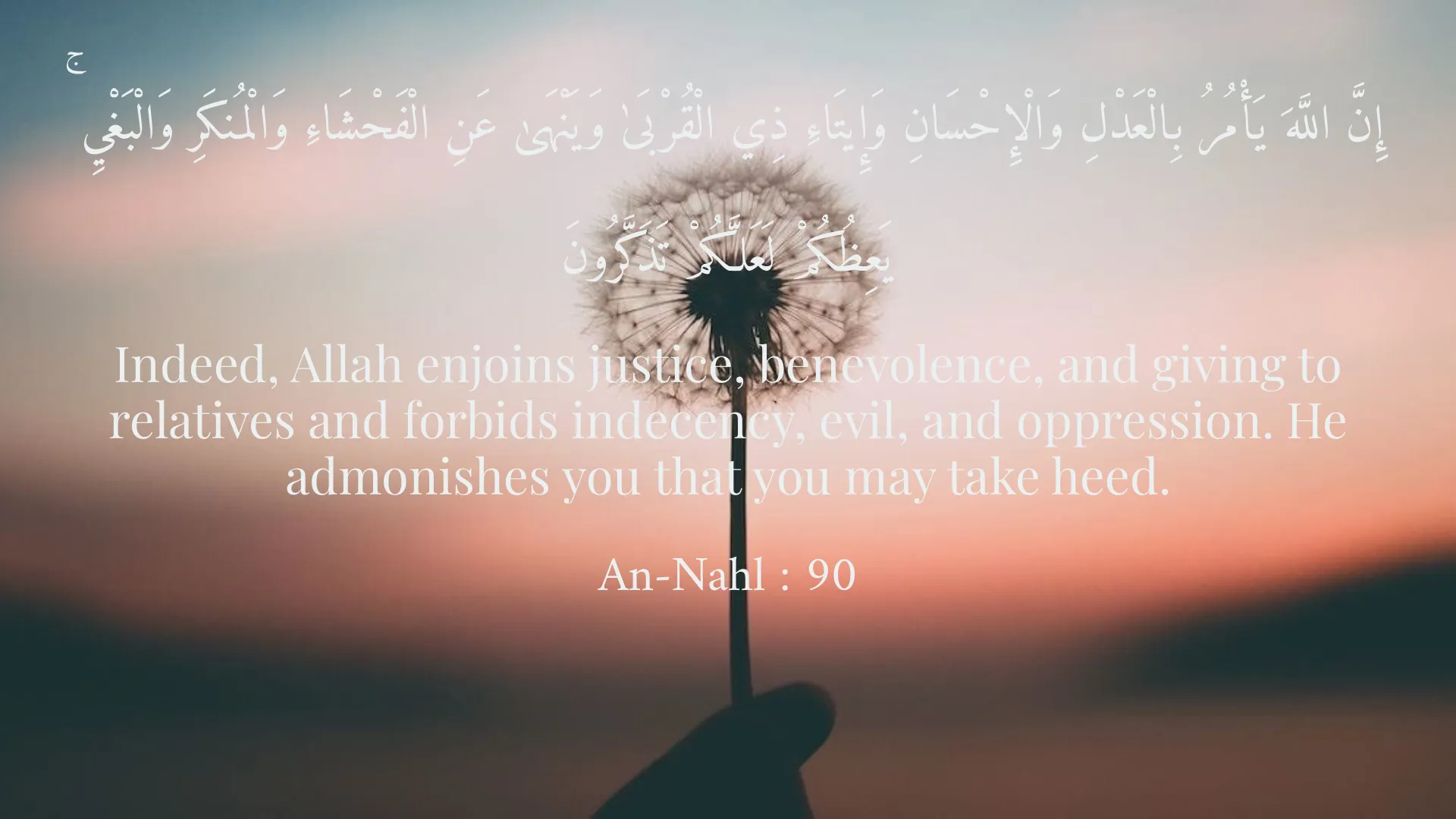
إِنَّ اللَّهَ يَأْمُرُ بِالْعَدْلِ وَالْإِحْسَانِ وَإِيتَاءِ ذِي الْقُرْبَىٰ وَيَنْهَىٰ عَنِ الْفَحْشَاءِ وَالْمُنكَرِ وَالْبَغْيِ ۚ يَعِظُكُمْ لَعَلَّكُمْ تَذَكَّرُونَ
Indeed, Allah enjoins justice, benevolence, and giving to relatives and forbids indecency, evil, and oppression. He admonishes you that you may take heed.
An-Nahl : 90
الَّذِينَ يَتَّبِعُونَ الرَّسُولَ النَّبِيَّ الْأُمِّيَّ الَّذِي يَجِدُونَهُ مَكْتُوبًا عِندَهُمْ فِي التَّوْرَاةِ وَالْإِنجِيلِ يَأْمُرُهُم بِالْمَعْرُوفِ وَيَنْهَاهُمْ عَنِ الْمُنكَرِ وَيُحِلُّ لَهُمُ الطَّيِّبَاتِ وَيُحَرِّمُ عَلَيْهِمُ الْخَبَائِثَ وَيَضَعُ عَنْهُمْ إِصْرَهُمْ وَالْأَغْلَالَ الَّتِي كَانَتْ عَلَيْهِمْ ۚ فَالَّذِينَ آمَنُوا بِهِ وَعَزَّرُوهُ وَنَصَرُوهُ وَاتَّبَعُوا النُّورَ الَّذِي أُنزِلَ مَعَهُ ۙ أُولَٰئِكَ هُمُ الْمُفْلِحُونَ
Those who follow the Messenger, the unlettered prophet, whom they find written in what they have of the Torah and the Gospel, who enjoins upon them what is right and forbids them what is wrong and makes lawful for them the good things and prohibits for them the evil things and relieves them of their burden and the shackles which were upon them. So they who have believed in him, honored him, supported him and followed the light which was sent down with him – it is those who will be the successful.
Al-A'raf : 157
وَنَفْسٍ وَمَا سَوَّاهَا
And [by] the soul and [by] He who proportioned it
Ash-Shams : 7
فَأَلْهَمَهَا فُجُورَهَا وَتَقْوَاهَا
And inspired it [with discernment of] its wickedness and its righteousness,
Ash-Shams : 8
قَدْ أَفْلَحَ مَن زَكَّاهَا
He has succeeded who purifies it,
Ash-Shams : 9
وَقَدْ خَابَ مَن دَسَّاهَا
And he has failed who corrupts it.
Ash-Shams : 10
Short Story
It is narrated that Nushirvan the Just, while building a hunting lodge, needed salt. His ministers advised him to bring salt from nearby villages without imposing taxes on the local people. However, a newly appointed official insisted that even the salt used for the construction should be taxed to increase the treasury. Nushirvan’s wise minister gently told him: 'Young man, you are unaware of the consequences. The foundation of tyranny in the world was small at first, and whoever came added to it until it reached its current magnitude. If a king takes a single apple from a garden, his servants will uproot the tree! We must be careful not to promote even the smallest sins and injustices, for from these tiny seeds, great trees of wickedness grow and cast their shadows over people's lives. Goodness and justice are likewise; they begin with small deeds and lead to great virtues.' This tale teaches us to always reflect on the origin and outcome of our actions and to know that good and evil originate from our smallest intentions and deeds, leading to significant consequences.