Quranic Answer
Patience is one of the fundamental principles in Islamic teachings and is highly emphasized in the Holy Quran. The concept of patience, or ‘sabr’ in Arabic, signifies perseverance and steadfastness in the face of life’s difficulties and challenges. In a fast-paced world where immediate gratification is often prioritized, the relevance of patience is more crucial than ever. In Surah Al-Baqarah, verse 153, Allah instructs the believers: "O you who have believed, seek help through patience and prayer. Indeed, Allah is with the patient." This powerful verse not only illustrates the importance of patience but also reassures the believers that divine support is promised to those who exhibit this virtue. The connection between patience and prayer is significant; prayer is often considered a source of solace and strength during hardships, thus combining patience with prayer forms a profound approach to dealing with life’s challenges. Moreover, patience entails enduring hardships without succumbing to despair and anxiety. In Surah Ar-Ra'd, verse 22, Allah states: "And those who are patient and do good deeds will have a great reward." This highlights the idea that patience is not merely a passive endurance of adversity, but it also requires active engagement in good deeds. Those who respond to challenges with patience and simultaneously contribute positively to those around them will attain immense rewards. The link between patience and good deeds emphasizes the holistic nature of Islamic teachings—spiritual growth is intertwined with actions that improve one's character and benefit society. The idea of patience is a recurring theme throughout the Quran. Believers are often reminded of the stories of prophets who exemplified patience during their trials. For instance, Prophet Job (Ayyub) is renowned for his unwavering patience in the face of great suffering. His story serves as an inspiration, showcasing that sincere patience, combined with faith, eventually leads to relief and divine mercy. The narratives within the Quran serve as powerful reminders that though trials may be daunting, patience is ultimately rewarded. Patience also plays a crucial role in our daily lives. For example, when faced with family, work, or financial issues, rather than giving in to despair or impulsive reactions, we must strive to foster resilience and approach problems with a patient mindset. In relationships, patience allows for deeper understanding and forgiveness; it encourages individuals to listen and empathize rather than react hastily. In professional settings, patience is essential for fostering strong teamwork and managing conflicts. Patience nurtures an environment where collaboration can thrive, thus leading to creative solutions and success. Financial hardship is yet another area where patience is significantly tested. Many individuals experience challenges in economic stability due to unforeseen circumstances or poor decisions. In these moments, the virtue of patience encourages individuals to create sustainable solutions rather than yield to despair. It prompts the individual to take a step back, assess their situation, and make thoughtful decisions rather than rash ones that might exacerbate the problem. Patience teaches us that financial success does not come overnight; instead, it is often the result of consistent effort and discipline over time. In a broader societal context, the concept of patience becomes vital. Throughout history, societal change and reform have taken time and persistent effort. Individuals advocating for social justice, equality, and human rights have had to demonstrate remarkable patience in their battles for lasting change. There are numerous examples of movements that have resulted in transformative change over long periods, illustrating that societal progress is not always immediate. The activism that embodies patience serves as a testament to the dedication required to effectuate meaningful change in the world. Furthermore, the practice of patience has psychological benefits. The act of exercising patience can contribute to better mental health, as it allows individuals to control their reactions and emotions. By developing the ability to respond thoughtfully rather than impulsively, people often experience a greater sense of peace and decreased anxiety levels. This mindset of patience can lead to improved relationships because it fosters understanding, reduces conflict, and strengthens bonds between individuals. Patience, as a principle in Islamic teachings, transcends religious boundaries. While it is deeply rooted in Islamic values, the importance of patience resonates with individuals of various beliefs and cultures. It is a universal virtue that encourages resilience, acceptance, and continuous effort toward achieving one’s goals or desires. Ultimately, patience is not merely an act of waiting; it is an active virtue that transforms our inner landscape and influences our external interactions. In conclusion, patience is an essential principle deeply embedded within Islamic teachings, as illustrated by the verses of the Holy Quran. The relationship between patience, prayer, and good deeds demonstrates a holistic approach to navigating life’s challenges. By embracing patience in our daily lives, we foster resilience in the face of adversity and contribute positively to our relationships and society. Therefore, patience is a multi-faceted virtue that not only strengthens individual character but also reinforces communal bonds and promotes enduring societal progress. As we continue to face the ups and downs of life, let us remember that patience, coupled with faith and good actions, ultimately leads to divine support and fulfillment of our aspirations.
Related Verses
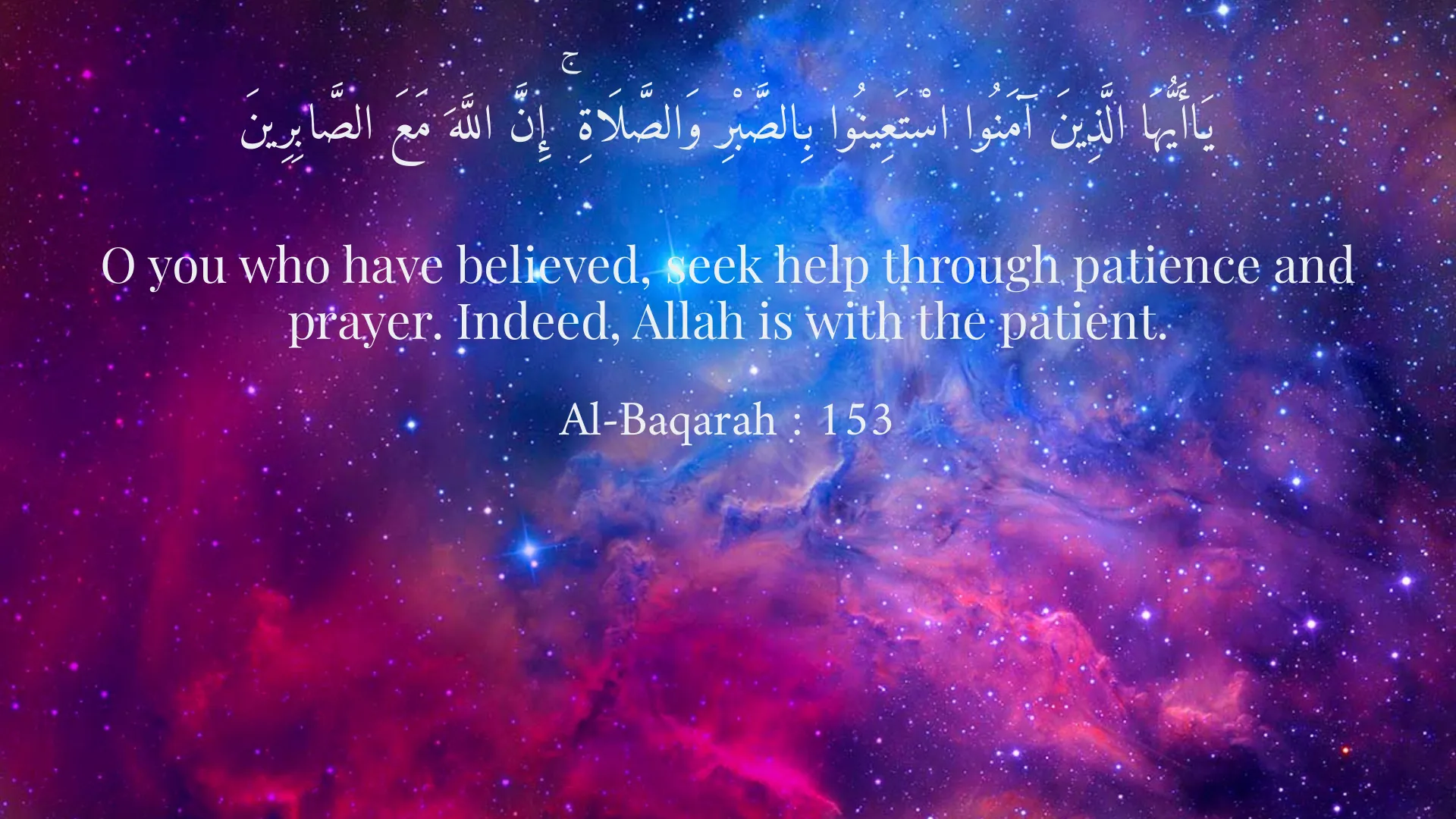
يَاأَيُّهَا الَّذِينَ آمَنُوا اسْتَعِينُوا بِالصَّبْرِ وَالصَّلَاةِ ۚ إِنَّ اللَّهَ مَعَ الصَّابِرِينَ
O you who have believed, seek help through patience and prayer. Indeed, Allah is with the patient.
Al-Baqarah : 153
وَالَّذِينَ صَبَرُوا وَعَمِلُوا الصَّالِحَاتِ أُولَـئِكَ هُمْ أَصْحَابُ الْجَنَّةِ
And those who are patient and do good deeds will have a great reward.
Ar-Ra'd : 22
Short Story
Once upon a time in a small village, there lived a man named Hasan who would often complain about his problems. He learned to respond to life's challenges with patience and endurance. Every time he faced a calamity, he would refer to the verses of the Quran and remind himself, 'Indeed, Allah is with the patient.' Gradually, others were inspired by his patience, and he became a role model of perseverance in the village.