Quranic Answer
True piety, known as 'Taqwa' in the Holy Quran, is not merely an outward act or the performance of a few ritualistic worships. Rather, it is a comprehensive and profound state of heart and action that encompasses all dimensions of human life. Taqwa means self-awareness and vigilance regarding the constant presence of God, adhering to divine limits, and abstaining from anything that displeases Him. The word originates from the root 'waqa,' meaning 'to protect or to guard,' and in Quranic terminology, it refers to refraining from sins and disobedience, and safeguarding oneself from satanic temptations and carnal desires. However, this abstinence is not solely about avoiding evil; it also includes performing good deeds and obeying divine commands. It is a dynamic and multifaceted concept that develops and evolves throughout an individual's life. numerous verses in the Quran extensively delineate the true signs of piety. One of the most comprehensive definitions of Taqwa is presented in Surah Al-Baqarah, verse 177. This verse clearly demonstrates that piety extends beyond merely turning one's face towards the East or West (i.e., merely performing outward rituals) and delves into the depths of faith, ethics, and righteous deeds. This verse enumerates six key characteristics for the pious: First: Genuine faith in the pillars of religion: This faith involves a deep and heartfelt belief in the One God, the Day of Judgment (belief in accountability for deeds and recompense), angels, divine books (the Quran and previous scriptures), and divine prophets. This belief forms the foundation for all righteous actions and piety, as it is through faith in these realities that a person lives purposefully, constantly perceiving themselves in God's presence, and performing their actions with precision and care. This faith is not merely a verbal claim but must permeate every aspect of one's being and serve as the basis for their worldview and behavior. Second: Spending in the way of God despite love for wealth: Giving away wealth and helping the needy, including relatives, orphans, the poor, wayfarers, beggars, and for freeing slaves, is one of the most prominent signs of piety. This act not only signifies generosity but also indicates overcoming the love for worldly possessions and material attachments, prioritizing divine love above all else. This spending is not merely out of abundance or for show, but even when one has a need or affection for that wealth, which itself is a sign of sincere intention and deep piety and altruism. Such generosity liberates the heart from worldly attachments and brings one closer to God. Third: Establishing prayer and paying Zakat: These two fundamental pillars of worship symbolize the practical connection between humans and God, and humans and their fellow beings. Prayer is a direct and spiritual connection with the Creator that restrains a person from indecency and evil, granting them spiritual tranquility and guidance. Zakat, too, symbolizes attention to societal rights and purifying wealth, circulating wealth within the community and reducing class disparities. Performing these two duties correctly and with devotion demonstrates the importance of divine commands and the cultivation of the soul and purification of spirit and body. Fourth: Fulfilling covenants and promises: Honesty and adherence to agreements, whether with God or with people, are other prominent signs of piety. One who breaks promises undermines the foundation of social trust and deviates from the path of Taqwa. The Quran strongly emphasizes fulfilling covenants and considers it a characteristic of true believers. This includes personal, social, and divine commitments, indicating an individual's discipline and responsibility. Fifth: Patience and steadfastness in hardships and battles: A truly pious person is one who remains patient and steadfast in the face of calamities, illnesses, poverty, and in the battlefield (Jihad). Patience in these contexts is not only a moral virtue but also a spiritual force that strengthens an individual against challenges and prevents them from straying from the path of truth. This steadfastness is a sign of reliance on God and submission to divine decree. Sixth: Truthfulness and sincerity: The concluding phrase of the verse (Al-Baqarah 2:177, “Ula’ika allatheena sadaqoo”) describes these individuals as truthful. Truthfulness means consistency between one's words, thoughts, and actions. One who possesses Taqwa is truthful and sincere in all aspects of their life, avoiding lies, hypocrisy, and deceit. This truthfulness applies both to one's relationship with God and with oneself and others. In addition to this comprehensive verse, other verses also refer to various dimensions of Taqwa. For instance, in Surah Al-Imran, verse 134, the attributes of the pious are listed as: “Those who spend [in the cause of Allah] during ease and hardship and who restrain anger and who pardon the people – and Allah loves the doers of good.” This verse emphasizes spending in both states of poverty and wealth, suppressing anger, and forgiving people. These are signs of a pure heart and a great soul necessary for achieving Taqwa. Suppressing anger and forgiving people show that Taqwa is not only about one's relationship with God but also manifests in one's interactions with others and respecting their rights, leading to human perfection. Furthermore, in Surah Al-Hujurat, verse 13, Allah Almighty states: “O mankind, indeed We have created you from male and female and made you peoples and tribes that you may know one another. Indeed, the most noble of you in the sight of Allah is the most righteous of you. Indeed, Allah is Knowing and Acquainted.” This verse explicitly declares that the criterion for human superiority in the sight of God is not race, wealth, or status, but only Taqwa. This means that the true value of human beings in the divine system is based on their level of piety and God-fearing, demonstrating a value system based on justice and virtue. Taqwa manifests in various ways in daily life. A pious person is just, truthful, and trustworthy in their social interactions. In their business, they avoid usury and any unlawful dealings, resorting to the most permissible ways of earning a livelihood. Within the family, they treat their spouse and children with kindness and respect, fulfilling their rights. When faced with sinful temptations, instead of succumbing, they remember God and avoid them with His help. Taqwa means that a person, whether in private or public, recognizes God as present and observing their actions, and constantly strives to earn His pleasure. This self-awareness causes one to always reflect on improving their soul and avoid any arrogance or self-aggrandizement. In essence, any action performed with pure intention and for the sake of God, and in accordance with sacred Islamic law, can be a manifestation of Taqwa. On the other hand, piety is not only about avoiding sin but also about drawing closer to God through performing good deeds and acts of kindness. One who is pious seeks not only to cleanse themselves of impurities but also to lead society towards purity and virtue. They are a herald of good and encourage others to uphold truth and patience. Taqwa grants insight and discernment to distinguish truth from falsehood, as stated in Surah Al-Anfal, verse 29: “O you who have believed, if you fear Allah, He will grant you a criterion and will remove from you your misdeeds and forgive you; and Allah is the possessor of great bounty.” This verse points to one of the most important fruits of Taqwa, namely 'Furqan' (the power of discernment), which indicates the deep impact of Taqwa on one's inner insight. Piety is a continuous journey on the path of human growth and perfection, and every moment of life is an opportunity to strengthen this divine attribute. Ultimately, piety is not only a means of salvation in the afterlife but also brings tranquility and success in this world, elevating a person to the highest levels of proximity to God.
Related Verses
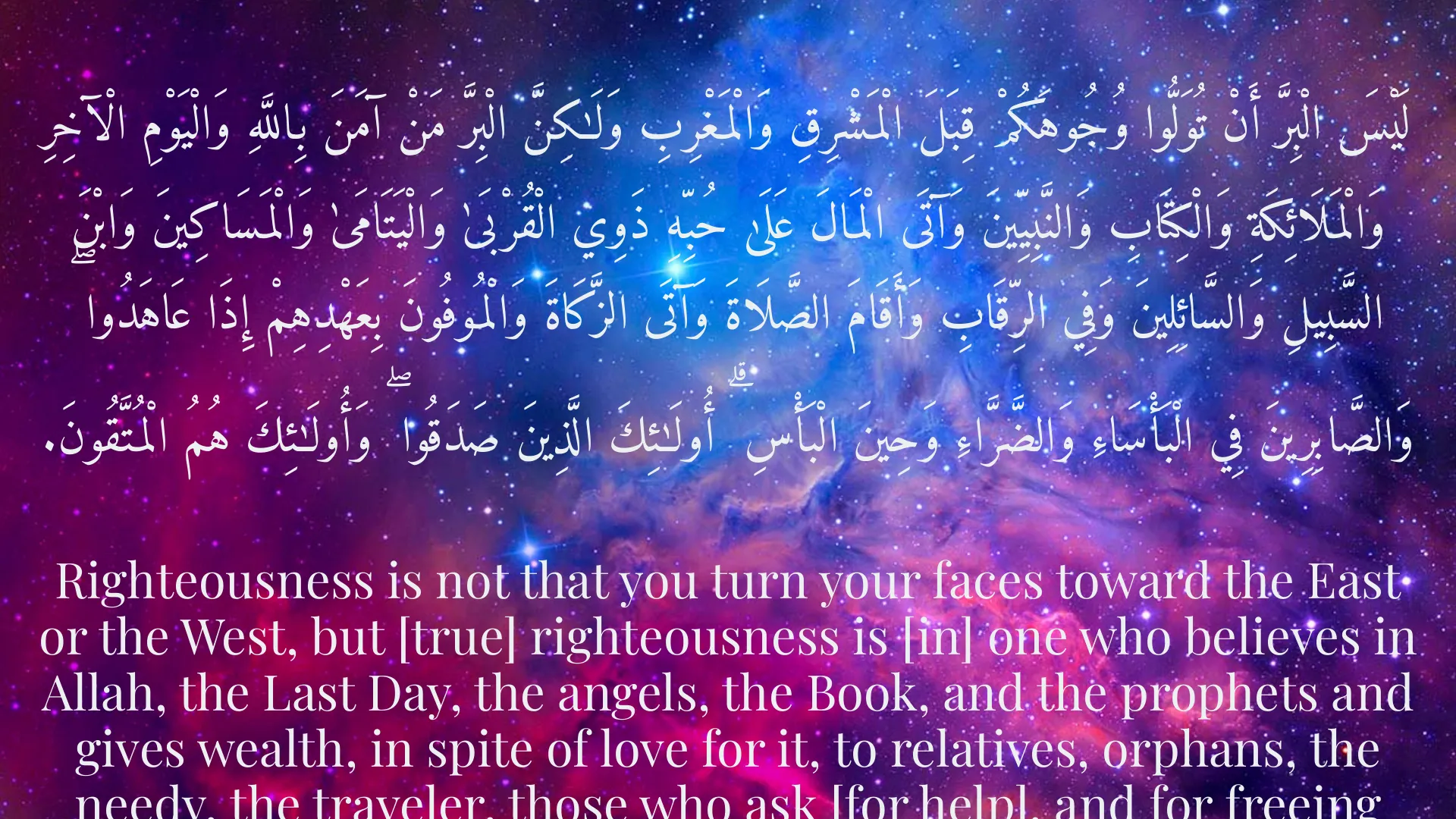
لَيْسَ الْبِرَّ أَنْ تُوَلُّوا وُجُوهَكُمْ قِبَلَ الْمَشْرِقِ وَالْمَغْرِبِ وَلَٰكِنَّ الْبِرَّ مَنْ آمَنَ بِاللَّهِ وَالْيَوْمِ الْآخِرِ وَالْمَلَائِكَةِ وَالْكِتَابِ وَالنَّبِيِّينَ وَآتَى الْمَالَ عَلَىٰ حُبِّهِ ذَوِي الْقُرْبَىٰ وَالْيَتَامَىٰ وَالْمَسَاكِينَ وَابْنَ السَّبِيلِ وَالسَّائِلِينَ وَفِي الرِّقَابِ وَأَقَامَ الصَّلَاةَ وَآتَى الزَّكَاةَ وَالْمُوفُونَ بِعَهْدِهِمْ إِذَا عَاهَدُوا ۖ وَالصَّابِرِينَ فِي الْبَأْسَاءِ وَالضَّرَّاءِ وَحِينَ الْبَأْسِ ۗ أُولَٰئِكَ الَّذِينَ صَدَقُوا ۖ وَأُولَٰئِكَ هُمُ الْمُتَّقُونَ.
Righteousness is not that you turn your faces toward the East or the West, but [true] righteousness is [in] one who believes in Allah, the Last Day, the angels, the Book, and the prophets and gives wealth, in spite of love for it, to relatives, orphans, the needy, the traveler, those who ask [for help], and for freeing slaves; [and who] establishes prayer and gives zakah; and [those who] fulfill their promise when they promise; and [who] are patient in poverty and hardship and during battle. Those are the ones who have been true, and it is those who are the righteous.
Al-Baqarah : 177
الَّذِينَ يُنْفِقُونَ فِي السَّرَّاءِ وَالضَّرَّاءِ وَالْكَاظِمِينَ الْغَيْظَ وَالْعَافِينَ عَنِ النَّاسِ ۗ وَاللَّهُ يُحِبُّ الْمُحْسِنِينَ
Those who spend [in the cause of Allah] during ease and hardship and who restrain anger and who pardon the people – and Allah loves the doers of good.
Al-Imran : 134
يَا أَيُّهَا النَّاسُ إِنَّا خَلَقْنَاكُمْ مِنْ ذَكَرٍ وَأُنْثَىٰ وَجَعَلْنَاكُمْ شُعُوبًا وَقَبَائِلَ لِتَعَارَفُوا ۚ إِنَّ أَكْرَمَكُمْ عِنْدَ اللَّهِ أَتْقَاكُمْ ۚ إِنَّ اللَّهَ عَلِيمٌ خَبِيرٌ
O mankind, indeed We have created you from male and female and made you peoples and tribes that you may know one another. Indeed, the most noble of you in the sight of Allah is the most righteous of you. Indeed, Allah is Knowing and Acquainted.
Al-Hujurat : 13
Short Story
It is narrated in Saadi's Golestan that a king once asked a wise man: "O wise elder, in this bustling world, what truly constitutes a person's real worth and value? Is it wealth and status, or power and grandeur?" The wise man, with a warm smile, replied: "O virtuous king! In truth, neither wealth nor status, but rather the essence of a human being lies in good deeds and a heart full of good intentions. If you possess a treasure of gold but have an impure heart and a deceitful tongue, what value do you hold in the sight of God and people? A person's true worth lies in their piety; in fearing the Lord, in fulfilling promises, in selfless generosity, in a heart that beats for God's servants, and in actions performed for the sake of truth. One who appears poor outwardly but whose inner being is overflowing with piety and righteousness holds a very high status with God and creation. For outward garments wear out and worldly possessions perish, but a good name and the impact of righteous deeds endure forever." The king pondered these wise words and understood that inner piety and goodness are the most exalted signs of worth and dignity.