Quranic Answer
Repentance, known in Arabic as Tawbah, is a significant concept within Islam that encapsulates the idea of returning to God and abandoning sins. The importance of repentance is crystallized throughout the teachings of the Holy Quran, which lays down clear directives and wisdom surrounding this vital aspect of faith. In Islam, repentance is not merely a ritualistic act; it is a transformative process that involves genuine remorse, a sincere commitment to changing one's ways, and a deep desire for reconciliation with the Creator. One of the Quranic verses that exemplifies the importance of repentance is found in Surah At-Tahrim, verse 8. The verse reads, 'O you who have believed, repent to Allah with sincere repentance!' This invitation is directed towards the believers, emphasizing the necessity of turning back to God. It highlights that believers are not exempt from sin, but they are encouraged to seek redemption through sincere repentance. This highlights the dynamic nature of faith in Islam, where individuals are called to continuously strive for improvement and closeness to God. Furthermore, the concept of repentance is reinforced in Surah Al-Furqan, verse 54, which states, 'And those who do not associate anything with Allah and, if they commit a sin, they turn to God in repentance and hope for His mercy, for the mercy of Allah is near to the hopeful sinners.' This verse illustrates the accessibility of God's mercy, showcasing that anyone, regardless of the magnitude of their sins, can find solace in repentance. It emphasizes the essential attitude of hope, which is crucial for those seeking forgiveness. By turning back to God, individuals are not only acknowledging their wrongdoings but are also expressing a willingness to correct their paths and embrace a life aligned with divine will. Repentance in Islam is not a one-time act; it is an ongoing process that requires genuine intent and action. In Surah Al-Baqarah, verse 160 reminds the faithful that 'And those who strive in the path of Allah, He will guide them.' This necessitates a proactive approach towards rectifying one's sins, which includes a multifaceted effort to forsake wrongful deeds and engage in righteous behavior. The act of prayer, seeking forgiveness, and engaging in good deeds are all essential components of a true repentance process. It is important that believers return to God with a pure heart and positive intentions, indicating a deep desire to amend their ways and live a life that pleases their Creator. In addition to personal efforts, the communal aspects of repentance are also underscored in Islamic teachings. The act of remembering and honoring God, maintaining consistent prayers, and seeking guidance through the community can play vital roles in reinforcing one's commitment to repentance. Engaging in discussions about faith, attending congregational prayers, and participating in charitable acts are practical manifestations of a person's return to righteousness. These acts not only elevate the individual spiritually but also serve as beacons of hope and encouragement for those around them. One of the beautiful aspects of God's mercy in Islamic theology is the belief that His doors of forgiveness are forever wide open to those who genuinely repent. No sin is beyond the reach of divine mercy, provided that the sinner approaches God with sincerity and a true desire for redemption. It is narrated in hadiths that the Prophet Muhammad (peace be upon him) emphasized the boundless nature of Allah's mercy, kindling hope among believers that regardless of their past wrongdoings, they can return and seek forgiveness. This is a testament to the compassionate nature of God, who yearns for His creation to turn back to Him, irrespective of the extent of their transgressions. Moreover, understanding the process of repentance in Islam also involves recognizing the significance of accountability. Believers are encouraged to reflect on their actions and the consequences of their sins, not only as a means of seeking forgiveness, but also to prevent further wrongdoing in the future. Repentance is tied to a commitment for change, urging individuals to actively work towards self-improvement, moral fortitude, and spiritual growth. This reflective aspect fosters a deeper connection with God and encourages a lifestyle that resonates with His teachings. It is also essential to distinguish between the two forms of repentance in Islam: personal and communal. Personal repentance involves the individual directly seeking forgiveness from God for specific transgressions. This is often done through sincere supplication, prayer, and reflection. On the other hand, communal repentance can be seen in instances where a community seeks forgiveness for collective misdeeds. Events such as prayers for rain or seeking forgiveness during calamities encapsulate this communal aspect, underscoring that the effects of sin can ripple through society, affecting the collective rather than just the individual. Practicing repentance requires courage and humility, as it involves the acknowledgment of one's faults, which can sometimes be challenging. However, Islam provides a structured approach to this necessity, presenting believers not only with the means to repent but also the encouragement to pursue righteousness earnestly. The promise of divine forgiveness serves as a powerful motivator for many, inspiring them to embark on their journey of repentance with hope and optimism. As such, in Islam, repentance serves as a vital pillar that upholds the authenticity of faith. It encourages believers to confront their imperfections, fosters a life of intentionality and purpose, and creates a pathway to establish a closer and more meaningful relationship with God. In a world rife with temptations and distractions, the act of returning to God through repentance becomes not only necessary but also a beautiful mechanism of personal growth and spiritual elevation. Ultimately, repentance is a constant reminder that no matter how far one strays, the possibility of returning to the path of righteousness is always present, and with it, the promise of inner peace and divine mercy.
Related Verses
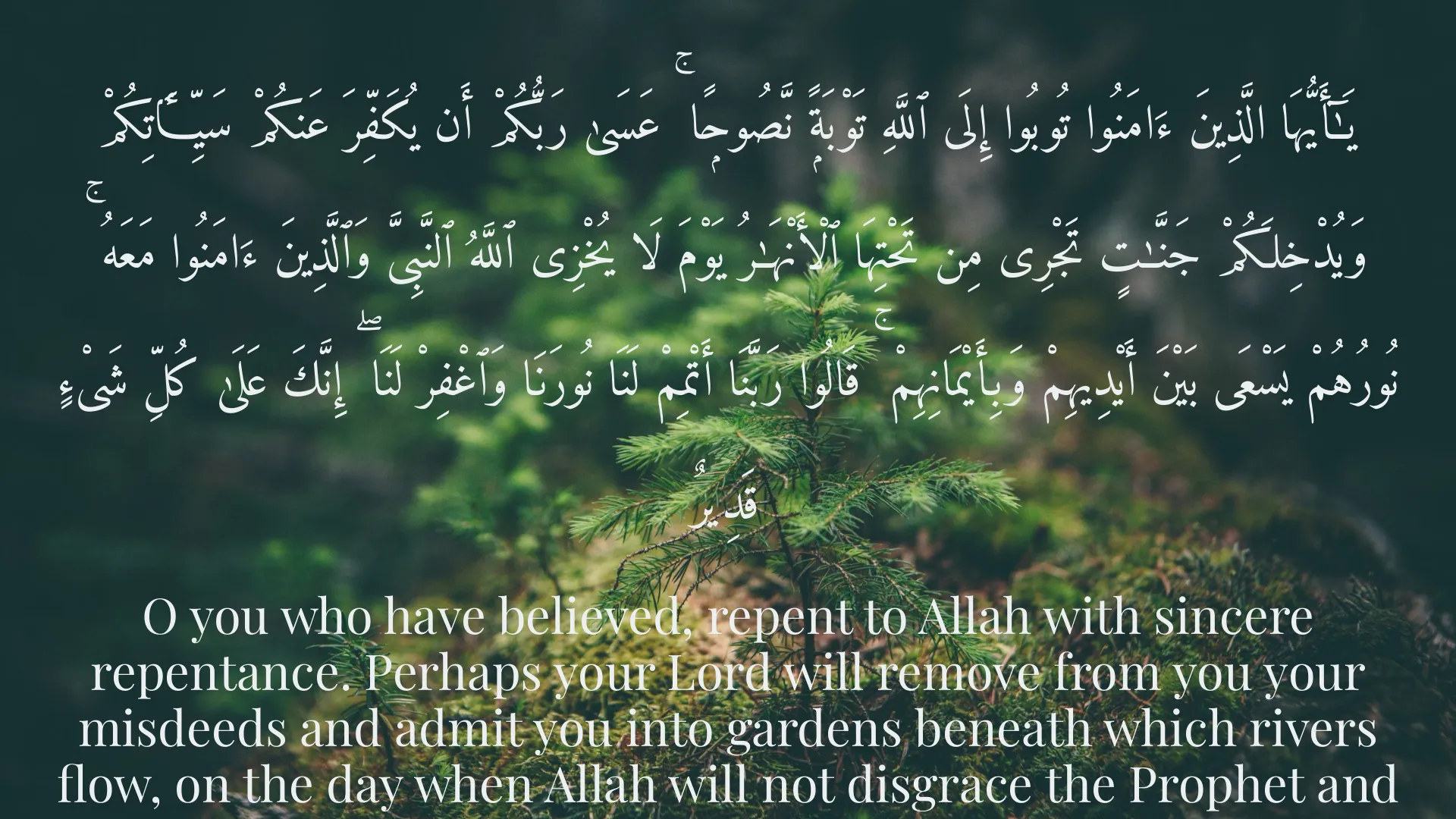
يَـٰٓأَيُّهَا الَّذِينَ ءَامَنُوا تُوبُوا إِلَى ٱللَّهِ تَوْبَةًۭ نَّصُوحًۭا ۚ عَسَىٰ رَبُّكُمْ أَن يُكَفِّرَ عَنكُمْ سَيِّـَـَٔاتِكُمْ وَيُدْخِلَكُمْ جَنَّـٰتٍ تَجْرِى مِن تَحْتِهَا ٱلْأَنْهَـٰرُ يَوْمَ لَا يُخْزِى ٱللَّهُ ٱلنَّبِىَّ وَٱلَّذِينَ ءَامَنُوا مَعَهُ ۚ نُورُهُمْ يَسْعَى بَيْنَ أَيْدِيهِمْ وَبِأَيْمَانِهِمْ ۚ قَالُوا رَبَّنَا أَتْمِمْ لَنَا نُورَنَا وَٱغْفِرْ لَنَا ۖ إِنَّكَ عَلَىٰ كُلِّ شَىْءٍ قَدِيرٌ
O you who have believed, repent to Allah with sincere repentance. Perhaps your Lord will remove from you your misdeeds and admit you into gardens beneath which rivers flow, on the day when Allah will not disgrace the Prophet and those who believed with him. Their light will proceed before them and on their right; they will say, 'Our Lord, perfect for us our light and forgive us. Indeed, You are over all things Competent.'
At-Tahrim : 8
إِلَّا مَن تَابَ وَءَامَنَ وَعَمِلَ عَمَلًا صَـٰلِحًا ۚ فَأُو۟لَـٰئِكَ يَدْخُلُونَ ٱلْجَنَّةَ وَلَا يُظْلَمُونَ شَيْئًا
Except for those who repent, believe and do righteous work. For them Allah will enter them into Paradise, wherein they will not be wronged at all.
Al-Furqan : 70
Short Story
One day, a man named Ibrahim decided to make a change in his life by repenting. He remembered the verses of the Quran and made up his mind not only to abandon his sins but also to help those in need. Over time, Ibrahim found that his life was moving towards goodness and peace, and he felt greater contentment. He realized that turning back to God not only made his prayers impactful but also brought tranquility to his heart.