Quranic Answer
The Holy Quran, a foundational text of Islam, serves as a comprehensive guide for Muslims seeking to navigate the complexities of life and spirituality. One of the essential themes explored in the Quran is the concept of Paradise, described as the ultimate reward for believers and a stark contrast to the torments of the Hereafter for those who stray from the divine path. Across various verses, the Quran clearly outlines the factors that distance individuals from this enshrined state of eternal bliss. This article delves into the key elements that the Quran identifies as barriers to entering Paradise, emphasizing the significance of faith, righteous actions, and moral integrity while contrasting these with the negative behaviors that lead to spiritual dislocation. At the heart of the Quranic message is the idea of faith, which is the cornerstone of a Muslim's relationship with God. Surah Al-Imran, verse 85, succinctly articulates this point, asserting that anyone who embraces a religion other than Islam will find their beliefs unaccepted on the Day of Judgment. The verse serves as a powerful reminder that faith in the oneness of God (Tawhid) and adherence to His commands are paramount. The assertion that those who choose a course counter to Islam will be among the losers in the Hereafter underscores the urgency of following the true path prescribed by God. The Quran does not merely present belief as a nominal act; rather, it demands a comprehensive commitment to the principles of Islam, encompassing both belief and practice. Disbelief, therefore, emerges as one of the significant barriers to attaining Paradise. The Quran characterizes disbelief not only as a denial of God's existence but also as an act of rebellion against His will. This theme is further reinforced in Surah Al-Ma'idah, verse 36, where the Quran warns of severe punishment awaiting those who live their lives in disregard of divine truths. This emphasizes that the consequences of disbelief extend beyond mere unbelief; those entangled in wrongdoing and transgressions face severe repercussions in the afterlife. The parallels drawn between disbelief and moral decay illustrate how ethical conduct is inextricably linked to one’s faith and belief system. In this context, the Quran invites individuals to reflect on their choices and the implications of their actions for their eternal fate. Another critical aspect of the Quranic teachings is the warning against worldly distractions that lead individuals to abandon their responsibilities towards God and their fellow beings. Surah Az-Zumar, verse 71 encapsulates the essence of this message, highlighting that those who reject divine truths while succumbing to worldly temptations will be distanced from Paradise. This verse speaks to the human condition, wherein the struggle against one's base desires and the allure of materialism often leads believers astray. The Quran tactfully reminds Muslims of their transient existence in this world and urges them to prioritize their spiritual well-being over temporal gains. It is a call to align one’s actions with divine commandments and to pursue a path of righteousness that, although challenging, ultimately leads to Paradise. Moreover, the implications of moral character and ethical conduct cannot be understated in the Quranic narrative regarding entry into Paradise. Actions rooted in deceit, hypocrisy, and oppression are explicitly condemned, as they dismantle the very fabric of community life and individual righteousness. The Quran warns that lies and hypocrisy not only distance individuals from the mercy of God but also breed discontent and discord among people. This understanding of morality emphasizes the interconnectedness of belief and actions, where ethical practices reflect one's faith. In this regard, the Quran serves as both a spiritual and moral compass for believers, encouraging them to cultivate honesty, integrity, and compassion. For instance, the value of honesty is not merely emphasized as a positive trait but is presented as a fundamental aspect that governs a believer's relationship with God and other individuals. Lies and deceit not only compromise one’s relationship with God by fostering a perception of hypocrisy but also result in the erosion of trust within communities. Similarly, oppression — whether it be sociopolitical, economic, or interpersonal — is portrayed as a grave sin that opposes the commandments of justice and fairness. The Quran is unequivocal in its condemnation of such behaviors, positing that they lay the groundwork for significant spiritual and societal ramifications that distance individuals from the grace of God and ultimately from Paradise. In conclusion, the Holy Quran provides a rich framework for understanding the journey toward Paradise, offering insights into the myriad obstacles that stand in the way. Disbelief and disobedience to God’s commands are foundational barriers underscored by consequential verses that alert believers to the severe outcomes of such choices. The interplay of belief and action, in addition to the emphasis on ethical conduct, underscores the holistic approach that the Quran advocates for believers. To draw closer to Paradise, then, encompasses striving for obedience to God, engaging in righteous deeds, and embracing a character that reflects moral integrity. Ultimately, the Quran serves as a perpetual source of guidance, inspiring Muslims to reflect on their lives, their beliefs, and the righteousness of their actions as they seek the eternal bliss of Paradise.
Related Verses
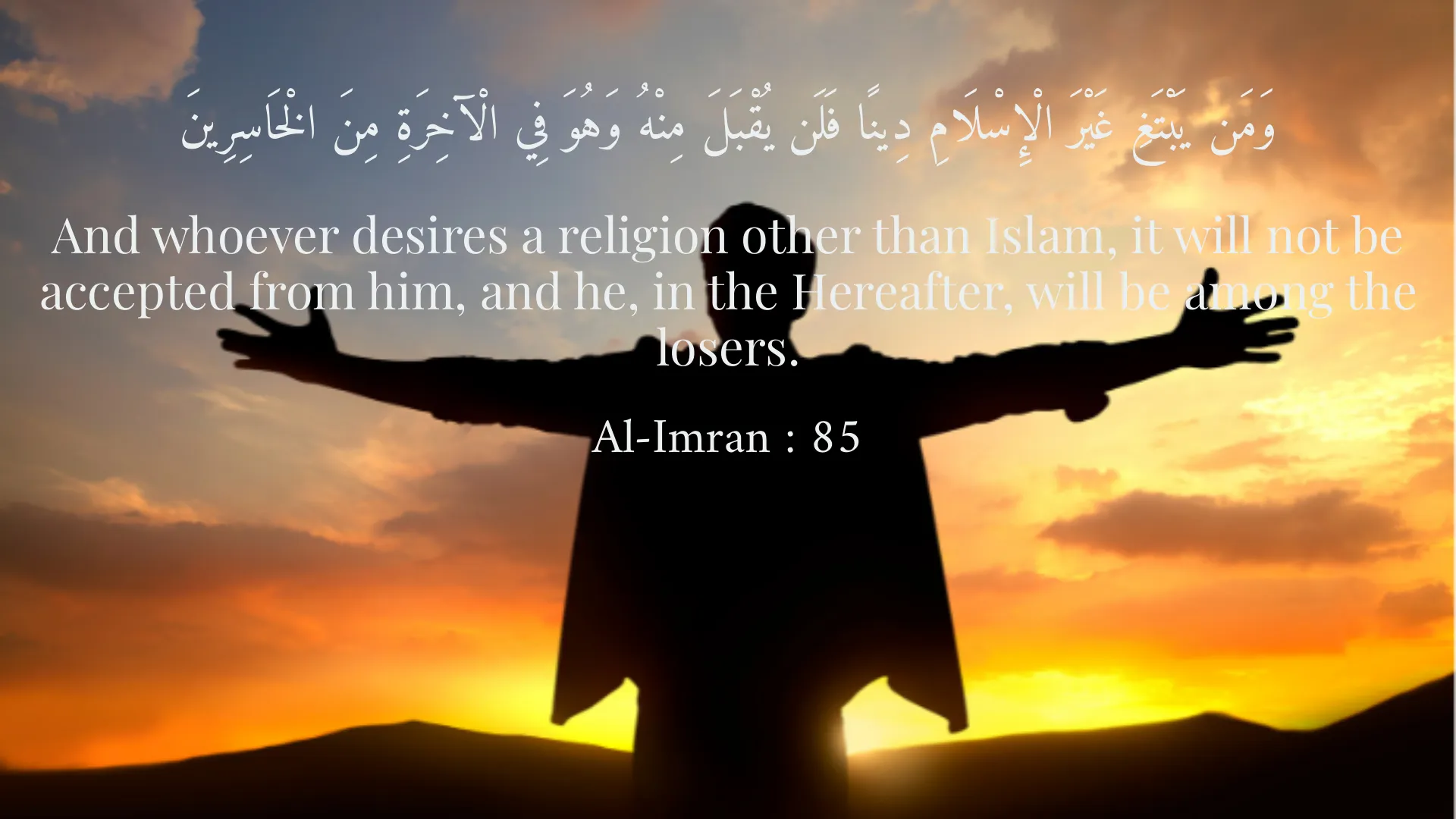
وَمَن يَبْتَغِ غَيْرَ الْإِسْلَامِ دِينًا فَلَن يُقْبَلَ مِنْهُ وَهُوَ فِي الْآخِرَةِ مِنَ الْخَاسِرِينَ
And whoever desires a religion other than Islam, it will not be accepted from him, and he, in the Hereafter, will be among the losers.
Al-Imran : 85
لِلَّذِينَ كَفَرُوا أَعْذَابٌ شَدِيدٌ ۖ وَأُولَـٰئِكَ هُمْ شُرَكَاءُ
For those who disbelieve, is a severe punishment, and they are partners [with other than Allah].
Al-Ma'idah : 36
وَأُدْخِلَ الَّذِينَ آمَنُوا وَعَمِلُوا الصَّالِحَاتِ جَنَّاتٍ تَجْرِي مِن تَحْتِهَا الْأَنْهَارُ
And those who have believed and done righteous deeds will be admitted to gardens beneath which rivers flow.
Az-Zumar : 71
Short Story
Once, in a beautiful garden, there was a young man named Amir who often lied and was hypocritical toward his friends. One day, a sturdy tree near him said, 'You are far from the light of truth!' Amir approached the tree and asked, 'How can I overcome this distance?' The tree calmly replied, 'Your distance from goodness and righteous deeds drags you into darkness. To draw closer to Paradise, you must be truthful and do good deeds.' Amir reflected on the tree's words and decided from that day on to be honest and kind to his friends. Gradually, his life became brighter, and he reached a kind of paradise in this world.