Quranic Answer
The Holy Quran, a book of guidance and light, is replete with stories and accounts of nations and individuals whose lives and ultimate ends serve as profound lessons and enduring examples for humanity. These narratives are not merely historical accounts; rather, they are clear signs for people of intellect to learn from the past and build a better future for themselves. The Almighty God repeatedly states in the Quran that the purpose of recounting these stories is to provide lessons, so that human beings may distinguish truth from falsehood and avoid the path of error and misguidance. These lessons encompass nations, societies, and even specific individuals who, due to arrogance, oppression, corruption, ingratitude, or disobedience to divine commands, faced divine punishment and destruction. One of the most prominent and frequently mentioned figures in the Quran, presented as a symbol of pride, tyranny, and disbelief, whose fate serves as a great lesson, is "Pharaoh" and his people. Pharaoh, the mighty king of Egypt, considered himself the supreme lord, spread corruption on earth, and severely oppressed the Children of Israel. Despite witnessing the clear miracles of Prophet Moses (peace be upon him) and repeated divine calls, he persisted in his rebellion and injustice. The Quran repeatedly narrates the story of Pharaoh, his claim to divinity, his oppression of his people, his resistance to the truth, and his tragic end by drowning in the Nile River. His body was preserved by divine command to be a sign and a warning for future generations. This story clearly demonstrates that worldly power and wealth are never guarantees of salvation, and rebellion against God will lead to nothing but destruction. The lesson from Pharaoh is for all arrogant and oppressive rulers throughout history to know that their powers are fleeting and the outcome of tyranny is humiliation and disgrace. Another example of nations that suffered divine punishment due to severe moral corruption and sexual perversions is the people of "Lot." Despite the warnings and calls from Prophet Lot (peace be upon him) to chastity and adherence to divine limits, this nation persisted in their sins and even assaulted Prophet Lot's guests. The Almighty God overturned their cities and rained down stones of baked clay upon them. This story is not only a lesson for societies that suffer moral decay but also a warning to all humanity to avoid corruption and indecency and to respect divine boundaries. The tragic end of Lot's people demonstrates that licentiousness and abandonment of ethics will have terrible consequences and can lead to the destruction of an entire civilization. This incident conveys an important lesson about the significance of modesty, chastity, and justice in human relations. The nations of "Aad" and "Thamud" are also among the peoples mentioned in the Quran as lessons and warnings. The people of Aad, possessing extraordinary physical strength and immense capabilities in construction (such as the lofty pillars in Iram of the Pillars), became arrogant and disbelieved their prophet, Hud (peace be upon him). God destroyed them with a furious, cold wind that lasted seven nights and eight days. The people of Thamud, who were unparalleled in stone carving and building strong homes in the mountains, denied their prophet, Salih (peace be upon him), and killed Salih's she-camel, which was a clear miracle. They too were annihilated by a mighty blast from the sky and a violent earthquake. The stories of these two nations serve as lessons for those who become proud of their material power, wealth, or abilities and forget God and His prophets. These accounts illustrate that no power is lasting except the power of God, and the outcome of arrogance, disbelief, and oppression is destruction. In addition to these nations, the Holy Quran also narrates the story of "Qarun," who serves as an example of the consequences of hoarding wealth without gratitude and of transgression. Qarun became arrogant due to his immense wealth, showed haughtiness towards Prophet Moses (peace be upon him), and was ultimately swallowed by the earth along with all his treasures. This story reminds us that wealth and possessions, if not used in the way of truth and with gratitude, can be a cause of destruction. Furthermore, the fate of the "Companions of the Elephant," who came to destroy the Kaaba and were annihilated by flocks of birds (Ababil), is an example of divine power in defending His House and destroying oppressors. Ultimately, it must be said that all these stories are not only messages for the past but also for the present and future. They teach us to avoid rebellion against God, injustice, corruption, and ingratitude, and to always remember that true power and ultimate destiny rest solely with God. These lessons are bright lanterns on humanity's path to find the right way through the darkness of ignorance and heedlessness and attain salvation.
Related Verses
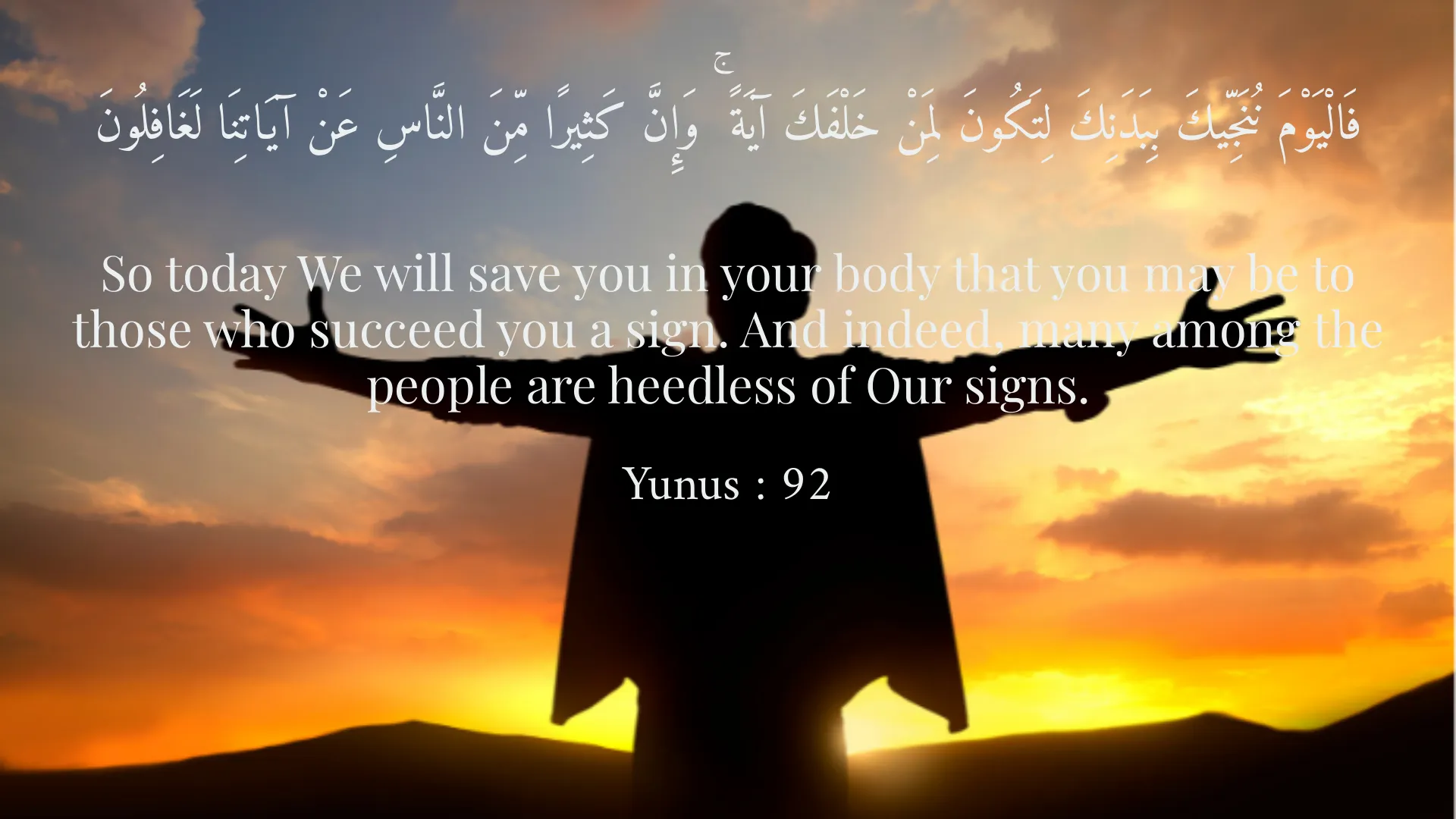
فَالْيَوْمَ نُنَجِّيكَ بِبَدَنِكَ لِتَكُونَ لِمَنْ خَلْفَكَ آيَةً ۚ وَإِنَّ كَثِيرًا مِّنَ النَّاسِ عَنْ آيَاتِنَا لَغَافِلُونَ
So today We will save you in your body that you may be to those who succeed you a sign. And indeed, many among the people are heedless of Our signs.
Yunus : 92
فَجَعَلْنَا عَالِيَهَا سَافِلَهَا وَأَمْطَرْنَا عَلَيْهِمْ حِجَارَةً مِّن سِجِّيلٍ
So We made the upper part of it its lower part and rained upon them stones of baked clay.
Al-Hijr : 74
أَلَمْ تَرَ كَيْفَ فَعَلَ رَبُّكَ بِعَادٍ
Have you not considered how your Lord dealt with 'Aad?
Al-Fajr : 6
إِرَمَ ذَاتِ الْعِمَادِ
Iram - who had lofty pillars,
Al-Fajr : 7
الَّتِي لَمْ يُخْلَقْ مِثْلُهَا فِي الْبِلَادِ
The likes of whom had never been created in the lands?
Al-Fajr : 8
وَثَمُودَ الَّذِينَ جَابُوا الصَّخْرَ بِالْوَادِ
And with Thamud, who carved out the rocks in the valley?
Al-Fajr : 9
Short Story
It is narrated in Sa'di's Golestan that a just king was asked, "Among all countries and nations, which do you love the most?" The king replied, "That nation which learns lessons from its past history, observes the fate of rebels and oppressors, and shuns sin and pride." The advisors were surprised and asked, "Do not all nations read history?" The king smiled and said, "Reading history is different from taking a lesson from it. Many read the story of Pharaoh and curse him, but they themselves, with a little power and wealth, follow Pharaoh's path. Or they speak of the fate of Lot's people, but they themselves are inclined towards deviation and corruption. Only that nation is prosperous that not only knows the stories but also turns them into mirrors of lessons, illuminating their path with the light of these mirrors so as not to go astray." This anecdote from Sa'di, much like the teachings of the Quran, emphasizes the importance of a deep look into the past and extracting life lessons from it, not merely narrating.